
The US drive to reduce reliance on China for rare earths and critical minerals will take more than fixing resource and processing gaps, experts say, noting that the decisive factor would be talent.
Eroding industrial know-how, a weak education pipeline, and the lack of a consistent long-term strategy could complicate US ambitions to become a mining powerhouse and rival or even surpass China, they warned.
Rare earth supplies are expected to be on the agenda when US President Donald Trump and Chinese leader Xi Jinping sit down in Beijing in mid-May.
The South China Morning Post has previously reported that the issue could dominate the long-awaited talks. The summit was originally scheduled for end-March but postponed because of Trump’s focus on the US-Israel war on Iran.
Rare earths are a critical component in many advanced weapons systems. Observers said China’s dominance in rare earths stemmed not only from its industrial scale but also from decades of accumulated engineering expertise, which the United States was struggling to rebuild after decades of decline.
According to Marina Zhang, associate professor at the University of Technology Sydney’s Australia-China Relations Institute, “rebuilding a rare earth supply chain is fundamentally a human capital challenge”.
“Core technological knowledge resides not just in equipment but in the decades of process experience and knowledge held by engineers,” she said.
China had developed a deep pool of several thousand rare earth separation specialists, while the US had fewer than 100 such engineers, a demographic that was also ageing significantly, Zhang pointed out.
In China, especially in the resource-rich regions of Inner Mongolia and Jiangxi, local authorities have expanded training capacity in the critical minerals sector, stepping up financial support for talent development and establishing new degree programmes and research institutes, while strengthening coordination between academia and industry.
With its strong expertise, China had established “formidable technical barriers” in the industry, which involved managing more than 200 complex process steps, Zhang said.
According to some estimates, about 300 mining engineers graduate annually from all of the sector’s schools in the US combined, while China churns out more than 3,000 graduates in the discipline every year.
Experts say decades of steady attrition have hollowed out American mining schools and specialist education programmes, leaving a graduate pool far too small to meet domestic demand.
The talent gap directly translated into an economic disadvantage for the US, with processing costs for rare earths about four times higher than in China, Zhang said.
The expertise gap was also reflected in performance, with China able to achieve significantly higher levels of separation purity than the US, which also had almost no refining capabilities for heavy rare earths, she noted.
“It requires at least a decade of practical experience to cultivate a fully qualified rare earth engineer,” Zhang added, highlighting the extent of time the US would require to rebuild its expertise.
Christopher Keane from the American Geosciences Institute noted that the rare earths sector – as a specialised subset of the critical minerals industry – required specific and highly skilled talent with more substantial training than the broader field.
According to Keane, the primary talent challenge for the American rare earth industry lies in downstream operations such as processing, separation and manufacturing.
“Expanding this specialised workforce beyond the initial talent shift will progress more slowly unless strong market incentives encourage those in chemistry, chemical engineering, metallurgy, materials science and related fields to focus on these specific challenges,” he said.
Regulatory hurdles also slowed industrial expansion, experts said, noting that building a new rare earth processing facility in the US required navigating 67 separate environmental reviews – a process that could take between five years and 10 years.
The robust US mining sector of the early 1980s was supported by more than two dozen accredited schools. But falling commodity prices, environmental pressures and industrial shifts resulted in a long decline, with capacity shrinking and expertise fading.
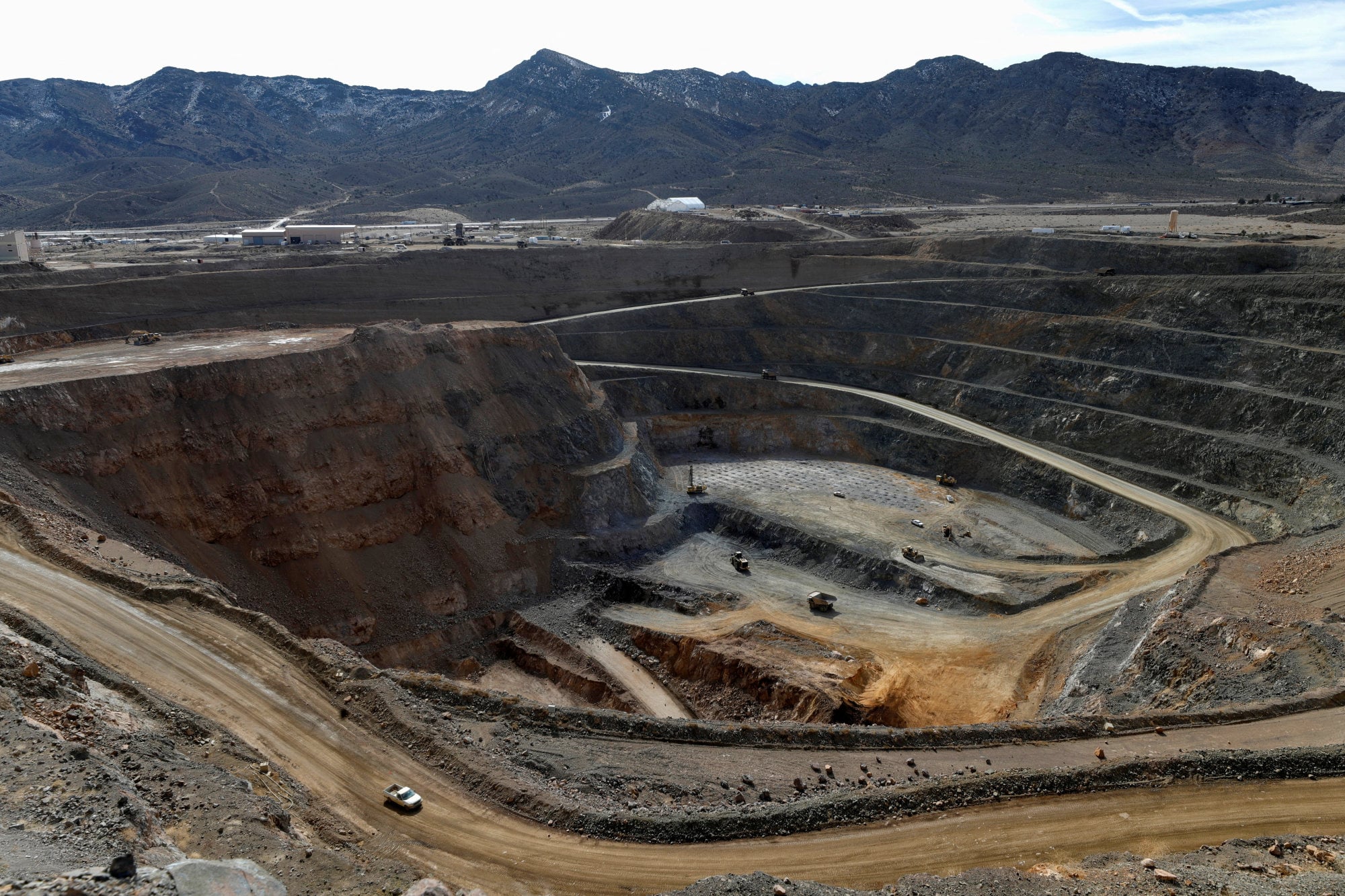
Foundational operations like the Mountain Pass Mine in California – the only operating rare earth mining and processing facility in the US – were closed for long periods along with numerous downstream operations.
Gavin Harper, a critical materials research fellow at the University of Birmingham, said that specialist skills in rare earth separation, metal making and alloy production had atrophied as knowledge withered.
“It is not only [the] operating processes that need to be rebuilt but also the knowledge of how to manufacture the machinery and equipment to create those processes from scratch that needs to be rebuilt,” he said.
The shortage of skills, regardless of resource availability, would be a “severe moderating factor” in the long-term competition between the US and China, according to Harper.
China had a deep reservoir of embedded “tacit knowledge” around the rare earth supply chain – developed through experience and often not written down or formally codified but “implicit, non-verbalised, and unarticulated”, he said.
“This is very hard to replicate for economies that have lost the expertise on how to process and produce rare earth materials,” Harper said.
“This isn’t knowledge that is just passed in a book or a course, but knowledge that comes from mentorship and observation, experience and practice.”
Thomas Hale, a critical minerals scholar at the Washington-based think tank Resources for the Future, voiced concerns that the US was making little concrete progress, with the increase in its student output unlikely to out-compete China’s workforce.
“The [talent] pipeline is imagined, ground has been exposed, but it has not gone further than that,” he said.
Measures like the Critical Mineral Mining Education Act of 2026, introduced in January, were a step forward but remained “far too small” relative to the scale of the workforce challenge facing the US geoscience and mining-related sectors, Hale pointed out.
Under the proposed legislation, exchange programmes would be established to bring international mining experts to US institutions, while placing American students and early-career researchers in mining-related fields at top-tier universities in allied countries.
The bill proposes an annual budget of US$10 million from 2026 through 2035 to implement the exchange programmes.
Hale said the student output in the selected fields would not add value to the critical mineral industry as a whole. “It is just splitting hairs over security and national priorities rather than long-term development.”
He argued that Washington seemed to have prioritised secondary technical skill sets, such as artificial intelligence and computer science, as a short cut to mining competitiveness, while bypassing the need to rebuild core, irreplaceable foundations.
“Working around the shortage of geologists, mining engineers and metallurgists rather than solving it could be a major strategic mistake,” he cautioned.
Keane, from the American Geosciences Institute, noted that in addition to traditional academic training, the US was encouraging professionals from other sectors to “lane shift” into critical minerals roles, providing a “relatively rapid, short-term solution”.
“The process for lane-shifting individuals can be slow and require online education and training, but it is much faster than waiting for more graduates to complete their academic training and earn their degrees and certificates,” Keane said.
Supported by government programmes in states like Wyoming and Pennsylvania, US recruiters are increasingly sourcing talent from the energy, aerospace and automotive sectors, thanks to the transferable technical skills and rapid upskilling potential.
The US is also tackling the critical mineral talent shortage through government-sponsored academic programmes and industry-led apprenticeships, according to a report by the Rare Earth Exchanges website.
Companies are increasingly partnering with schools and local workforce boards to create an “earn-and-learn” model that builds a pipeline of technical expertise from the ground up, it said.
Sydney academic Zhang suggested that in the short term the US could restore funding to mining and materials institutions such as the Colorado School of Mines and expand enrolment in relevant programmes – “potentially through legislation”.
Salaries should also be competitive with high-paying sectors like finance and technology to prevent top talent from leaving the field, she said.
In Hale’s view, the US could pursue a softer form of mineral diplomacy, rooted in trust and partnership instead of relying mainly on pressure, coercive bargaining or aggressive deal-making.
According to Harper, Western countries could gain an advantage by focusing not only on newly mined rare earths but also on the recovery and recycling of materials that have already been extracted.
Hale said this should be a priority, because the investment of energy and environmental impacts had already been made and there were less impactful processes that could be used to regenerate these materials.
Harper argued that boosting supply‑chain resilience need not come at the expense of the environment.
“To be competitive, the West needs to look at opportunities to do things differently and this is one way in which supply chain resilience can be bolstered in a less environmentally impactful way.” -- SOUTH CHINA MORNING POST