US military leaders painted a picture of Chinese military threats, spanning Taiwan and space, as they briefed Congress on the military readiness for the financial year 2027 on Wednesday.
The People’s Liberation Army’s (PLA) “invasion rehearsals and live-fire exercises near Taiwan and around the region” had illustrated “the need for combat-ready naval forces in the Indo-Pacific”, according to James Kilby, vice chief of Naval Operations.
“[The US Navy therefore] remains committed to partnering and burden-sharing with allies and partners around the world to deter and, if necessary, defeat threats to the peace,” Kilby said.
Kilby made the remarks on Wednesday in a statement to the House Armed Services Subcommittee during a hearing on the US military’s combat readiness for next year, as the US Congress returned from recess.
Throughout the hearing, the US military’s operational challenges in Iran were a key focus of discussion.
Generals from the Army, Navy, Air Force, Marine Corps and Space Force acknowledged that US military ships, aircraft, and ground vehicles are generally facing shortages of spare parts, limited access to maintenance and insufficient industrial production capacity.
The US military’s efforts to maintain a deterrent against China, which Washington views as a major rival, in the Indo-Pacific region were mentioned repeatedly by lawmakers and generals on Wednesday.
During his oral testimony before the subcommittee, Kilby said that in the Indo-Pacific, the American sailors “operate every day deterring China and building partnerships”.
At the time of the hearing, US President Donald Trump’s record-breaking US$1.5 trillion defence budget request for the financial year 2027, which starts on October 1, was about to be debated by Congress.
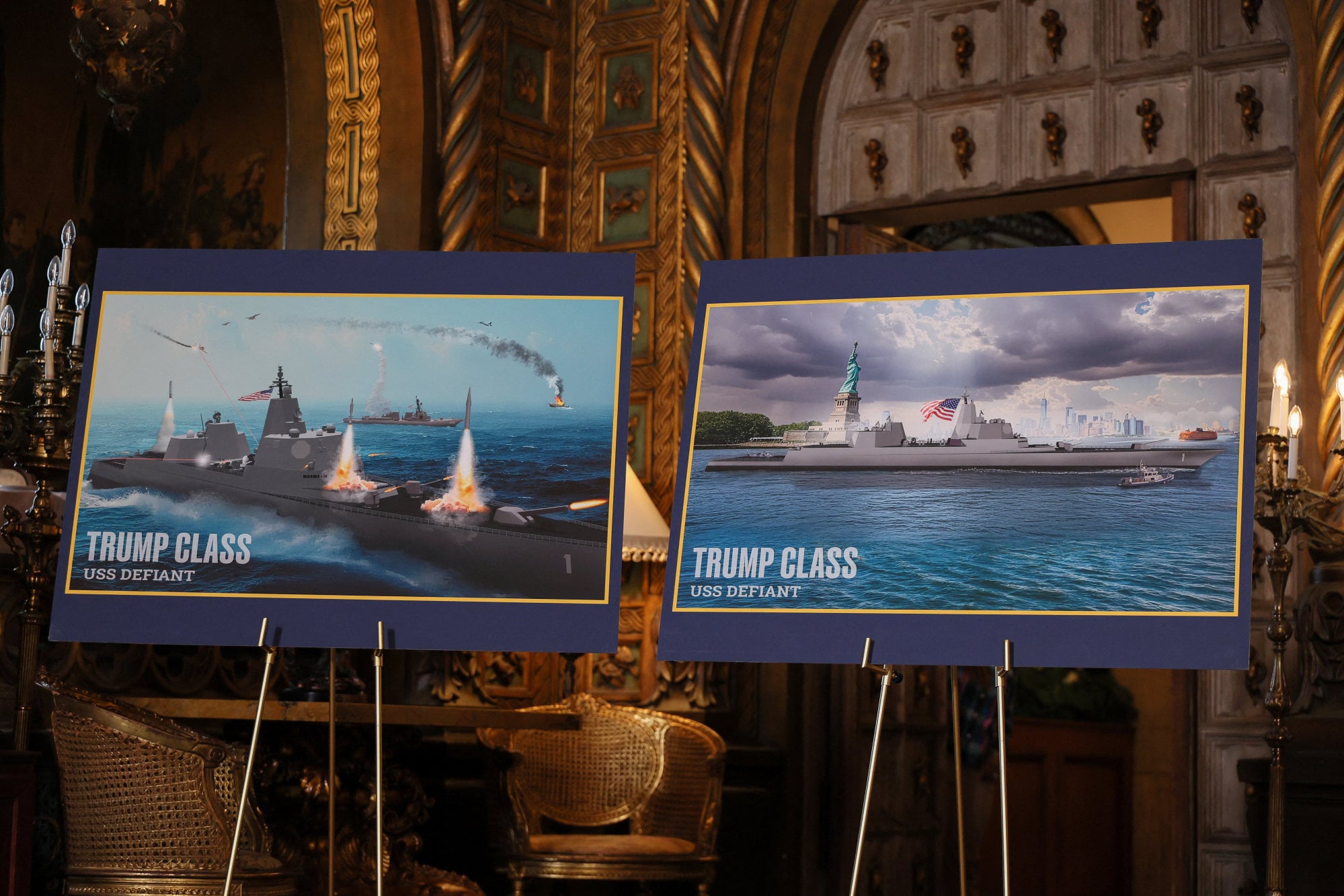
The request includes US$65.8 billion in funding for the US Navy to build what Trump has called a “Golden Fleet” and to bridge the gap in shipbuilding capabilities between the US and China.
Presidential budget requests generally amount to more of a wish list than anything else and are sometimes described in the world of US politics as “dead on arrival”.
A longstanding framing is that “the president proposes, but Congress disposes”, given the legislature’s power of the purse. But it does provide a snapshot of the chief executive’s priorities, if nothing else.
It also came as the US and Iran are in a two-week ceasefire, and their second round of talks is expected to take place soon.
Taiwan is expected to be one of the key topics in Trump’s upcoming meeting with Chinese President Xi Jinping, scheduled for next month.
Beijing sees Taiwan as part of China and has never renounced the use of force to reunite it with the mainland.
Most countries – including the US – do not recognise Taiwan as an independent state. But Washington is opposed to any attempt to take the island and is committed to supplying it with weapons.
Since the pro-independence Taiwanese leader William Lai Ching-te took office in 2024, the PLA has not eased its pressure on Taiwan and has conducted multiple large-scale military exercises around the island.
However, Beijing has repeatedly stated that peaceful reunification remains its preferred solution.
Kilby said that the US Navy “is committed to maintaining peace in the Indo-Pacific but is ready for conflict if necessary”, including “deterring aggression and contributing to a denial defence along the First Island Chain”.
With a direct mention of China, Kilby said: “Over the last twenty years, China has undergone an unprecedented military build-up, modernised capabilities, and improved proficiencies across all warfare domains.
Kilby told the House Armed Services Subcommittee on Readiness that the “evolving joint capabilities and concepts” of the PLA “continue to strengthen China’s ability to revolutionise its maritime capability to rival and contest our own”.
Beyond the Taiwan Strait, the PLA’s threats in space were also highlighted.
“China continues to develop space control weapons to hold our satellites – and the services they provide to the Joint Force – at risk,” according to Shawn Bratton, Vice Chief of Space Operations of the US Space Force.
“China is hard at work developing the space architecture to allow the People’s Liberation Army to track, target, and strike our Joint Forces on Earth,” Bratton said.
“The threat from China continues to grow, and, to ensure readiness, we must train against this threat.”
Counterspace operations are likely a means for the PLA to counter US military intervention in a regional conflict. It has been developing and fielding a wide range of counterspace capabilities, such as anti-satellite (ASAT) missiles. -- SOUTH CHINA MORNING POST