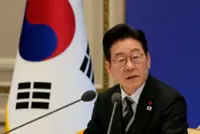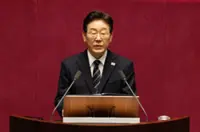
SEOUL: South Korea must accept a degree of risk in importing crude oil from the Middle East amid blockages of the Strait of Hormuz, President Lee Jae Myung (pic) said on Monday (April 6).
"There are not many alternative routes, and if shipments are cut off altogether because of heightened risk, it could have a serious impact on South Korea's crude supply and pose a major risk to the public, so we need to strike a balance and accept a certain degree of risk," Lee said in a cabinet meeting.
South Korean authorities have been consulting with other oil-producing countries to secure alternative routes, including Saudi Arabia, Oman and Algeria, ruling Democratic Party lawmaker Ahn Do-geol said on Monday.
Ahn told reporters that diplomatic efforts led by the foreign ministry included the potential dispatch of special envoys to support the process.
The Industry Ministry is pushing a plan to deploy five South Korean-flagged vessels on the Red Sea route and officials had discussed supplying government-held oil reserves to private refiners first, with swaps to be made once replacement cargoes secured overseas arrive in the country, he said.
Finance Minister Koo Yun-cheol on Friday met envoys from Gulf Cooperation Council member states to ensure a steady supply of oil, liquefied natural gas, naphtha, urea and other critical resources, the ministry said in a statement on Sunday.
Like many other Asian economies, South Korea relies heavily on energy imports, including through the Strait of Hormuz, which was a conduit for 20% of the world's oil before the US and Israel launched air strikes on Iran on February 28. Iran has since effectively shut down the waterway, driving up energy prices and stoking fears of a global recession.
The Energy Ministry said the government planned to meet a goal of supplying 100 gigawatts of renewable energy by 2030 as soon as possible and expand the share of power generation from renewables to more than 20%.
Inter-Korean border areas would be included as a solar power deployment zone, while residents living near high-voltage transmission line construction sites would be allowed to directly invest in projects and earn income from them, it said.
South Korea has also set a target for hydrogen reduction steelmaking, which uses hydrogen instead of coal or gas, with a 300,000-ton pilot facility to be completed by 2028, with full commercialisation targeted for after 2037. - Reuters