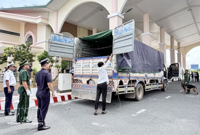
HANOI: The Ministry of Agriculture and Environment will establish inspection teams to carry out thematic checks on slaughtering activities and veterinary control nationwide after nearly 300 tonnes of diseased pork entered the market, including supplies to school kitchens in Hanoi.
Phan Quang Minh, deputy director of the ministry’s Department of Livestock Production and Animal Health, on Wednesday said the case highlights the urgent need to tighten management in veterinary services, food safety and supply chain control.
“The incident not only raises the risk of disease transmission among livestock but also directly threatens food safety and public health, while undermining discipline and the effectiveness of state management in the veterinary sector,” Minh said.
Following the discovery, on Monday (March 30), the ministry advised the Prime Minister to issue an urgent directive to rectify slaughter control and strengthen law enforcement discipline.
A series of measures have been proposed, including toughening up control from farm inputs through slaughtering to product certification before distribution on the market.
Minh said the ministry will coordinate with local authorities to detect and strictly handle facilities that fail to meet hygiene standards.
At the same time, the management mechanism will be reviewed towards a value chain-based approach, strengthening traceability and applying risk-based management. Slaughtering has been identified as a key control point to ensure transparency in the origin of animal products.
He emphasised the need to tighten quarantine work from slaughterhouses to domestic transport and cross-border control to minimise the circulation of unsafe products.
Deputy Minister of Agriculture and Environment Phung Duc Tien said slaughtering, quarantine and animal disease prevention are inherently complex, while small-scale, informal slaughtering remains widespread in many localities.
“Market price fluctuations can drive spontaneous slaughtering activities, complicating oversight,” he said, adding that despite existing regulations and management programmes, implementation in some areas still falls short of requirements.
Tien stressed the need to tighten discipline across the system and enhance accountability at all levels, from regulators to businesses and farmers.
“We must face responsibilities directly and not allow lax management to persist,” he said, calling for a review and improvement of inadequate mechanisms and policies.
Earlier, Hanoi police launched criminal proceedings and prosecuted eight suspects linked to a large-scale network involved in slaughtering and distributing diseased pigs.
Investigators said the suspects colluded with certain quarantine officials to bypass mandatory inspections, allowing diseased pigs, including dead animals, to be slaughtered.
Just in 2026, the group has distributed around 3,600 diseased pigs, equivalent to nearly 300 tonnes of pork. The products were supplied to wholesale and traditional markets and to a food company, which in turn provided meals to several schools in Hanoi.
Regarding the issue of ractopamine, Minh said the substance is banned in veterinary drugs in Vietnam, though regulations on its use in animal feed remain unclear. Authorities will review and adjust policies in line with international practices and domestic management requirements.
In a related move, the municipal People’s Committee has ordered a comprehensive review of school meal services following concerns over unsafe food entering school kitchens.
The city’s Department of Education and Training has instructed local authorities and schools to strengthen coordination to ensure food safety for semi-boarding meals, verify suppliers and ingredient origins, and proactively manage risks and incidents.
Schools must review the entire meal provision process, from planning and supplier selection to receipt, storage, processing, serving and supervision, and make necessary adjustments to address shortcomings. — Vietnam News/ANN