China and Japan’s long-standing rivalry has deep historic roots, and relations between the two have taken a significant turn for the worse in recent months. This article, the first in a three-part series, looks at how both countries are trying to turn soft power to their advantage in the battle to shape international opinion.
The rise of China’s soft power has been fuelled by global successes in fields ranging from gaming and films to consumer brands and technology.
Success stories range from the blockbuster video game Black Myth: Wukong, inspired by Chinese mythology, to the acclaimed sci-fi novel The Three-Body Problem, later made into a Netflix series.
This rapidly growing global footprint has prompted Japan – long regarded as a leader in fields such as gaming and animation – to launch an initiative to promote the country’s own culture.
Last month, the Yomiuri newspaper compared the foreign ministry initiative with China’s efforts to use cultural outreach to expand its influence, adding it was designed “to strengthen this nation’s diplomatic capabilities by increasing the number of people who understand Japan”.
The report said: “As China has used cultural diplomacy to undermine other countries’ reputations, the ministry decided to send out storytellers with the aim of creating an environment that will make it easier for Japan’s positions and policies to be accepted abroad.”
The Japanese foreign ministry plans to hold events in more than 20 countries by the end of this month, featuring both ancient and modern aspects of Japanese culture that range from tea ceremonies to manga and anime.
Analysts have argued that China’s rising cultural influence is increasingly driven by private companies and “bottom-up cultural exchanges” involving regular people rather than being driven by governments.
However, they also warn that sustaining this soft power requires an environment that encourages innovation, saying the country should aim for deeper engagement with international audiences.
Chinese culture has been growing in popularity across many different genres.
Soon after its release in August 2024, the video game Black Myth: Wukong – based on the figure of the Monkey King – took the world by storm, selling more than 10 million copies in less than four days and more than 20 million in the first month after its release.
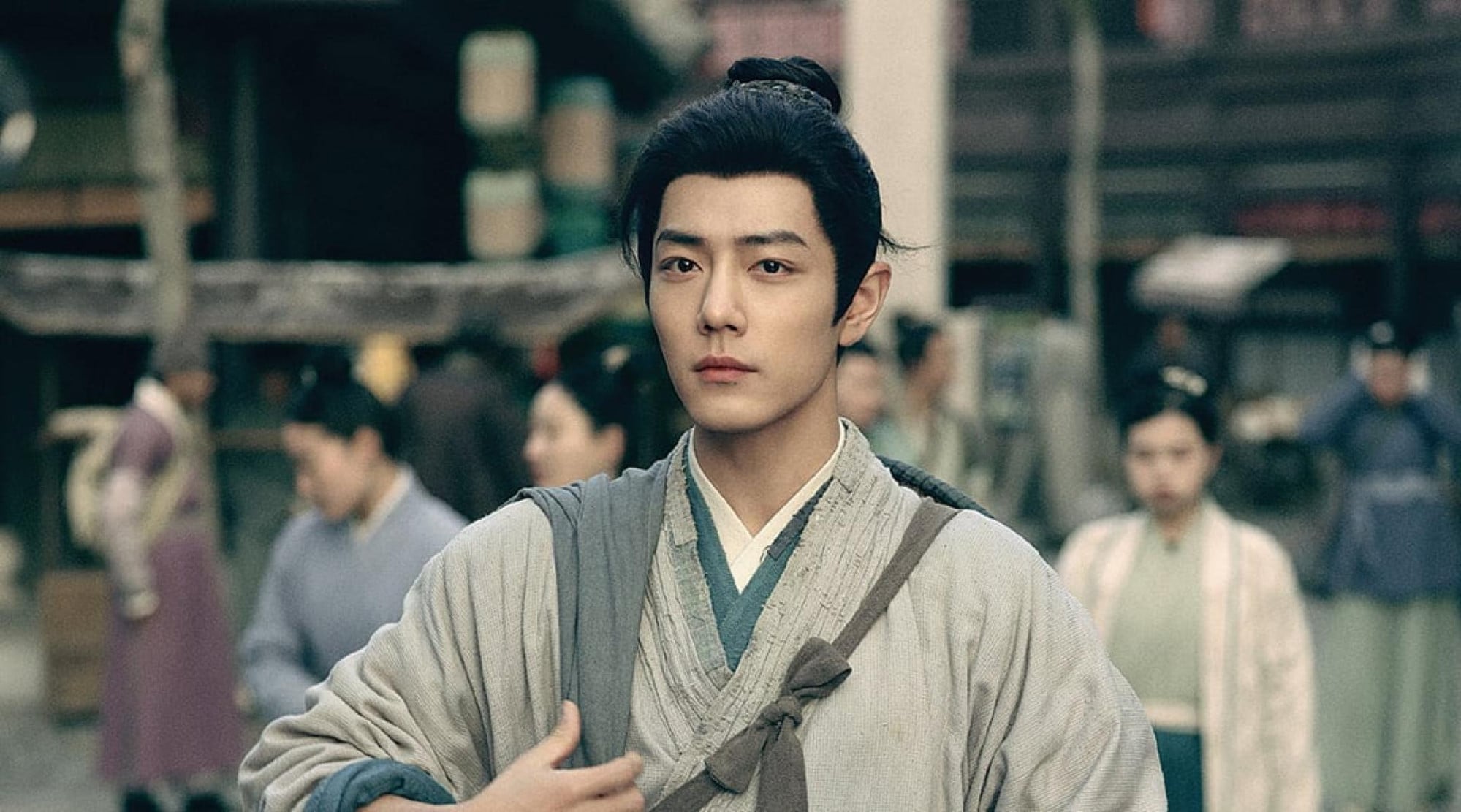
Another global hit, the animated film Ne Zha 2, also drew on a character from Chinese mythology, while the 40-part TV drama Legend of Zang Hai, a historical fantasy that drew on ancient artforms such as shadow puppetry and Kunqu opera, topped multiple overseas rankings on streaming platforms.
Meanwhile, Liu Cixin’s novel The Three-Body Problem has gathered widespread international acclaim – with fans ranging from former US president Barack Obama to Game of Thrones creator George R.R. Martin. The book sold millions of copies worldwide, won a slew of awards and was adapted for television by Netflix in 2024.
The trend even extends to toys such as Pop Mart’s Labubu dolls, which became a global craze last year and created long queues outside shops as fans fought to get their hands on one.
Sheng Zou, an interdisciplinary media researcher and professor at Hong Kong’s Baptist University, said private companies were playing an increasingly important role.
“When it comes to soft power, I feel that much attention has been traditionally paid to state actors and top-down initiatives, but non-state actors – even individuals – and bottom-up processes of cultural exchanges are happening every day. The latter are playing increasingly important roles.”
One indication of this trend came in the 2025 Soft Power Index, conducted annually by marketing consultancy Brand Finance, where China overtook Britain to take second place behind the United States.
In the 2026 index, China maintained that position, while Japan passed Britain to move into third place.
The report said China was the only nation in the top 10 to increase its soft power score and had “narrowed the gap to the US to less than 1.5 points”.
It said tourism was playing an increasingly important role in this due to the “growing attraction of Chinese cities, heritage and leisure opportunities, aided by visa facilitation programmes and people-to-people exchanges”.
In an effort to boost tourism, Beijing has steadily been extending the number of countries whose citizens can visit without a visa for up to 30 days after the ending of strict Covid-19 controls in 2023.
Last year, more than 30 million foreign nationals entered China without a visa, a year-on-year increase of nearly 50 per cent, according to the National Immigration Administration.
China has also been working to promote its heritage and culture among new generations through technology, and has invested heavily in museum digitalisation to bring its ancient history to life.
The report also said: “Cultural phenomena such as Labubu, which gained global popularity in 2025, alongside strong recognition for brands like Huawei and TikTok, and the growing exports of electric vehicles, enhance China’s reach further.”
Zou also pointed to the recent “Chinamaxxing” trend among young Americans who are embracing Chinese wellness practices and lifestyle choices, saying the “positive implications for China’s soft power building should not be too hastily dismissed”.
Another related trend is that of “becoming Chinese”, where foreign internet users share popular memes and videos of themselves adopting Chinese lifestyle habits such as sipping hot water or using traditional Chinese medicine.
Both trends may have their origins in the sudden surge in popularity of the Chinese social media platform RedNote among American users last year after the US passed legislation – that was never implemented after Donald Trump returned to power – to ban TikTok.
Zou also pointed out the role of American YouTubers in spreading positive images of China, including Aleese Lightyear, a teacher whose videos about life in Chengdu were featured on CNBC and “triggered discussion among the American audience about the fast-changing China”.
Zou said geopolitical situations, including frustrations with Trump’s authoritarianism, could be a factor, “but most importantly, the cultural and technological progress that China has made is bound to be seen by people around the world”.
Beijing also seems to have recognised the potential for social media to reshape its national image on the global stage.
Expanding the international influence of such platforms was listed as a strategic goal in the current five-year plan, which will run until 2030.
Shaoyu Yuan, a specialist in soft power at New York University, said the biggest change was that Beijing was no longer relying on official image management.
“It now has globally visible cultural products that people choose on their own, from blockbuster games to collectible brands to creator-driven lifestyle content,” he said.
According to Yuan, Beijing has moved from a top-down image-building approach to fostering cultural industries and storytelling.
He said global culture was increasingly shaped by social media and was “more fragmented and less controlled by a few Western gatekeepers. That creates more room for Chinese cultural products to travel on their own merits.”
He added: “China’s rise in cultural influence comes from a stronger domestic content ecosystem meeting a global environment that is more open to non-Western cultural power than it used to be.”
However, there are also many challenges that China should be mindful of in sustaining its soft power globally.
Zou said China’s goal of shifting its emphasis towards innovation and high value-added products needed “heightened copyright protections, the incentivisation of original designs, more rigorous quality control, and more space for artistic explorations and cultural productions”.
Yuan said China’s main soft power challenge was turning growing global visibility into lasting trust, as audiences may enjoy Chinese cultural products while still holding concerns about censorship and state influence.
Beijing also needed to think about building a durable global image, he added.
“A trend like ‘becoming Chinese’ or ‘Chinamaxxing’ can make Chinese wellness habits and daily aesthetics feel relatable, but if that familiarity never develops into deeper engagement through travel, education, language learning, long-form storytelling and sustained exchange, the effect stays shallow.”
Carwyn Morris, a senior lecturer in the department of media studies at SOAS University of London, said China still lacked cultural products that could speak to wider audiences, partly because they were either insufficiently supported or subject to suppression.
“Due to the suppression, when China needed a strong cultural counterbalance to humanise the country and its people on the world stage they were lacking. Instead, the cultural projects that the Chinese government supported and exported felt extremely inauthentic and had little cultural power or relevance around the world,” Morris said.
He added Beijing could be more confident about accepting criticism or the unfamiliar, saying cultural powerhouses “accept that the cultural sector can be publicly critical or just publicly different from the government while still being of benefit to the nation”.
“Even critical cultural products can provide rewards for the nation, and by allowing and even supporting these counter-culture voices the government can increase its authenticity, giving it greater cultural power projection in the future,” Morris said. -- SOUTH CHINA MORNING POST