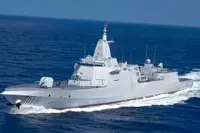
SOUTH-EAST ASIA (Bloomberg): South-East Asian nations agreed to boost cooperation and create a centre for maritime issues, which the Philippines said could help avert a situation in the South China Sea similar to the closure of the Strait of Hormuz.
The Association of Southeast Asian Nations will set up "a central repository for maritime issues and maritime policy” that will guide the 11-member bloc, according to Philippine President Ferdinand Marcos Jr., who hosted this week’s summit. Manila has offered to host the centre.
The Asean Maritime Centre will aim to maintain safety, freedom of navigation and order in the South China Sea, including by monitoring cases of illegal fishing, smuggling and human trafficking, said Marcos.
"The vessel traffic in the South China Sea is immense. How to regulate that, how to monitor that is something we have to decide what to do,” he said. "All the maritime countries around the South China Sea already do that, but they do it individually.”
The closure of the Strait of Hormuz due to the Iran war has underlined the importance of keeping maritime routes open. Asean nations have been among the hardest hit by the supply disruptions for crude and fertilizer, seeing consumer prices soar and economic activity stall.
"If such a thing were to happen in the South China Sea, the inevitable consequences would be alarming just to even think about,” Marcos said in a press conference on Friday.
Anxieties also rose last month after Indonesia floated - and quickly walked back - the possibility of charging ships to transit the Strait of Malacca, a key maritime trade artery for Asia. Both Singapore and Malaysia responded, stressing that the strait must remain unimpeded.
The plan to create an Asean Maritime Centre could irk Beijing, which has overlapping claims in the South China Sea with the Philippines, Vietnam, Malaysia and Brunei. The disputed sea is a strategic and resource-rich waterway, believed to hold vast oil and gas reserves, and trillions of dollars in global trade travel through the area each year.
Marcos sought to downplay those concerns, saying: "The ultimate reason for having this maritime center is not to confront or somehow push back on any single force or any single country.”
Fuel-Sharing
Meanwhile, the regional bloc agreed to expedite the ratification of a fuel-sharing pact that was enacted back in 2009 and remains an untested emergency mechanism. The bloc also proposed creating a shared fuel stockpile they can tap in case of future supply disruptions.
"We are developing the idea that we will have a fuel reserve - all the different kinds of fuels, crude oil, jet fuel, all the way to the most refined fuel - so that when such a thing happens again then there is a reserve that we can all avail of,” Marcos said.
The ambitious scheme faces tough questions though, including where the stockpiles will be kept and how to determine who gets supplies first, Marcos said.
-- ©2026 Bloomberg L.P.