




Large passenger jets and advanced chips, BeiDou satellites and the Tiangong space station: these large-scale science and technology projects could be part of China’s efforts to mobilise resources nationwide to speed up the development of new weapons, according to a study by researchers with China’s top defence university.
China’s military modernisation has accelerated at a pace that unsettles many analysts in Washington. In the past decade alone, Beijing has rolled out a sequence of major defence technologies: electromagnetic catapult systems for aircraft carriers, new stealth fighter platforms, hypersonic weapons, directed-energy lasers and rapidly advancing military artificial intelligence systems.
The tempo of development is striking not only because of its speed but because of the resources behind it. The United States spent roughly US$997 billion on defence in 2024, while China’s officially announced defence budget for 2026 stands at about US$277 billion. Even allowing for differences in accounting standards and purchasing power, China’s military spending remains far below that of the US.
The disparity becomes clearer when focusing specifically on military research and development. The US Department of Defence allocates about US$140 billion annually to research, development, testing and evaluation (RDT&E) – roughly 15 to 17 per cent of the Pentagon’s total budget.
China does not publish a detailed R&D breakdown, but most external estimates suggest that between 5 and 10 per cent of its defence spending goes towards military research – around US$20 billion to US$50 billion.
Yet China continues to introduce a wide range of advanced systems across multiple technological domains. This has prompted a debate among defence researchers: how can a country with much lower defence spending sustain such a broad portfolio of military innovation?
With his colleagues, Wu Ji, director and associate researcher with the science and technology department at the Institute for Defence Technology and Strategic Studies at the National University of Defence Technology, described what they called a “new nationwide mobilisation system”, which had been implemented in recent years to boost defence science and technology.
“Amid the current, exceptionally fierce great-power competition, technology has become the central focus of the rivalry. The United States, seeking to contain China’s development through technological hegemony, is imposing increasingly stringent technology controls on our country,” Wu’s team wrote in a study published in the Forum on Science and Technology in China journal on February 2026.
“National defence technology has become the top priority in these US restrictions, directly affecting the independent and controllable development of our nation’s weaponry and equipment.”
The new system for mobilising resources nationwide has become an effective way to promote the development of key core technologies in the new era, according to Wu.
The system “integrates the strengths of the socialist system – its ability to concentrate resources on major initiatives – with the efficiency of market mechanisms in resource allocation. By doing so, we can refine the new nationwide system for tackling key defence science and technology challenges ... and continuously explore new models for national defence R&D to boost innovation efficiency,” he added.
The concept builds on a long-standing model in China’s strategic technology programmes. During the early decades of the People’s Republic, the government relied on highly centralised national mobilisation to make technological breakthroughs.
The most famous example is the “Two Bombs, One Satellite” programme, which developed China’s atomic bomb, hydrogen bomb and first satellite during the Cold War.
However, that traditional model was built around a planned economy and relied heavily on administrative control. As China’s economy became increasingly market driven, policymakers began experimenting with a hybrid version of the system that blended central coordination with market competition and industrial collaboration.
Under the new system, similar approaches were expanded to large-scale civilian projects such as semiconductor, advanced jet engines, the BeiDou satellite navigation system and the country’s manned space programme. In these cases, the state concentrated resources from civilian research institutes, universities and state-owned enterprises into tightly coordinated national programmes.
The result is a multilayered innovation network that brings together national laboratories, government research institutes, leading universities, defence conglomerates and private technology companies.
Instead of relying solely on a closed military-industrial complex, the system tries to integrate civilian scientific and industrial strength into defence innovation.
Large state-owned defence groups still play a central role, particularly in the development of complex weapons platforms and critical components such as aero-engines or missile systems. These firms act as prime contractors responsible for system integration, coordinating research institutions, suppliers and engineering teams across large programmes.
The structure of China’s defence innovation ecosystem has therefore expanded in recent years, according to Wu’s team.
National research platforms – including leading universities, major laboratories and institutions under the Chinese Academy of Sciences – increasingly lead exploration of frontier technologies where outcomes are uncertain.
In areas such as artificial intelligence, quantum information, advanced materials and next-generation computing, research teams across multiple institutions often pursue parallel technological pathways. This form of competition within the research system allows various technical approaches to be explored simultaneously before successful breakthroughs are transferred into defence applications.
At the same time, the central government continues to organise large strategic programmes that require massive long-term coordination. Projects such as satellite navigation networks, space systems or major aerospace technology often involve dozens of research institutes, companies and universities working together under national planning frameworks.
These initiatives can run for decades and require sustained public investment, especially where commercial returns may be indirect or delayed.
“This model is mainly suited for major foundational engineering technologies that address significant public societal needs, feature complex systems, require substantial investment, involve long development cycles and offer low direct economic returns,” Wu’s team wrote.
“Examples include the BeiDou Navigation Satellite System Project and the China Manned Space Programme.”
Perhaps the most distinctive feature of the emerging system is the growing role of industrial ecosystems led by large technology companies.
In sectors considered strategically important – such as semiconductors, microelectronics and advanced manufacturing – a leading firm may act as the “chain leader” of an industrial cluster, coordinating suppliers, start-ups, research institutes and universities within a broader innovation network.
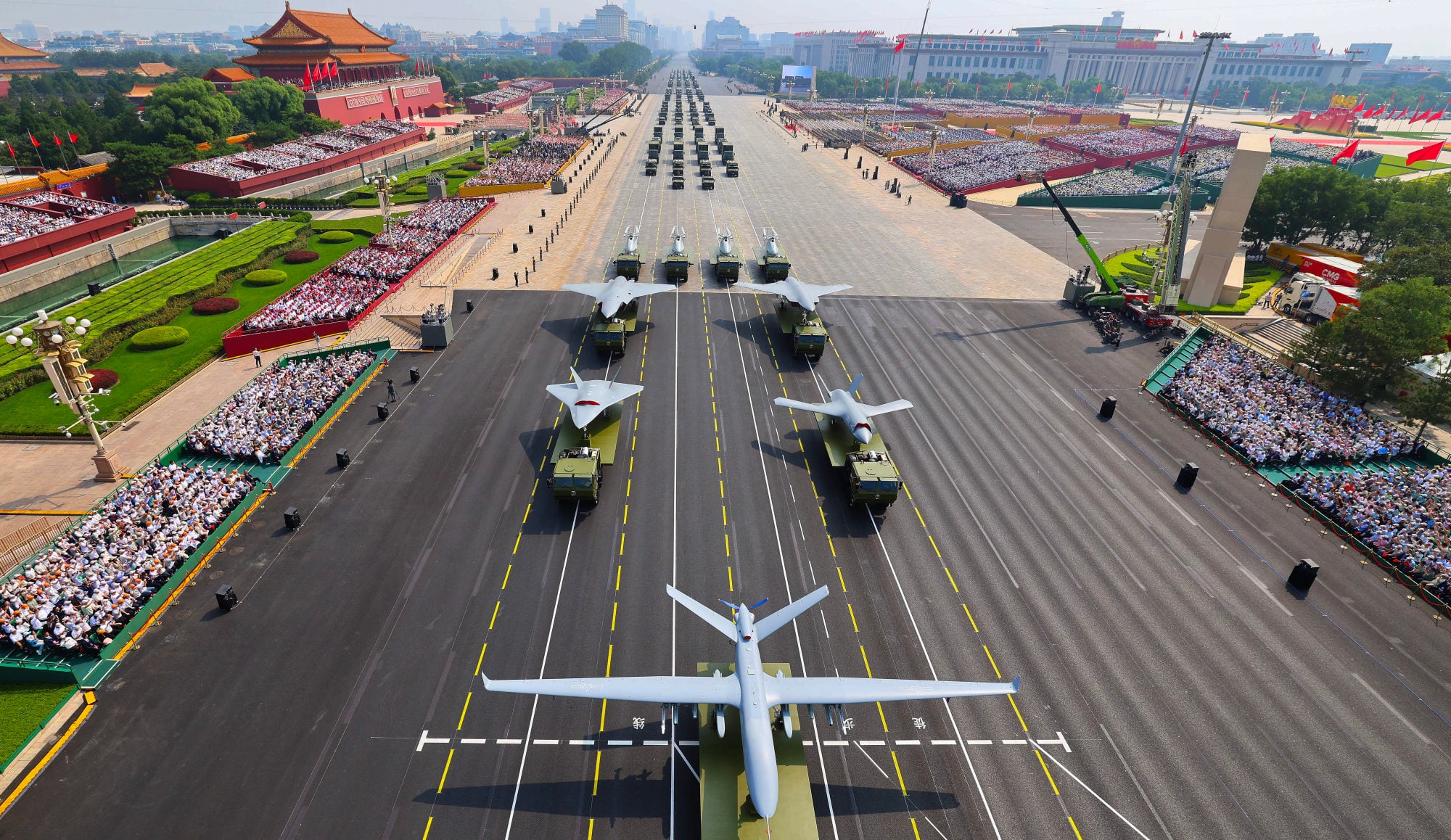
“This model is mainly aimed at critical industrial technologies that are dual-use in nature, hold immense economic and security significance, offer broad industrial prospects and promise substantial potential economic returns, particularly those facing major bottlenecks,” the team wrote.
“Examples include very-large-scale integration technology and large aircraft technology. Given their vast industrial potential and high potential returns, this approach can effectively mobilise the enthusiasm and initiative of relevant enterprises. By having enterprises take the lead, the role of market mechanisms can be better leveraged.”
Government policy supports these clusters through funding programmes, tax incentives and procurement demand, while private companies contribute engineering expertise, manufacturing capacity and commercial innovation. The model is particularly important in areas where China is trying to overcome technological bottlenecks and reduce reliance on foreign suppliers, according to the paper.
Together, these institutional layers create a hybrid innovation structure that combines elements of state planning with the dynamics of a market-driven technology sector. Researchers argue that such an arrangement can reduce the cost of developing complex technologies.
One reason is that high-risk research efforts are distributed across multiple institutions rather than concentrated within a single programme, according to the researchers.
Universities and laboratories explore competing scientific approaches, while companies focus on engineering solutions and industrial production.
Another factor is the integration of civilian innovation into military development.
China’s large private technology sector, including firms active in artificial intelligence, robotics, electronics and advanced manufacturing, provided a wide base of technical capabilities that can be incorporated into defence systems, they said. -- SOUTH CHINA MORNING POST


