ASIA PACIFIC (Bloomberg): Japanese Prime Minister Sanae Takaichi delivered a landmark speech to convey her vision for deepening her nation’s economic and security ties with the Indo-Pacific, with a view to making the region more resilient in the face of geopolitical challenges.
Speaking in Hanoi after a bilateral summit on Saturday with Vietnam’s General Secretary and President To Lam, Takaichi stressed the importance of strengthening supply chains, maritime security, space development and a reliable communications infrastructure for the exchange of large amounts of data.
"The excessive reliance on specific countries for critical goods stems from unfairly low-priced supply conditions,” Takaichi said. "To strengthen supply chains, ensuring fair competitive conditions based on factors other than price is essential.”
She also touted the importance of "safe and free navigation of sea lanes” and pledged to channel more official development assistance to help nations build ports and airports and strengthen maritime security capabilities.
The premier cited patrol vessels and radar systems provided by Japan to the Philippines that serve as the "eyes” and "feet” protecting the safety of sea lanes.
The two sides announced six deals covering space technology, information and communications, irrigation, infrastructure development for disaster and climate resilience, and low-carbon growth. No values were disclosed.
They also agreed on measures to raise Japan’s investment in Vietnam to $5 billion per year at an early date and to bring bilateral trade to $60 billion by 2030, according to a post on the Vietnamese government website.
The speech, marking a decade since her mentor and former Prime Minister Shinzo Abe introduced the "Free and Open Indo-Pacific” initiative, came as Japan is gradually raising its profile overseas while also seeking alliances to secure resources including critical minerals through robust supply chains.
It also came as Takaichi has projected a more assertive image in the region, including removing most restrictions on weapons exports and taking part in military drills for the first time with the US and the Philippines. Her comments late last year about defending Taiwan particularly incensed Beijing, which interpreted some of her actions as signs of militarism.
Takaichi’s decision to deliver her speech in Hanoi may have been a strategic choice, as she was likely to find a receptive audience in a country that sees China’s maritime claims as overly ambitious.
Abe’s FOIP strategy focused on the rule of law, freedom of navigation and free trade among like-minded countries across the Indian and Pacific oceans. The US has backed the vision, which has at times been seen as a tool to counter China’s ascendancy.
Takaichi’s stop in Vietnam underscores Japan’s pressing concerns over supply chains, particularly of critical minerals, as Japanese firms shift their manufacturing bases away from China to Vietnam amid political turbulence.
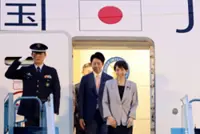
"We intend to establish economic security as a new axis of cooperation” in Vietnam, Takaichi told reporters Friday as she prepared to depart for Hanoi, highlighting that the country is key to its supply chains, including for medical supplies.
In recent years, Vietnam has overtaken China as a destination for Japanese investment, as the deterioration of Japan-China ties seeps into business sentiment.
Japan has been trying to shore up supply chains for critical minerals as it remains heavily dependent on China for rare earths, particularly when Beijing tightens export controls. Cooperation with Vietnam, home to world’s sixth-largest reserves, is seen as important for economic security.
The opportunity for economic cooperation goes both ways.
Vietnam has been seeking support from Japan and other countries for oil supplies. Ahead of the trip, Idemitsu Corp. said it would supply 4 million barrels of crude oil to Vietnam’s Nghi Son refinery at the request of Japanese government.
Vietnam and Japan upgraded ties to a comprehensive strategic partnership in 2023. Japan is Vietnam’s largest provider of official development assistance, third-largest investor and fourth-largest partner in tourism and trade. Bilateral trade reached $51.4 billion last year, Vietnam’s government said.
Japan is also Vietnam’s top labor partner with over 680,000 Vietnamese living in the country, making them the second-largest foreign community. Vietnam aims to train 500 semiconductor researchers at the PhD level by 2030, with Japan ultimately expected to host about half.
After Vietnam, Takaichi will head to Australia for further discussions.
While Takaichi visits Hanoi and Canberra, Japan’s defense minister Shinjiro Koizumi will stop by Indonesia and the Philippines. He will oversee the Japanese Self-Defence Forces’ first full participation in joint military exercises with the Philippines and the US, in line with the drive for deeper cooperation and stronger defense ties.
"FOIP is not about imposing anything on anyone. It has developed flexibly, accepting diverse voices and adapting to the changing times,” Takaichi said.
-- With assistance from James Mayger and Akemi Terukina. -- ©2026 Bloomberg