China’s first drone-carrying Type 076 amphibious assault ship, the Sichuan, began sea trials on Friday, according to state news agency Xinhua.
The ship, launched in December last year, is seen as a key asset for the PLA Navy’s unmanned aerial vehicle (UAV) operations because of its electromagnetic catapult launch system and is often described as the world’s first drone carrier.
The sea trial will test the reliability and stability of the engine and power system, Xinhua said.
Named after the southwestern Chinese province and bearing the hull number 51, the Sichuan’s launch and naming ceremony was held in December at Shanghai’s Hudong-Zhonghua shipyard.
The trials mark a significant milestone for the People’s Liberation Army’s naval force, which is expected to take delivery of the Sichuan by the end of next year.
This comes shortly after the official commissioning last week of the Fujian, China’s most advanced aircraft carrier and its first to be equipped with electromagnetic catapult technology.
The 076 warship is an upgrade over China’s first amphibious assault ship – the Type 075 – which was launched in September 2019 and went into service 19 months later.
Compared to its predecessor, the Sichuan has an increased full-load displacement of 50,000 tonnes and a larger flight deck with a length of around 260 metres (853ft) and a beam or width of 52 metres (171ft).
The Type 075 has a 40,000 tonne displacement and a 237 by 36 metre flight deck.
The extended flight deck makes the Type 076 one of the largest amphibious assault ships in the world – larger than the US America-class and Japan’s Izumo-class helicopter carriers.
Its size means the Sichuan can carry more aircraft within its internal hangar, and has additional launching space for them.
The Sichuan also stands apart from other amphibious assault ships by its incorporation of electromagnetic catapult and arresting gears – similar to China’s third aircraft carrier, the Fujian.
The catapult assisted take-off but arrested recovery (CATOBAR) system enables aircraft carriers to achieve higher sortie generation rates than their counterparts equipped with ski-jump ramps.
Only flat-top aircraft carriers have traditionally been outfitted with catapults, while amphibious assault ships have been limited to launching helicopters.
The Sichuan is likely to be the first amphibious assault ship equipped with a CATOBAR system and could host both helicopters and fixed-wing aircraft, which would possibly be UAVs.
The GJ-11 fixed-wing stealth UAV, which could be used for precision strikes and aerial reconnaissance missions, is expected to be one of the drones deployed on the Sichuan as it appears in the ship’s crest design.
Mock-ups of the aircraft were also spotted on board the Sichuan while it was still under construction.
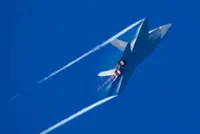
In the first footage of China’s crewed and uncrewed aircraft working together, released by the PLA Air Force on Wednesday, the GJ-11 was seen flying alongside and linked to the J-20 stealth fighter jet.
The drone carrier has become a significant naval trend around the world, with the emphasis on UAVs in modern warfare.
In July, South Korean lawmakers announced plans to scrap a proposed light aircraft carrier and instead build up to three 30,000 tonne drone carriers.
In February, the Iranian military reportedly took delivery of its first drone carrier, the Shahid Beheshti, reconstructed from a former container vessel. -- SOUTH CHINA MORNING POST