Last year, as the European Union’s 27 members prepared to vote on whether to impose tariffs on Chinese-made electric vehicles, US diplomats hit the phones.
Washington mounted a pressure campaign to ensure EU countries did not waver under a counter campaign from Beijing to vote down Brussels’ proposed tariffs.
Chinese officials were dangling the carrot of lucrative investments for those opposing the duties, as well as the stick of retaliatory investigations into goods like pork, brandy and dairy that would disproportionately affect those who voted in favour.
Do you have questions about the biggest topics and trends from around the world? Get the answers with SCMP Knowledge, our new platform of curated content with explainers, FAQs, analyses and infographics brought to you by our award-winning team.
In the run-up to the vote, analysts created countless charts to predict where each capital would land in the EU’s complex voting system, weighing how susceptible they were to Beijing’s retaliation against whether they could benefit from the EV tariffs.
In the end, the vote passed comfortably and tariffs are now in place. But the prolonged episode showed how vulnerable the bloc is to superpower influence – and the fragility of EU unity.
Barely half a year later, the unity is being tested again, but with a twist: Europe is turning some of the weapons it had trained on Beijing towards Washington for potential use in the erstwhile allies’ worsening trade war.
This time the pressure to hold fire is even greater – and now it is coming from Washington.
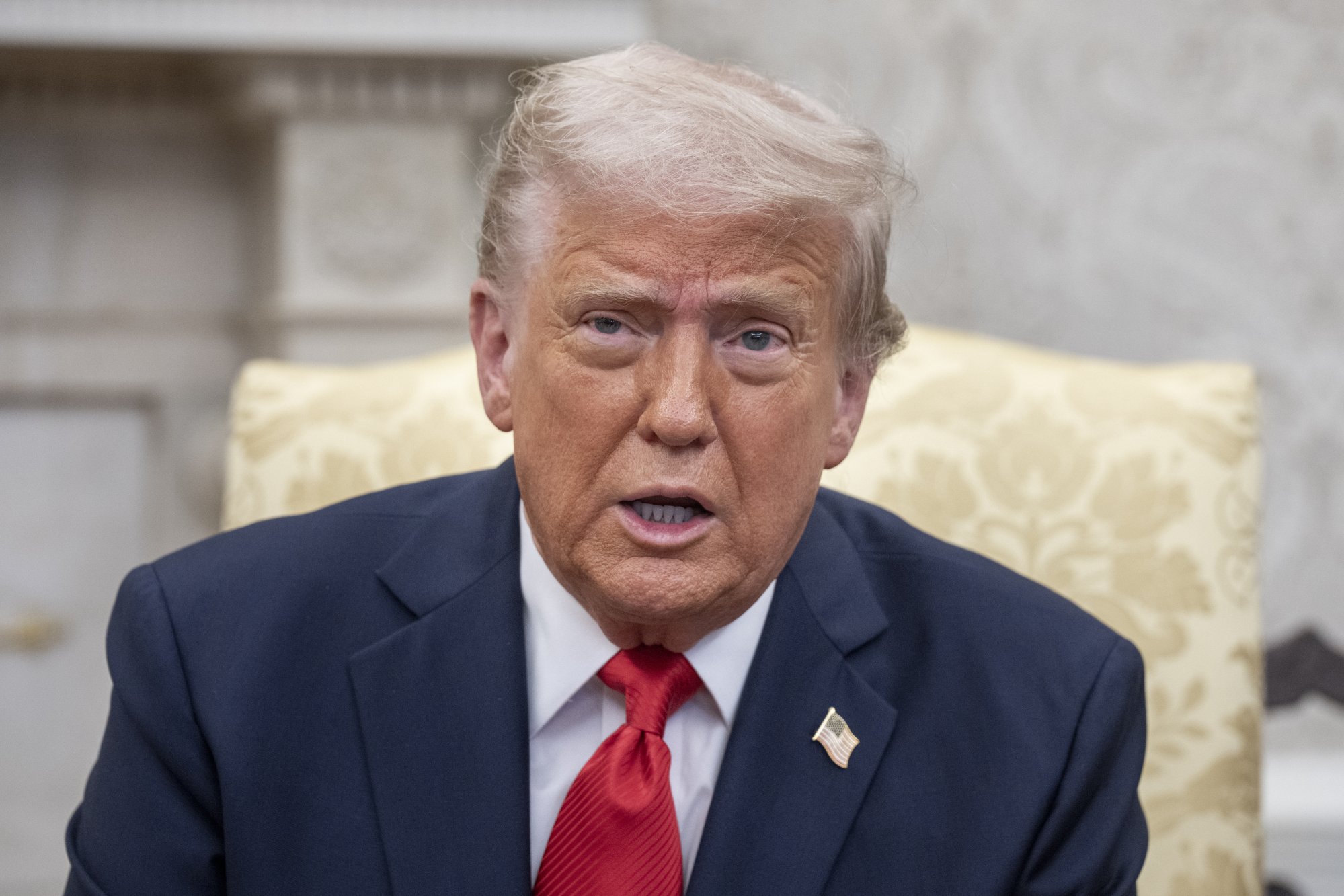
US President Donald Trump has threatened untold consequences if Europe dares retaliate, leading some to observe that the bloc’s experiences with China last year may have provided an unlikely dry run for dealing with the two-time American president.
“When Europe’s economic security interests clash with the two superpowers, member states quickly fracture into camps,” said Tobias Gehrke of the European Council on Foreign Relations.
The challenge for a union of 27 different countries is that each has its own national interests, at risk of being peeled off from the group with a promise or threat.
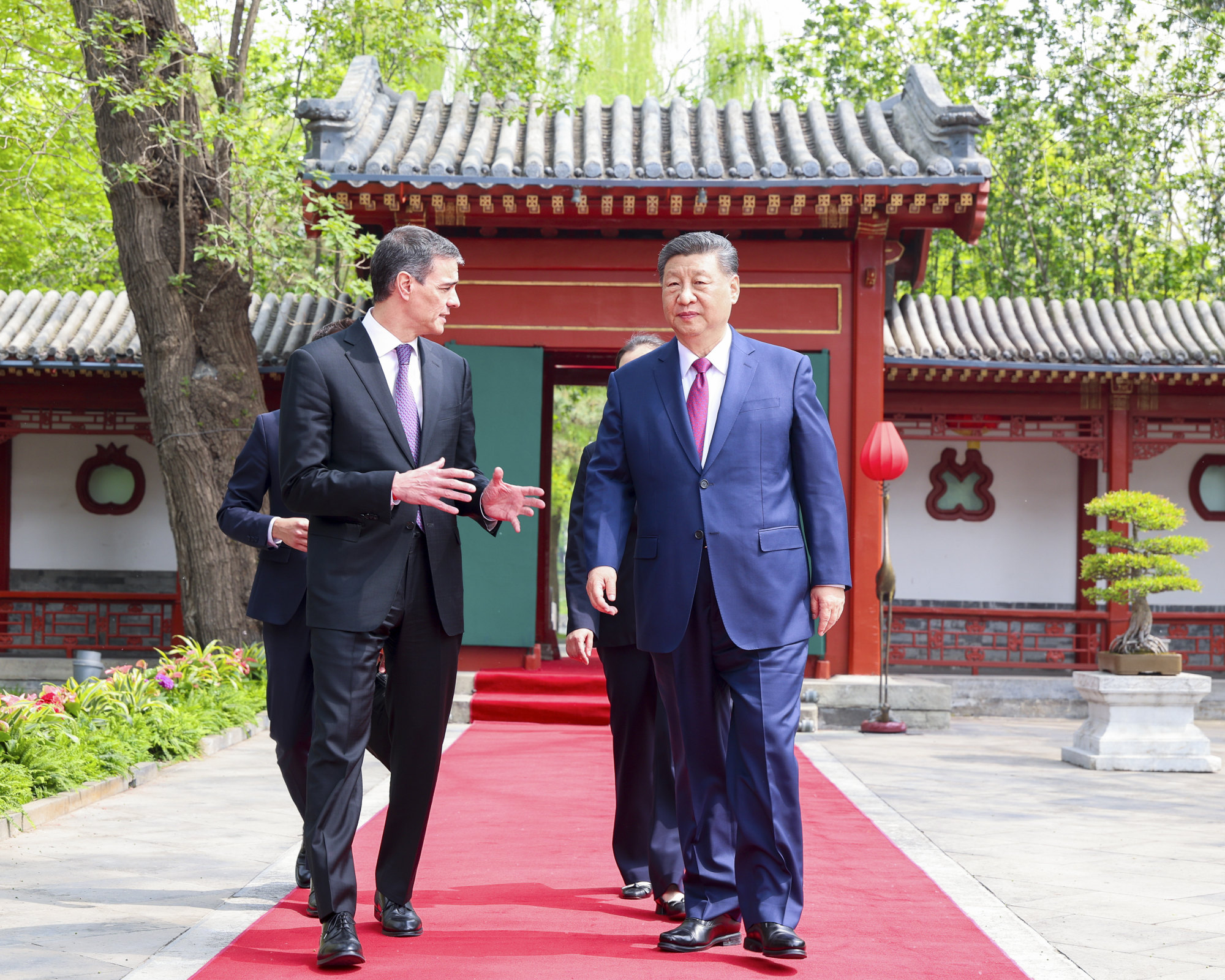
On the Chinese EV vote, Spain flipped from a vote in favour to an abstention after its prime minister, Pedro Sanchez, went to China and was threatened with a moratorium on investing in the Spanish economy, while Beijing launched a trade investigation into pork imports that would hit Spanish farmers hardest.
Germany, the EU’s biggest economy and its largest trader with China, was the most vocal opponent of the duties. Its companies feared retaliation in the form of tariffs and unfavourable treatment in China.
“Another 12 member states chose silence, abstaining from the vote and letting the [EU] Commission take the heat,” Gehrke recalled.
“In the debate over retaliating against US tariffs, coalitions reshuffle again. While European unity appears solid from afar, some cracks appear upon closer inspection.”
Brussels officially ceased all forms of retaliation against the US after Trump paused and reduced his “reciprocal tariffs” for everyone but China, meaning EU exporters will pay 10 per cent rather than 20 per cent.
But EU capitals still want to ensure their own companies are not disadvantaged in a tit-for-tat trade war. Trump’s 145 per cent tariffs on Chinese goods in response to Beijing’s retaliation have given some in Europe pause for thought.
These divisions were on full view last week. Members voted to adopt retaliatory tariffs against Trump’s steel and aluminium duties, but they have clashed as the conversation has turned to the next steps.
Some members, including France and Germany, pushed to deploy the anti-coercion instrument (ACI), the EU’s “trade bazooka” allowing it to target the US tech sector, for the first time.
The ACI was conceived in 2021 as a means of countering Trump’s first-term tariffs. It gained traction among EU members following China’s economic coercion of Lithuania later that year in a row over Taiwan.
“The whole China story has moved the debate on the ACI forward a lot,” said Etienne Hora of the Bertelsmann Stiftung, a German think tank, who suggested that the weapons adoption would have been less rapid had China not been a factor.
“If we had not had this mental exercise, talking about China, I think we would not be in the same place that we are now.”
Cecilia Malmstrom, the former EU trade commissioner, described the ACI as “a powerful tool that could cause severe pain for American companies if imposed”.
“But wouldn’t it be ironic if an instrument created to address unfair trade and coercion by China would for the first time be used against the United States?” she asked in a note for the Peterson Institute of International Economics, an American think tank.
As the retaliation debate develops, analysts have once again started publishing detailed charts, now looking at each country’s US ties.
The aim is to find out which could be vulnerable to being picked off by a superpower – this time, Trump – as the bloc mulls firing its bazooka.
Among the strongest opponents are Ireland, corporate home to many US tech giants, and the Baltic states, which depend on Washington for security guarantees.
“If you were to get into that space, it would be an extraordinary escalation at a time when we must be working for de-escalation,” said Irish Foreign Minister Simon Harris last week.
“It is the nuclear option, if you start talking about the use of the anti-coercion instrument.”
Lithuania’s top envoy, Kęstutis Budrys said “we don’t want to rush to use” the tool.
“We know we have it, the US knows we have ACI, but we don’t have to use it right now. We should keep it as an option,” Budrys added.
“Lithuania was one of the reasons it was created because of economic coercion from China, so we have to keep it, but we don’t want to rush to use it.”
The dynamics will be familiar to those who have followed the EU’s lack of unity on China down the years, with Beijing often accused by Brussels of trying to “divide and conquer” the bloc.
They also reflect a suspicion held by many that the world’s two superpowers are becoming more alike and that experience in dealing with one may be helpful in dealing with the other.
“If we are to discuss a changing China, we cannot do this without reflecting on a changing US,” said Arancha Gonzalez, the former Spanish foreign minister, at an event in Paris last week.
Gonzalez saw similarities with China in Trump’s “authoritarian” bent, the “very personalised style of leadership”, the “weakening of the checks and balances”, the “blurring of the public space, the private space and the state space” and the “rise of very conservative values”.
“What we can observe is that maybe this ideological closeness is leading this discussion in the direction of more of a great-power competition rather than a competition for imposing a certain model of ideology, a certain vision of democracy or not, or protection of human rights or not,” Gonzalez said.
“It’s more about winning the race than imposing a model.”
More from South China Morning Post:
- Faced with Donald Trump’s hostility, is the European Union pivoting towards China?
- US, EU, German business chambers in China brace for ‘long-lasting’ trade war
- China never backs down when faced with ‘unreasonable’ behaviour, Xi Jinping warns
- EU senses more leverage over Beijing as US and China wage superpower trade war
- EU leaders plan trip to Beijing in July for summit with Xi Jinping
For the latest news from the South China Morning Post download our mobile app. Copyright 2025.
Already a subscriber? Log in
Get 20% OFF The Star Digital Access
Cancel anytime. Ad-free. Unlimited access with perks.