



Chinese tourists are expected to be among the hardest hit by Japan’s fivefold visa fee increase, a move analysts warned could further strain already tense relations between Beijing and Tokyo.
For the first time since 1978, the Japanese government has decided to raise visa fees. The cost of a single-entry visa will increase from 3,000 yen (US$18.54) to 15,000 yen, while multiple-entry visas will jump from 6,000 yen to 30,000 yen.
The new policy, which will come into effect on July 1, has been widely seen as Tokyo’s response to inflation and the yen’s depreciation. The change will bring Japan’s visa fees closer to the levels of its developed counterparts, including those in Europe.
Of Japan’s top five inbound tourism markets so far this year, mainland China is the only one whose travellers are required to obtain a visa.
An industry insider in Beijing said the cost surge would primarily affect single-entry applicants, noting that those seeking multiple-entry status already faced a high financial threshold, including proving a minimum annual income of 200,000 yuan (US$29,500).
“For multiple-entry applicants, these cost spikes are unlikely to tip the scales when planning a trip,” the source said.
To cope with overtourism, Japan will triple its international departure tax from 1,000 yen to 3,000 yen starting on July 1.
For other travellers from China, the real hurdle lies elsewhere.
Kyle Zhang, a resident of the southwestern city of Chengdu, said her travel plans to Japan had stalled because of a lack of flight options and soaring airfares, rather than visa policies.
There is just one direct flight connecting Chengdu, a city of over 21 million people, to Tokyo – and a one-way ticket costs upwards of 3,000 yuan.
“I have no plans to travel right now simply because the tickets are too expensive,” Zhang said.
Zhang said she would make the trip if airfares fell from their current peaks.
“It is what it is. At the end of the day, it’s their call,” she said.
China has scrapped nearly 9,000 flights to Japan so far this year amid a protracted diplomatic row with Tokyo, according to Chinese media reports and calculations by the South China Morning Post.
In May alone, 1,592 flights between the two countries were cancelled, Shanghai-based media outlet Yicai reported, citing figures from data platform DAST. Meanwhile, the number of Chinese visitors plunged 60.4 per cent year on year to 313,000, data from the Japan National Tourism Organisation showed.
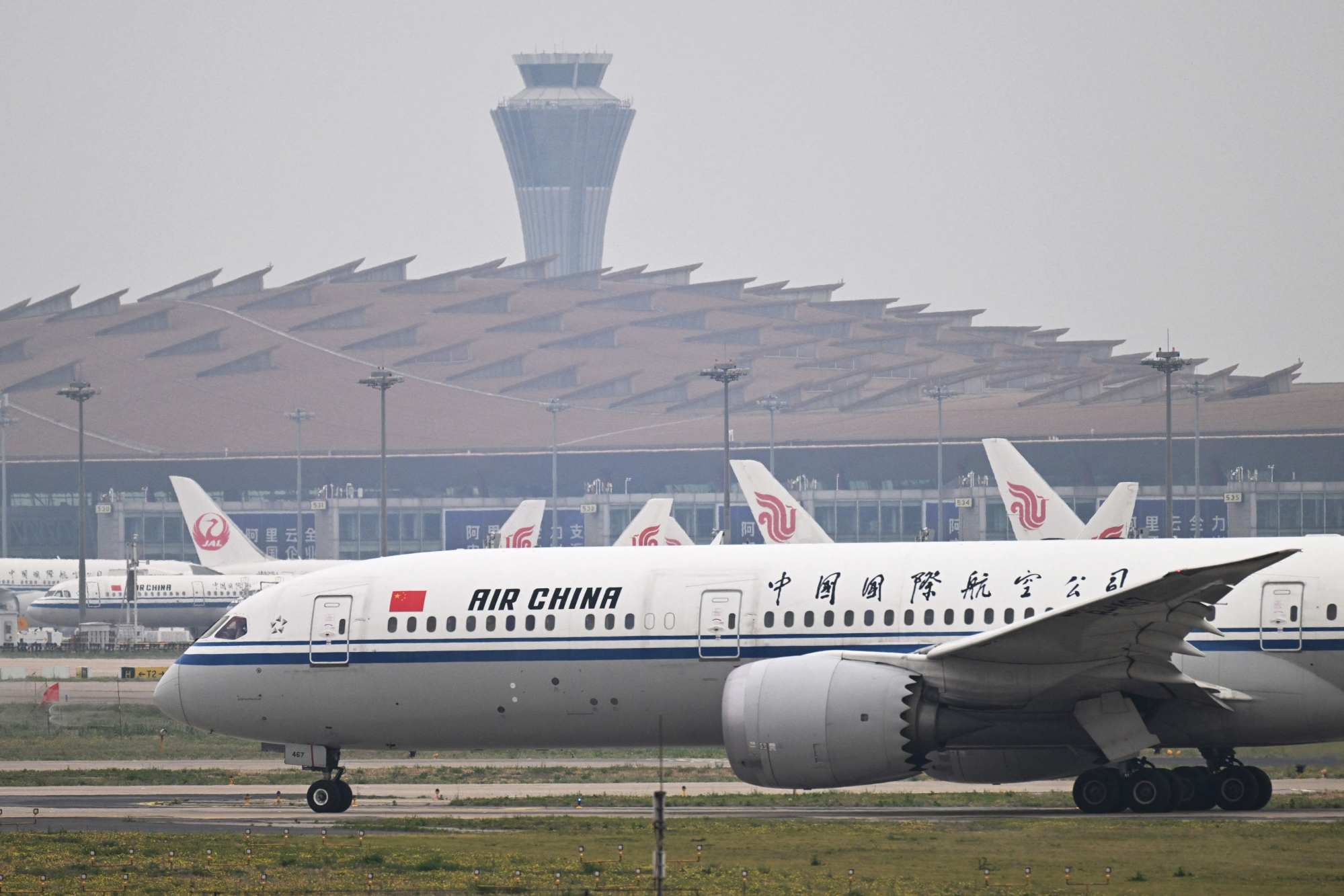
Despite the sharp drop in travel, airlines and cruise operators appear to be hoping for a rebound. Starting next month, Air China will introduce widebody planes to key routes connecting China and Japan, including flights serving Beijing, Shanghai, Tokyo and Osaka, according to information gathered from Trip.com, China’s biggest online travel agency.
Chinese cruise operator Adora Cruises has reinstated its Japan-bound itineraries with port calls in Okinawa starting in December. Royal Caribbean has also adjusted at least three planned sailings between August and October, replacing scheduled stops in South Korea with destinations in Japan, according to the latest official information from the cruise line.
Air China and Adora Cruises did not immediately respond to inquiries from the SCMP. Royal Caribbean said in an email that route changes were part of its routine adjustments.
Though Japan’s visa fee increase does not explicitly target Chinese tourists, it will inevitably weigh on bilateral relations, according to Chen Yang, a research fellow at the Charhar Institute, a Beijing-based think tank.
He noted the measure could prompt price-sensitive Chinese travellers to cut back on short-term or first-time trips, hindering critical opportunities for ordinary citizens on both sides to meet and build mutual understanding.
“While this may affect people-to-people exchanges, it will also, over time, affect the development of China-Japan relations,” warned Chen, who is also a visiting research fellow at Liaoning University’s Institute of Japan Studies.
He added that wariness towards Japan had been rising in Chinese society following Japanese Prime Minister Sanae Takaichi’s controversial remarks on Taiwan – which sent Beijing-Tokyo relations to their lowest point in decades – as well as her administration’s policy moves on security, defence and immigration.
In November, Takaichi suggested that a conflict over Taiwan could be seen as a “survival-threatening situation” for Japan, which could allow Tokyo to deploy its self-defence forces. She has since refused to retract her comments.
Chen said that against this backdrop, Japan’s visa fee increase could be seen as an attempt to raise the bar against Chinese tourists.
“Such an interpretation may not reflect the policy’s actual purpose, but it can easily generate negative associations in the public discourse and further affect the emotional foundation between the two peoples,” he said.
Chen warned that a potential drop in mainland Chinese tourists due to rising visa fees could also economically squeeze Japanese local governments, cooling their long-standing enthusiasm and influence in promoting subnational cooperation with China.
However, Chen noted that Japan’s visa fee increase was primarily driven by domestic considerations, including efforts to address overtourism.
“What will truly shape or determine the future trajectory of China-Japan relations is whether Takaichi can retract her remarks on Taiwan, whether Japan can respect China’s core interests, and whether Japan can undertake meaningful reflection on historical issues,” he said. -- SOUTH CHINA MORNING POST
