
Hong Kong’s shipping sector has “a lot of catching up to do” in terms of its environmental efforts, especially given fast-changing regulations and technology advances, according to an industry body.
The sector has done well, however, when it comes to driving higher value services even as its global ranking for container port traffic has slipped, the head of the Hong Kong Shipowners Association said.
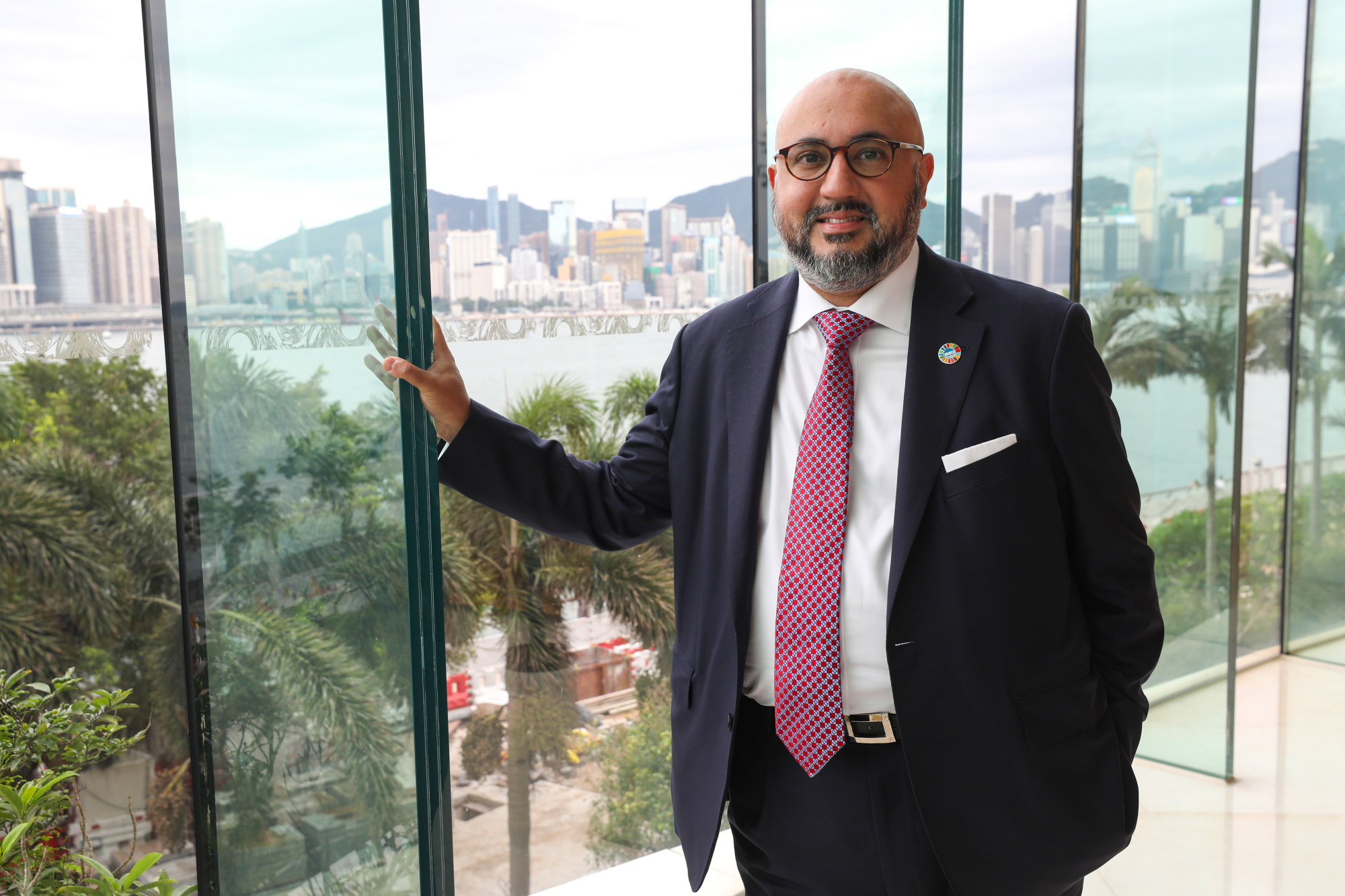
“Hong Kong is right on track on higher value maritime services as the number of companies in the sector has risen to 1,200 from around 850 before the Covid-19 pandemic, and the number of shipowners in the city has also increased,” said chairman Angad Banga.
Do you have questions about the biggest topics and trends from around the world? Get the answers with SCMP Knowledge, our new platform of curated content with explainers, FAQs, analyses and infographics brought to you by our award-winning team.
“On the green side of things, we are slower to the game and have a lot of catching up to do to get us back on track. The government’s action plan on maritime and port development announced late last year will help us to get there.”
He was speaking in an interview on the sidelines of an international conference organised by the Asian Shipowners Association on Tuesday.
Despite declining container port throughput, Hong Kong has great opportunities to transition from its historical roots and strengths in the maritime industry into more value-added services like ship management, brokering, insurance, besides legal and arbitration services, he said.
Its advantages in those areas stem from its role as a gateway to China, which has the world’s biggest shipbuilding industry and owns the largest fleet of vessels.
Having ranked as the world’s top container port for most of the period from 1987 to 2004, Hong Kong last year failed for the first time to make the top 10, knocked into 11th place by Dubai’s Jebel Ali port, according to shipping data provider Alphaliner.
In December the government unveiled an action plan on maritime and port development to enhance industry competitiveness and high-value services capacity through decarbonisation initiatives, digitalisation of processes, tax concessions and collaboration with overseas partners and neighbouring cities in Guangdong province.
Banga said the government’s strategy on procuring greener marine fuel by being open to various lower carbon fuels – pursuing liquefied natural gas as a transition fuel while exploring the feasibility of using green methanol to power vessels – is the right move.
Flexibility is needed given it is possible that in the future, different types of vessels plying their trade on different routes may end up using different transition fuels because of costs and availability considerations, he noted.
That is despite the fact that such a strategy may necessitate the establishment of two sets of bunkering infrastructure, which will add to costs.
“Right now it is too early to tell which alternative fuel is going to win the race,” he said. “No shipowner or government around the world is putting all their eggs in one basket.”
Hong Kong, a free port, has the advantage of being close to a rising supply of green methanol in mainland China, while also having access to other potential sources of environmentally friendly fuels overseas if they can be imported and used cost effectively and safely, he said.
However, to realise the government’s goal of turning Hong Kong into a high-quality green fuel bunkering centre, finding suitable land in the city or neighbouring cities in Guangdong to store the fuels will be key, he added.
To accelerate the decarbonisation of the industry, he said all stakeholders including various government departments, shipowners, fuel suppliers, bunkering infrastructure providers and port operators need to be brought together to collaborate, and one government body needs to take responsibility for driving results.
Meanwhile, the International Maritime Organisation (IMO), a United Nations agency, and the International Chamber of Shipping are deliberating over several proposed global mechanisms to put a price on the industry’s greenhouse gas emissions, said IMO secretary general Arsenio Dominguez.
“Now the focus is on what will be the cost impact of these measures ... we are working on 20 scenarios,” he said, adding that the study’s findings will be presented to the IMO’s marine environment protection committee at the end of September.
Last summer, the IMO committed its 175 member nations to net-zero greenhouse gas emissions by 2050, with a target to slash emissions per unit of transport work by at least 40 per cent by 2030 compared with 2008 levels. Additionally, it aims to boost the industry’s uptake of near zero-emission fuels to at least 5 per cent by the end of the decade.
The IMO was also tasked with coming up with common technical standards for green bunker fuel and a unified mechanism to impose a cost on emissions to create a level playing field globally.
More from South China Morning Post:
- World shipping sector’s green fuel adoption puts cart before horse as supply struggles to keep pace
- Green shipping: China Merchants to build emission-cutting propulsion system for UK-based BAR Tech
- Greener shipping: lack of infrastructure, incentives is hindering projects to capture and store vessels’ carbon emissions, says Hong Kong shipowner
- Greener shipping: why China will help drive the global cargo industry’s adoption of wind power to cut carbon emissions
- Climate change: launch of biofuel blended shipping fuel by Hong Kong firm is just the start of the search for the ultimate green solution
For the latest news from the South China Morning Post download our mobile app. Copyright 2024.