
HAVE you ever noticed bubbles in the toilet bowl after urinating? One may shrug it off and not think much about it.
However, it could be an early sign of kidney trouble.
It starts as a tiny leak – frothy urine
“The kidney is an amazing organ that acts like a smart water purifier,” states consultant nephrologist and internal medicine physician Dr Yeo Geok Ping.
A single kidney contains millions of tiny structures called nephrons and in these nephrons are the body’s filters, a network of tiny vessels called the glomerulus. The glomerulus removes toxins, excess salt, water and minerals, while retaining useful components, such as protein.
“Cellular pumps in the glomerulus act like toll gates, determining what is removed or retained based on molecular size and charge,” explains Dr Nur Hidayati Mohd Sherif, consultant nephrologist and internal medicine physician.
When the kidney is injured, this filtration is affected and toxins are retained in the blood.
Additionally, nutrients that should have been retained, like protein, end up leaking out through the urine.
Kidney damage can be acute or chronic. Acute kidney damage is usually temporary and can be caused by dehydration, excessive use of painkillers, or infection.
In chronic kidney disease (CKD), however, the damage to the kidneys is irreversible.
Early signs of CKD bubbling to the surface
Proteinuria begins as microalbuminuria, where small amounts of protein leak into urine.
This amount does not present physical signs and is only detected through a urine test. With time, the undetected kidney damage worsens and more protein leaks into the urine.
The protein interacts with air to create bubbles in the urine and forms frothy urine.
“In Malaysia, diabetes is the leading cause of CKD in patients needing dialysis, followed by hypertension,” shares Dr Yeo.
Experts recommend that patients with diabetes and hypertension have regular urine screening.
Poorly controlled diabetes damages the glomerulus, and when coupled with hypertension, this damage is further intensified.
Frothy urine does not always mean CKD. It can occur temporarily during pregnancy, dehydration or infections.
These episodes of proteinuria are not permanent. Dr Yeo and Dr Hidayati recommend checking with healthcare providers to investigate any urine abnormalities.
Proteinuria is more than just a marker for CKD
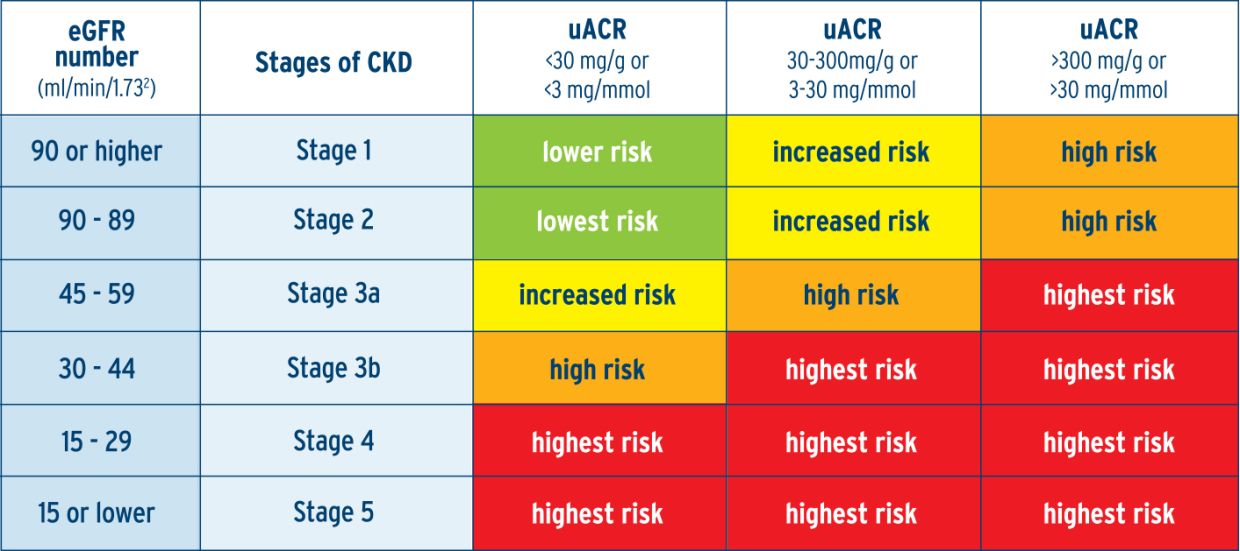
Proteinuria is confirmed through a urine test, namely urine albumin-to-creatinine ratio (uACR), from which the degree of protein loss is calculated.
Combined with estimated Glomerular Filtration Rate (eGFR) numbers, derived from a blood test, nephrologists can determine a patient’s CKD severity (Figure 1).
For instance, a patient goes to his healthcare provider for testing and the results indicate 200 mg/g of proteinuria and an eGFR of 50.
This would indicate that the patient is at CKD Stage 3a with a "high risk" of his CKD worsening.
Lowering the levels of proteinuria helps reduce the risk of CKD progressing further.
“Early detection of proteinuria is important in order to have early intervention,” highlights Dr Hidayati.
“Unfortunately, the reality is that patients only check on their kidney health when they have symptoms.”
Plugging the leak with the right diet and therapy
In CKD, steps can be taken to reduce proteinuria. In addition to controlling their blood sugar levels and blood pressure, patients should adopt a kidney-friendly diet.
“With the right guidance, a low protein diet (LPD) is usually easy to adopt,” shares Dr Yeo.
Working closely with a dietician helps patients manage their diets properly to ensure they can adhere to their diets and get proper nutrition.
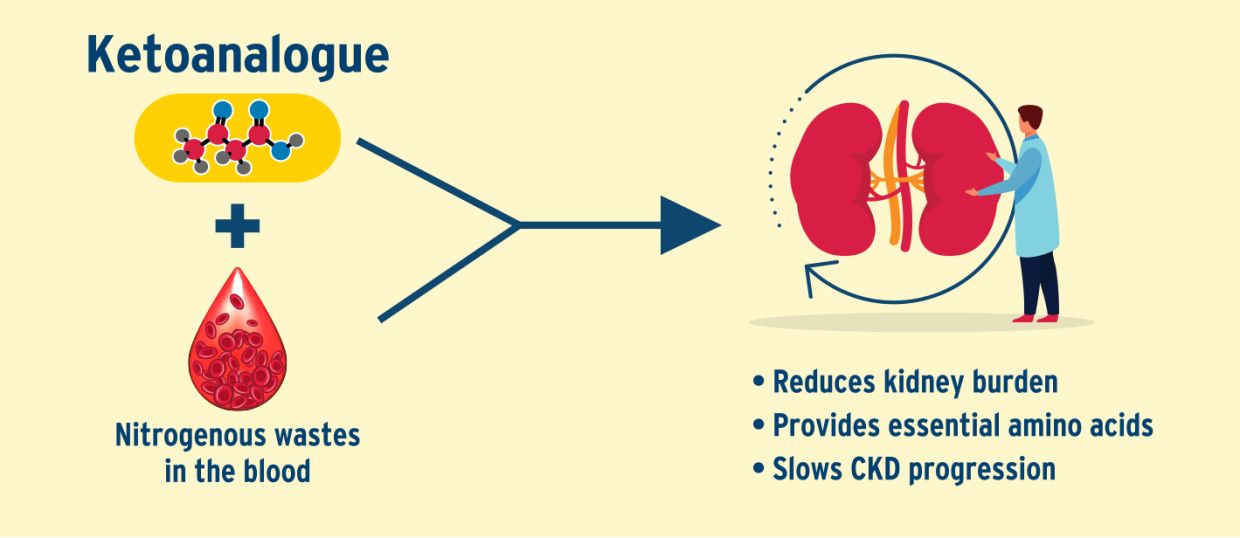
Studies show that combining a LPD with ketoanalogues therapy (KAT) reduces proteinuria in CKD patients.
Ketoanalogues are nitrogen-free substitutes of essential amino acids that convert nitrogenous wastes in the blood, such as urea, into essential amino acids for the body, thereby reducing the burden on the kidneys.
In doing so, combining LPD and KAT helps slow CKD progression and delay the onset of dialysis.
How to safeguard kidney health
Dr Yeo advises:
- Keep an eye on your kidney health - it matters more than you think
- Healthy adults should have an annual medical check-up. Those at risk of CKD (such as those with diabetes or hypertension) should do an annual check-up
- Adopt a healthy lifestyle with sufficient exercise and adequate hydration
- Be careful with supplements. Always consult with a healthcare provider before taking them
Dr Nur shares:
- Do not wait until it’s too late to check for CKD. Keep that in check, or else you will need dialysis
- Know your risk factors and always adhere to your medication and doctor follow-ups
- Adopt a kidney-friendly diet – low in protein, sodium and sugar, and balanced with vegetables and fruits.
- Stop smoking and limit alcohol intake. Keep at your ideal weight and exercise regularly
For more information, visit the website.