


The Code 11.59 by Audemars Piguet Selfwinding Flying Tourbillon is presented in a stylised two-tone case design interweaving black ceramic with 18-carat white gold for a powerful contrast. — Photos: Audemars Piguet
Audemars Piguet just introduced three impressive additions to the Code 11.59 by Audemars Piguet collection, showcasing its savoir-faire and craftsmanship.
This year, while Swiss Haute Horlogerie manufacturer Audemars Piguet is celebrating its Royal Oak 50th Anniversary, the luxury timepiece brand has surprised their clients and watch enthusiasts with three brand new Code 11.59 by Audemars Piguet complication timepieces.
The first is the new Code 11.59 by Audemars Piguet Selfwinding Flying Tourbillon presented in an elegant black onyx dial that is created by blending advanced technology and time-honoured tradition.
For the first time, with a case combining 18-carat white gold with a vibrant blue ceramic that houses the Calibre 2948, the Code 11.59 by Audemars Piguet Tourbillon Openworked reflects the expertise of the Manufacture’s craftspeople, pushing the art of openworking to new levels.
The third innovation is the Code 11.59 by Audemars Piguet Flying Tourbillon Chronograph that comes in 18-carat pink gold and black ceramic, and a complicated mechanism that is the result of meticulous craftsmanship.
Both the Tourbillon Openworked and Selfwinding Flying Tourbillon Chronograph models are exclusively limited to 50 pieces each.
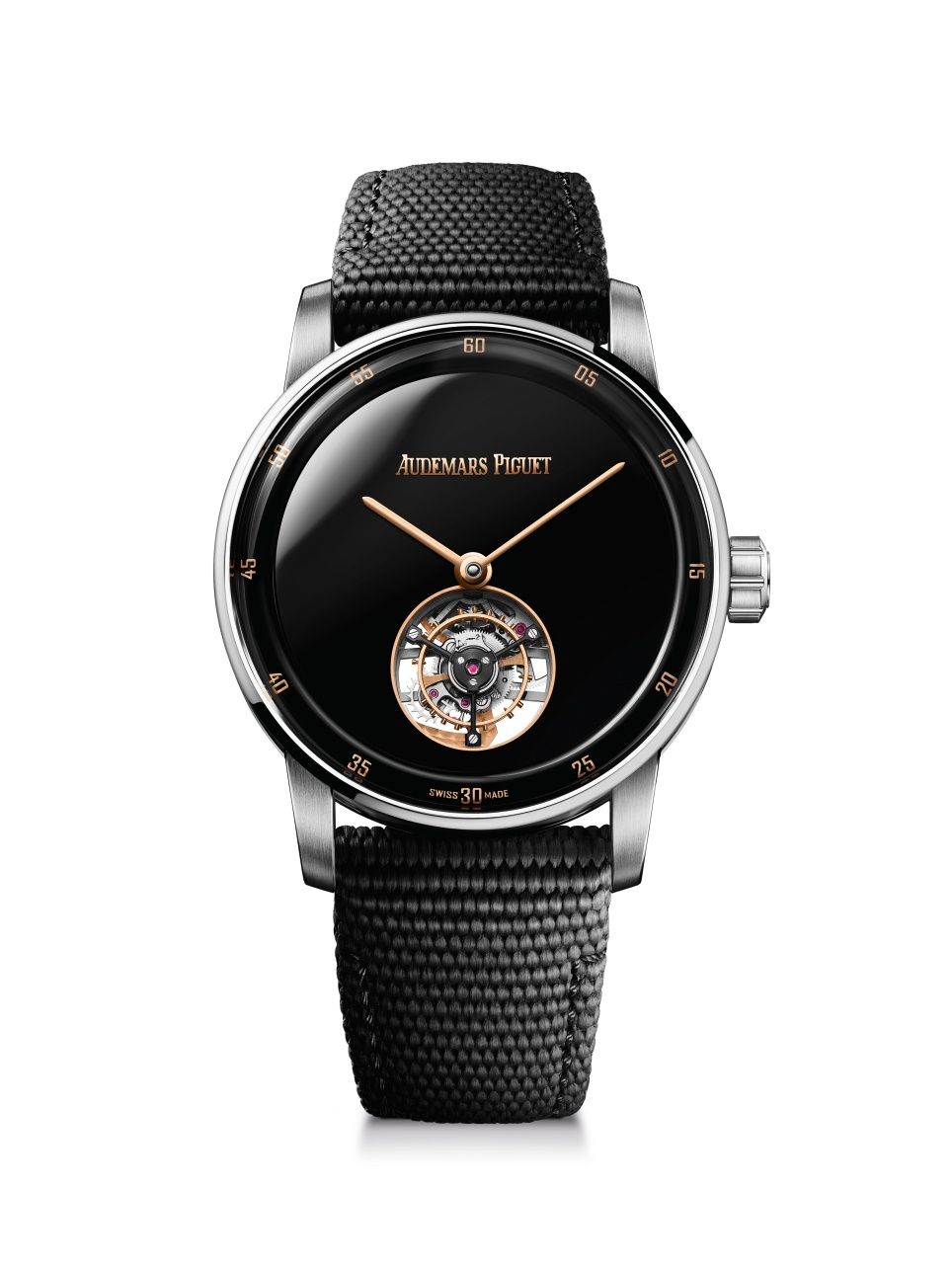 The latest Code 11.59 by Audemars Piguet Selfwinding Flying Tourbillon enriched with a black onyx dial.
Code 11.59 by Audemars Piguet Selfwinding Flying Tourbillon
The new Code 11.59 by Audemars Piguet Selfwinding Flying Tourbillon, with a contemporary black rubber-coated strap, gives pride of place to the black onyx dial, whose purity is highlighted by the absence of hour-markers. This stone dial has been crafted in collaboration with long-term partner Someco, a company specialised in dial manufacturing since 1966 and located in La Chaux-de-Fonds.
Carved out of a single black onyx stone, the dial has then been cut into a thin disc, ground, sanded and polished to perfection before being inserted into the dial’s pinkgold-toned brass base plate.
The overall minimalist design is enriched with pink gold accents, including pink gold hands and a discreet pink-gold-toned minute track printed on the black lacquered inner bezel.
Lastly, the flying tourbillon cage, encircled by a delicate pink-gold-toned thread, matching with the balance wheel pulsating within, makes its rotations at 6 o’clock.
For the first time, the top bridge of the flying tourbillon cage has been finished with black PVD in an echo to the dial’s colour.
Two-tone case aesthetic
The Selfwinding Flying Tourbillon is endowed with a contemporary two-tone case design. While the bezel, lugs and caseback are crafted in 18-carat white gold, the octagonal case middle is honed from black ceramic. First introduced on the Code 11.59 by Audemars Piguet Selfwinding Chronograph in 2021, this two-tone case aesthetic makes its debut this year on some of the collection’s complicated models.
Blending advanced technology and time-honoured tradition, the case required complex programming, dedicated tools and highly specialised human talents for its industrialisation and the hand finishing of its components. The ceramic case middle has been crafted in collaboration with Bangerter, a Swiss family-owned company specialised in the manufacturing of precision components made of advanced ceramics, tungsten carbide and other super hard materials.
Balancing tradition and modernity
As previous iterations, this new model is powered by selfwinding Calibre 2950. While the flying tourbillon made its appearance in 2018 in the Royal Oak Concept collection, the Code 11.59 by Audemars Piguet first introduced this prestigious mechanism coupled with a central rotor in 2019.
Visible on the dial and through the sapphire caseback, the flying tourbillon cage defies gravity by constantly rotating on itself while offering an unobstructed view of some of the watch’s regulating components. The flying tourbillon’s absence of bridges also furthers the dial’s minimalist aesthetic.
The timepiece’s sapphire caseback reveals the collection’s dedicated 22-carat pink gold oscillating weight and the refined finishing adorning Calibre 2950, including Cetes de Geneve, traits tirs, snailing and circular graining, among other techniques.
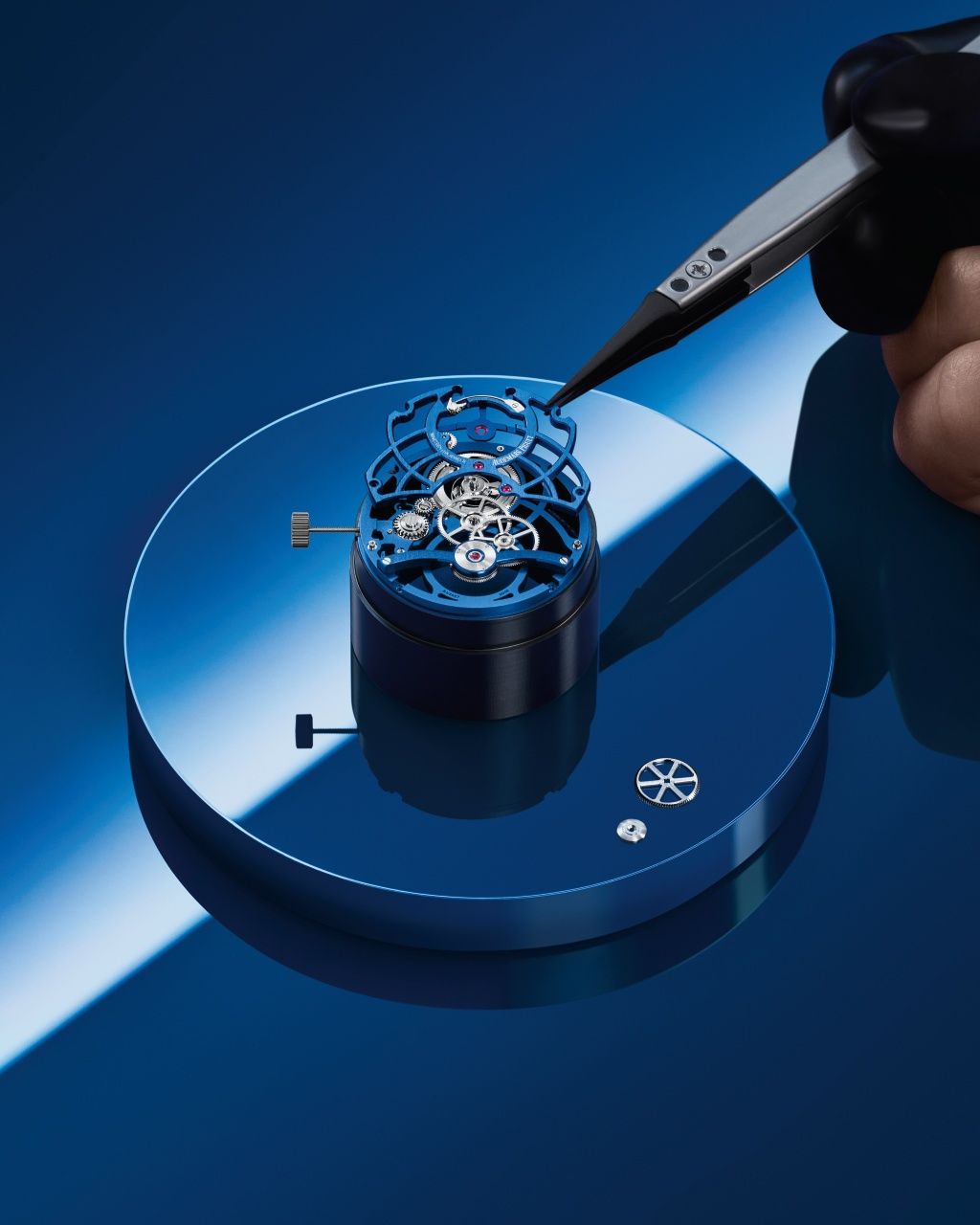 The new Tourbillon Openworked showcases the talents and dedication of Audemars Piguet artisans in hand finishing.
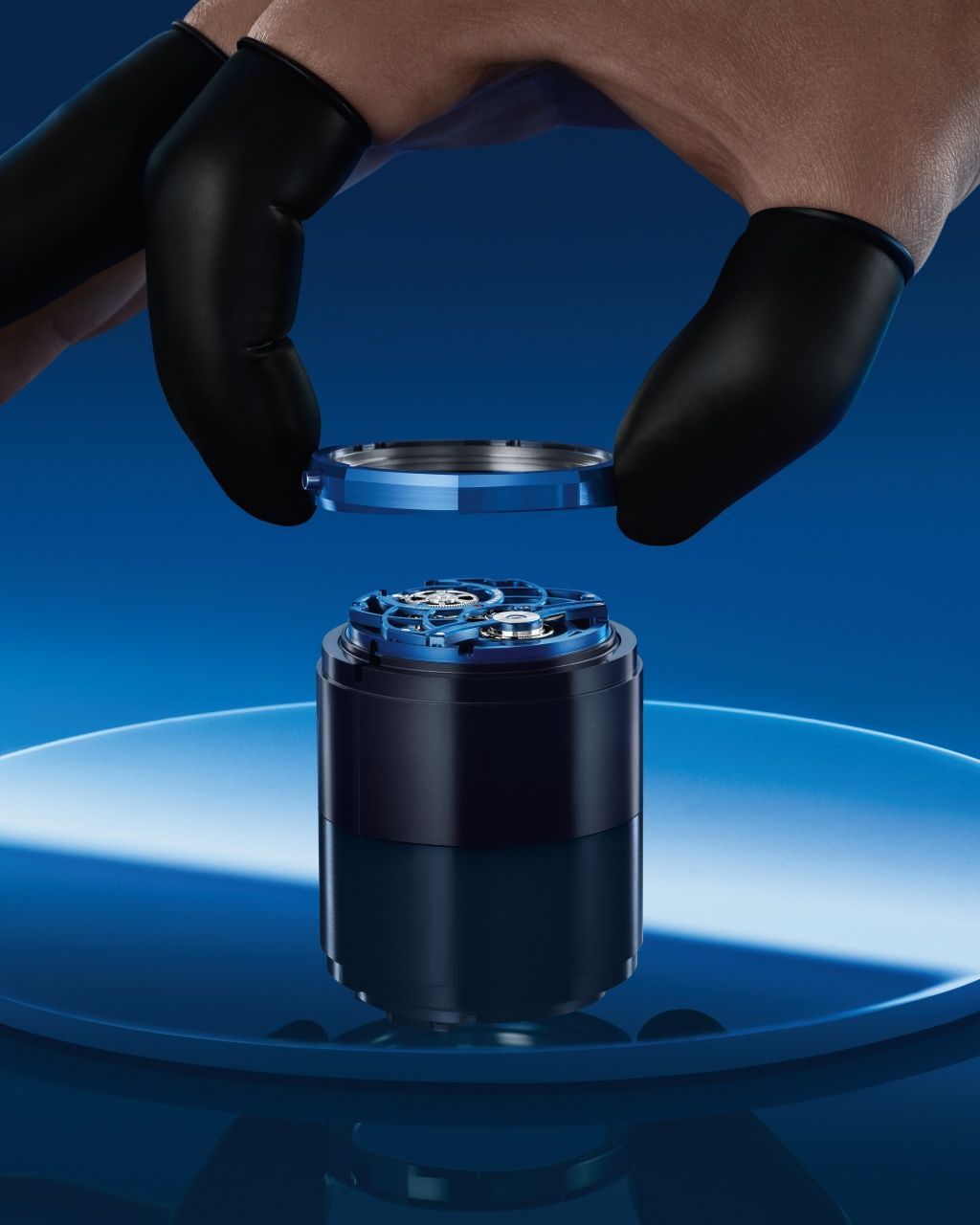 Skilfully assembling the Code 11.59 by Audemars Piguet Tourbillon Openworked.
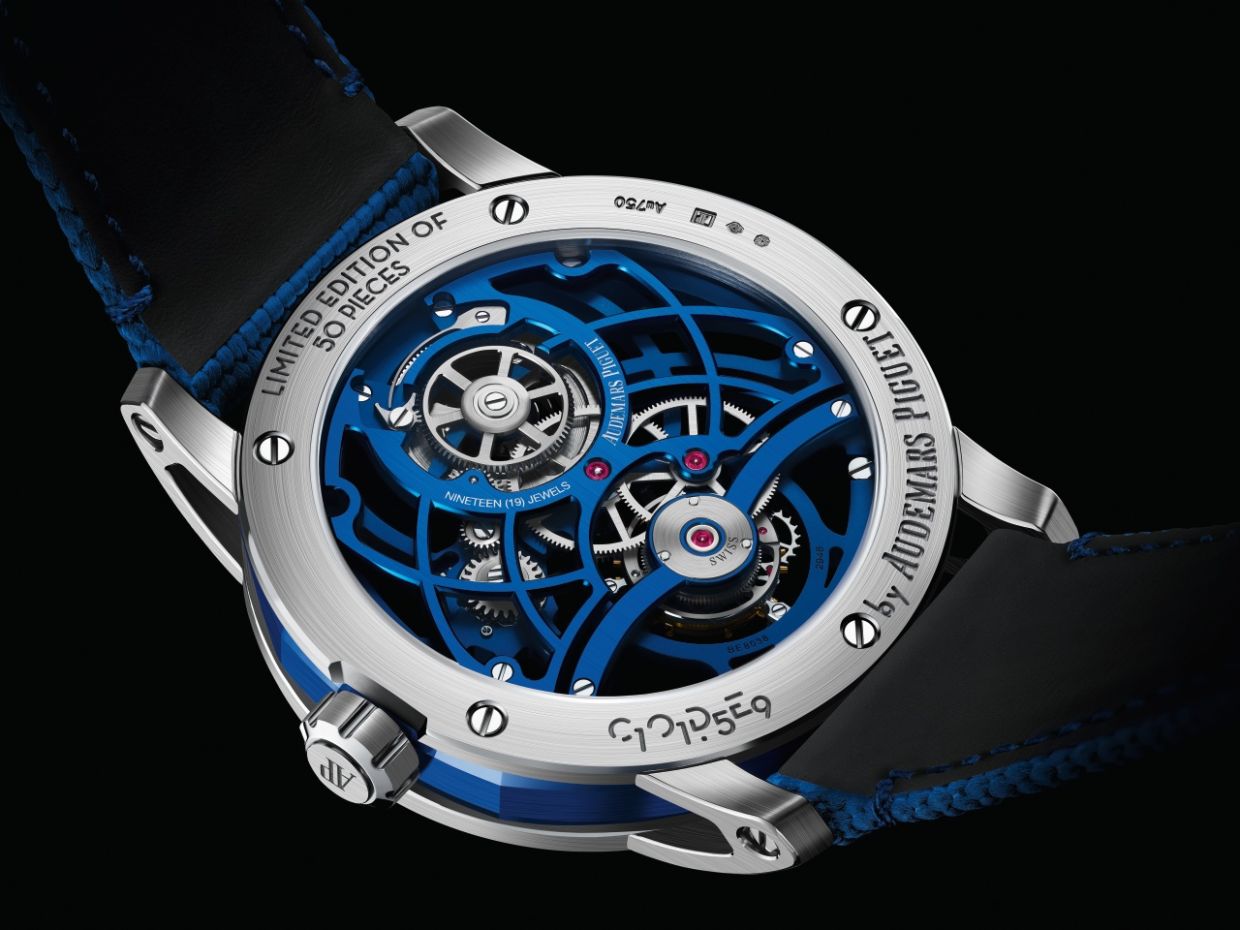 Backcase of the Code 11.59 by Audemars Piguet Tourbillon Openworked.
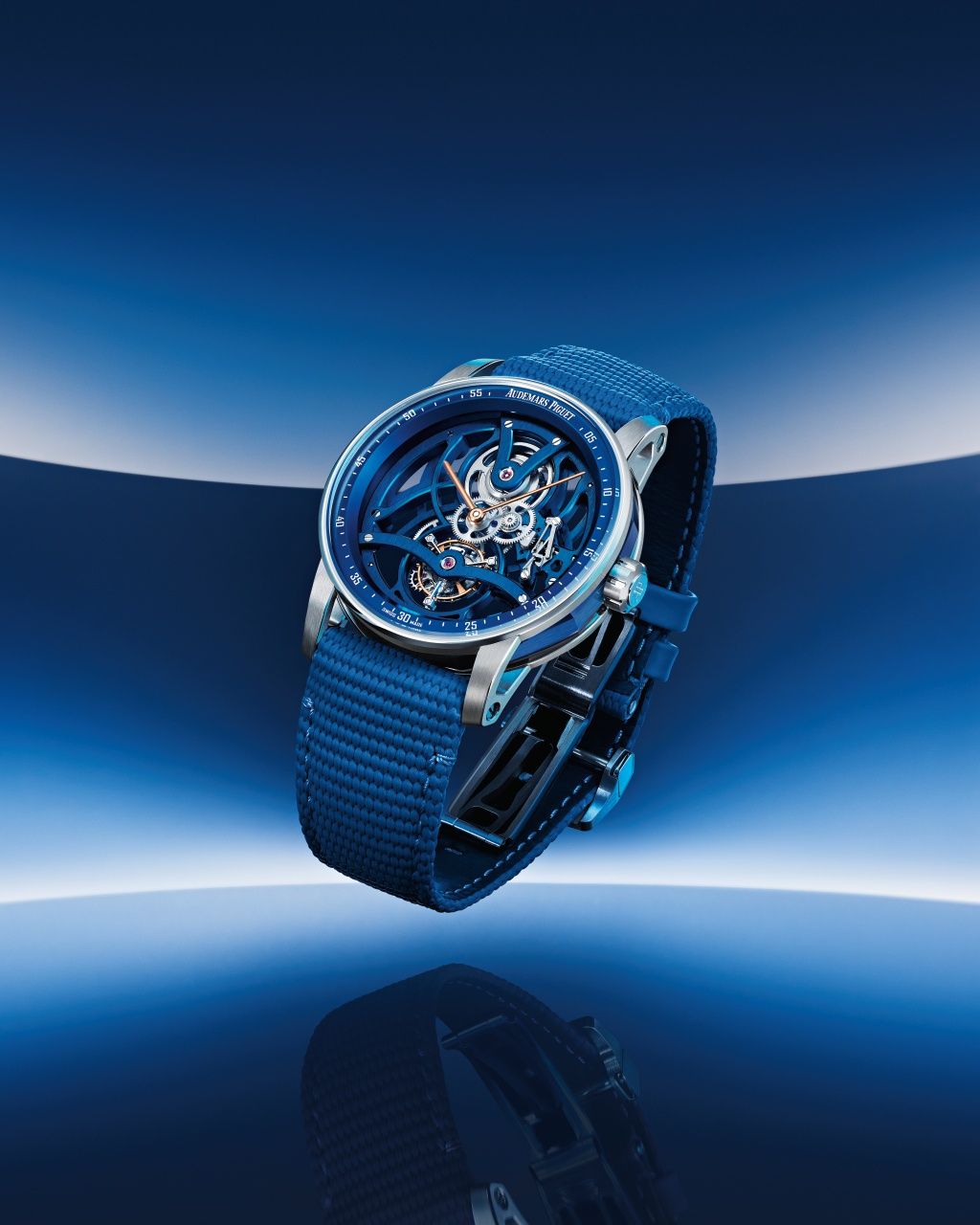 The Code 11.59 by Audemars Piguet Tourbillon Openworked, which comes in a limited edition of 50 pieces, pushes the art of openworking to new heights.
Code 11.59 by Audemars Piguet Tourbillon Openworked
The new variation of its Code 11.59 by Audemars Piguet Tourbillon Openworked comes with a 41 mm case and fitted with a contemporary blue textured rubber-coated strap lined with calfskin leather.
For the first time, the case – which houses handwound openworked tourbillon movement, Calibre 2948 – combines 18-carat white gold with blue ceramic.
“Once again, the Code 11.59 by Audemars Piguet collection reveals its versatility with the introduction of new materials and colours. Thanks to its architectural design, this collection is the perfect canvas for complex and openworked mechanisms. This new Tourbillon Openworked showcases the talents and dedication of our artisans in hand finishing, while reflecting the constant search for new materials conducted by the Manufacture,” says Anne-Gaelle Quinet, Complications expert for Audemars Piguet.
An aesthetic dancing with the light
While blue ceramic was already employed in the Royal Oak Offshore collection in 2020 (ref. 26405CE), this is the first time that it appears on a Code 11.59 by Audemars Piguet.
Part of the beauty of ceramic lies in its technical complexity. Ceramic requires precise manufacturing and meticulous hand-decorations to respond to the Manufacture’s high quality requirements.
Zirconium Oxide powder (ZrO2), modified to obtain a blue pigmentation once baked, is mixed with binder content before being transformed into ceramic through a complex and sophisticated industrial flow requiring numerous high precision machining steps.
Further enhancing the blue ceramic case middle, the electric blue openworked elements and lacquered inner bezel reinforce the timepiece’s two-tone aesthetic. The white gold and sapphire caseback is engraved with the words “Limited Edition of 50 pieces”.
An openworked movement with tricolour contrasts
This timepiece is equipped with the Calibre 2948, a hand-wound openworked tourbillon movement that is built on several levels. Its openworked mainplate and bridges come in shades of blue obtained by a process called ALD (Atomic
Layer Deposition). This deep blue is illuminated by a pink-gold-toned balance wheel and an openworked barrel that reveals the spring and the light grey geartrain within.
With 70 hand-polished V-angles, the finishing of this 3.65 mm thick movement has pushed the limits of openworking to new heights, with the tricolour decorations amplifying the 3D effect.
The blue CVD (Chemical Vapour Deposition) inner bezel complements the openworked movement and accentuates the extreme thinness of the bezel that is barely visible around the dial. The long 18-carat pink gold hands add a subtle touch of colour that matches the balance wheel.
The double-curved sapphire crystal perfectly fits the extra-thin bezel, playing with the depth and light, while also highlighting the openworked movement’s multitude of details.
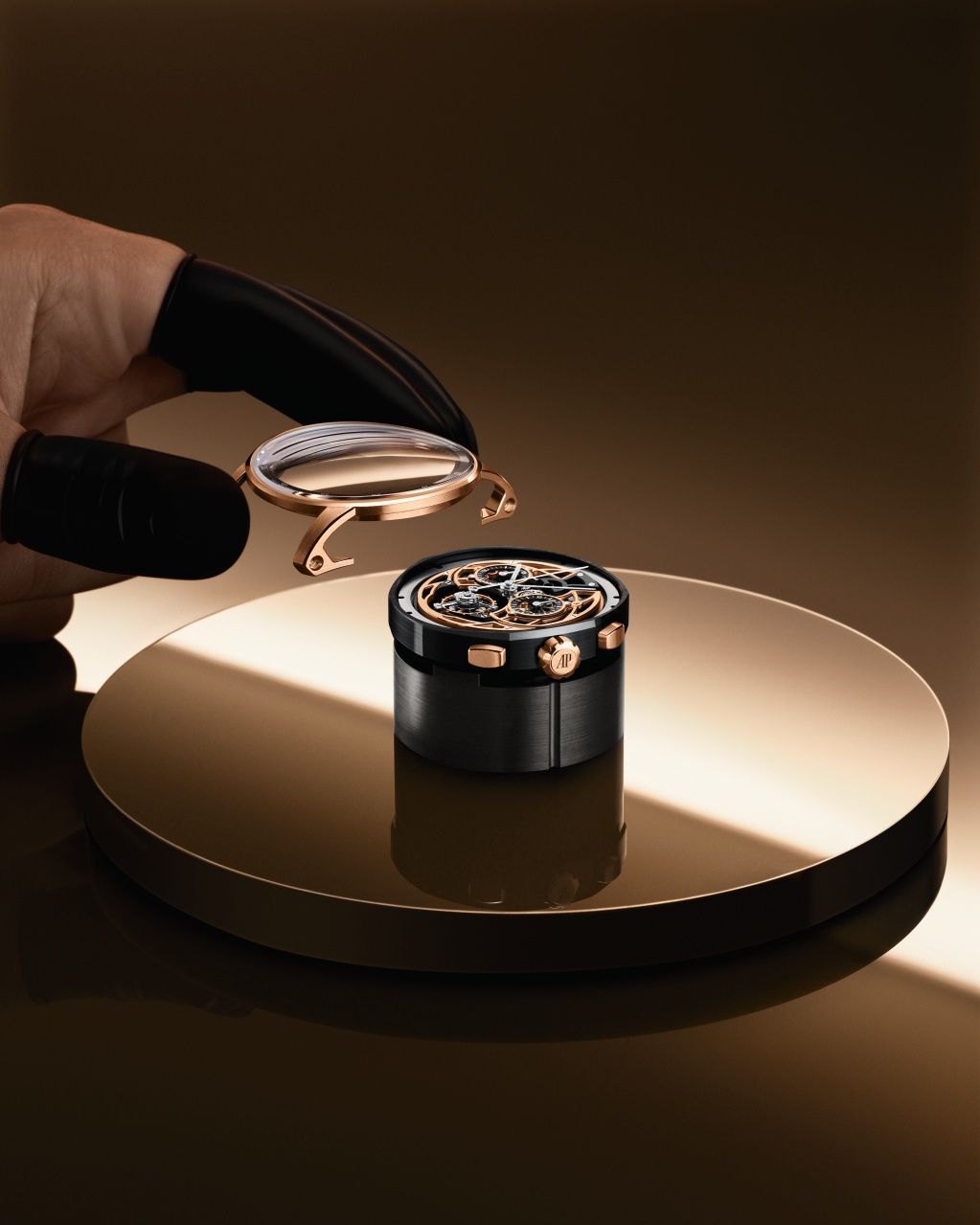 The Code 11.59 by Audemars Piguet Selfwinding Flying Tourbillon Chronograph requires specific manufacturing and hand-finishing processes.
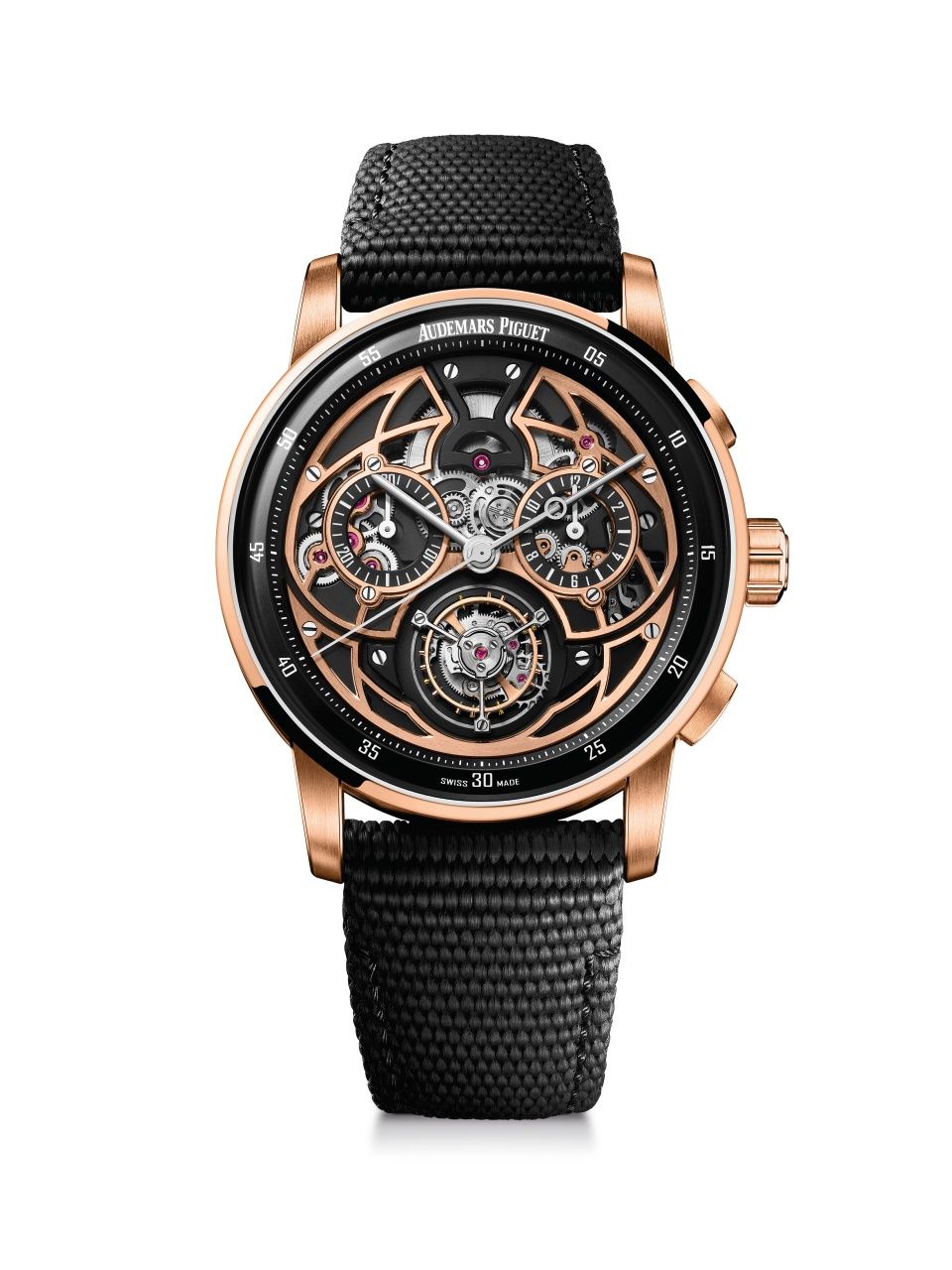 The Code 11.59 by Audemars Piguet Selfwinding Flying Tourbillon Chronograph.
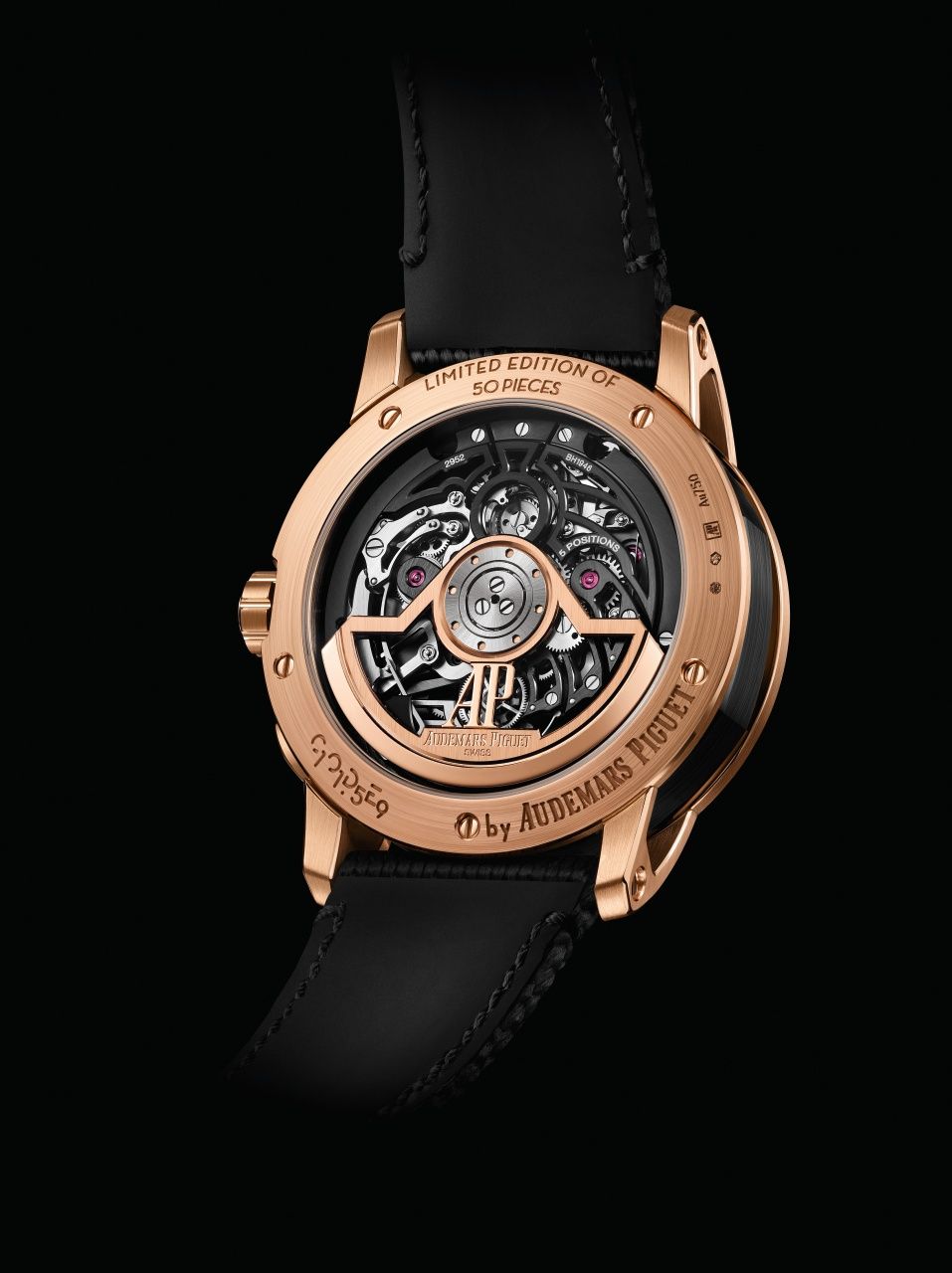 The caseback of the Code 11.59 by Audemars Piguet Selfwinding Flying Tourbillon Chronograph.
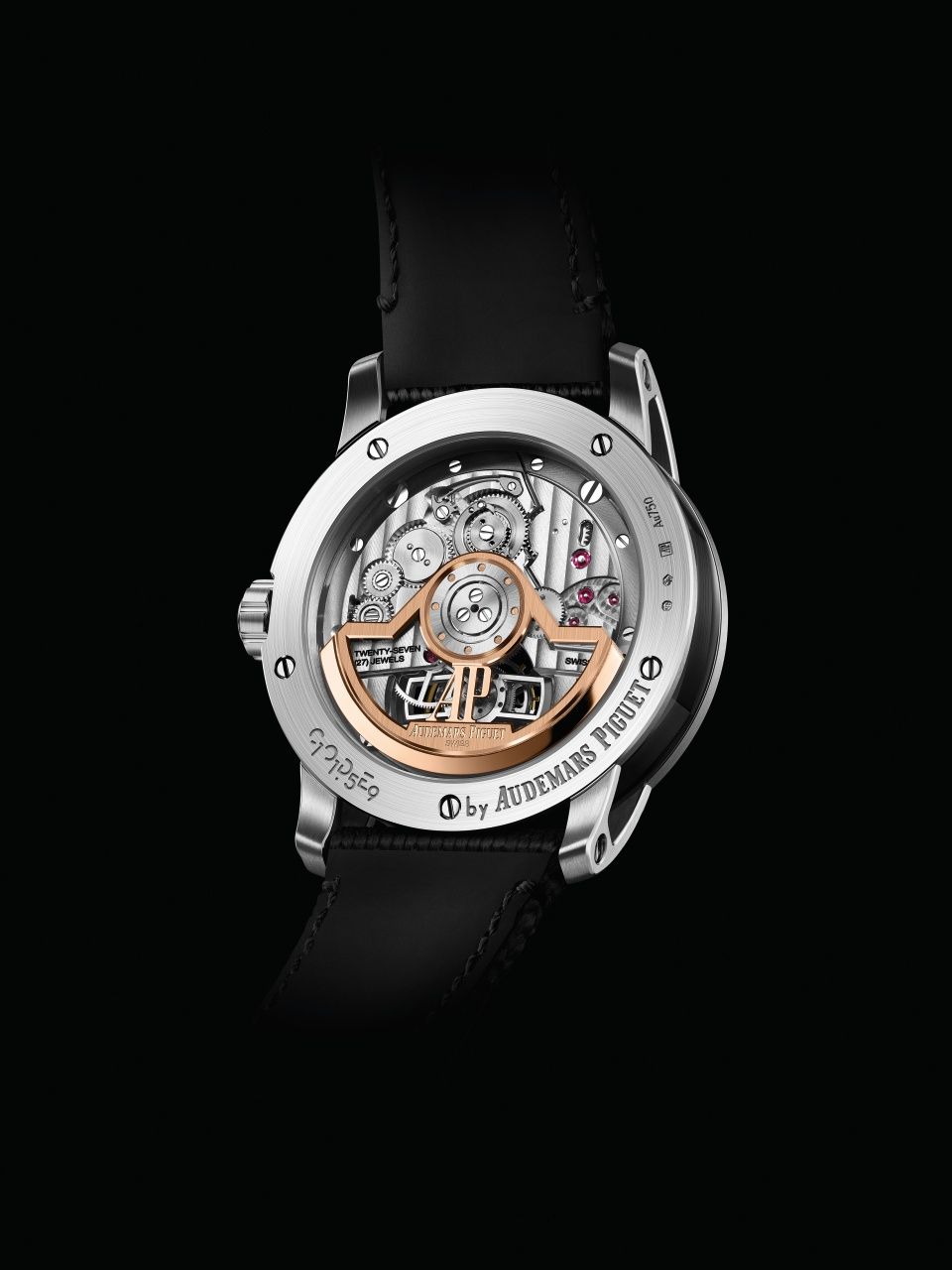 Backcase of the Code 11.59 by Audemars Piguet Selfwinding Flying Tourbillon.
Code 11.59 by Audemars Piguet Selfwinding Flying Tourbillon Chronograph
The new variation of its Code 11.59 by Audemars Piguet Selfwinding Flying Tourbillon Chronograph is presented with an interweaving of 18-carat pink gold and black ceramic.
“The latest version of our selfwinding flying tourbillon chronograph brings together the contemporary nature of hand-finished black ceramic and the timeless impact of 18-carat pink gold into a unified and balanced design. The entire watch is a canvas for 21st century hand-finishing and a celebration of the latest generation of complicated mechanisms,” says Michael Friedman, head of Complications for Audemars Piguet.
Meticulous craftsmanship
This timepiece highlights the complex architecture of the collection along with the three-dimensional aesthetic of the movement.
Part of the beauty of black ceramic is its technicity, with each model requiring specific manufacturing and hand-finishing processes.
Echoing the two-tone case, the architectural movement is comprised of openworked bridges in both black and pink-gold tones, matching with the pink gold toned balance wheel. The decoration of the movement alone represents over 70 hours of work, underlying the technical and extremely precise know-how of Audemars Piguet’s artisans.
The result of this meticulous work provides an interplay of shiny and matte finishes that create a captivating play with light reflections, bringing depth to the different levels of the movement.
This new model, which joins other references released in recent years, is powered by the Calibre 2952. The Manufacture’s latest automatic movement is equipped with a hypnotic flying tourbillon and a contemporary flyback chronograph. This mechanism allows the chronograph to be reset and restarted with one push, without having to stop it first.
Following in the footsteps of its predecessor unveiled in 2021, this new timepiece is limited to 50 pieces and combines contemporary design with ancestral know-how.


