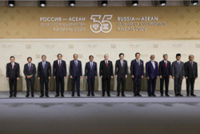
THE Asean-Russia Commemorative Summit held in Kazan, Russia from June 17 to June 18, was dedicated to the 35th anniversary of Asean’s relations with Russia and 30th anniversary of their dialogue partnership.
Previous summits took place in 2005 (Kuala Lumpur), 2010 (Hanoi, Vietnam), 2016 (Sochi, Russia) and 2018 (Singapore). The 2021 summit was held via video conferencing.
During the summit in Kazan, all 11 Asean member states participated, holding multilateral meetings and also bilateral talks with Russian President Vladimir Putin.
The summit adopted four key documents – the Kazan Declaration 2026 (“Asean-Russian Federation: Unity in Diversity – 35 Years Together”); the Joint Statement on Energy Security; Joint Statement on Cultural Cooperation; and the Comprehensive Plan of Action to Implement the Asean-Russian Strategic Partnership.
One may occasionally hear some experts in Asean lamenting about the limited scope of the Asean-Russia partnership, but it is progressing and acquiring new dimensions. Politically and strategically, both parties regard each other as important geopolitical centres in the emerging polycentric world.
The Kazan Declaration states that Asean and Russia are both aspiring for a just and multipolar world order based on international law.
Conceptually, Asean already provides a normative framework for an inclusive regional order, which, in practice, accommodates diverse political and economic systems. Important elements of the framework include the Asean Way, limitations to hegemonic competition, and the idea of Asean centrality for the regional institutional network.
If the Asean experience had been seriously considered internationally, most likely a just multipolar world order might have emerged much faster.
The Kazan Declaration also matches Russian and Asean visions of macro-regional development, mentioning cooperation in the geographical framework of the Asia-Pacific, Indian Ocean and Eurasia.
Asean and Russia are also continuing to build bridges between various regional institutions in Eurasia, e.g. between Asean and the Eurasian Economic Union, and between Asean and the Shanghai Cooperation Organisation.
At the same time, Russia has expressed support for four priority directions of the Asean Outlook on the Indo-Pacific (AOIP) – maritime cooperation, connectivity, achievement of the UN sustainable development goals, and overall economic cooperation.
Several new areas are emerging as important avenues for Asean-Russia security cooperation, including a joint reaction to maritime and biological security challenges.
Maritime cooperation includes securing freedom of navigation, seamless maritime trade and safety of underwater infrastructure. The ongoing attacks by the United States on Iran and most recent events in the Middle East, which resulted in the blockade of the Hormuz Strait, as well as the destruction of the “Nord Stream” pipeline from Russia to Europe in 2022, make such cooperation extremely necessary.
From the economic point of view, the summit highlighted a particularly important direction for Asean-Russia energy cooperation. Contrary to the European and American narratives, Russian oil, gas and other energy resources appear to be an economic (and consequently, political) stabilising force for many South-East Asian states.
Due to the Hormuz Strait blockade, the Philippines, which is most vulnerable to the Middle East turbulence (90% of their energy resources are derived from this region), has started buying Russian oil. In March 2026, Russia and Vietnam reactivated the nuclear power plant project that had been dormant since 2016.
In April, Indonesian President Prabowo Subianto visited Moscow to discuss energy security issues. And Malaysia and Thailand have expressed their interest to buy oil from Russia.
Finally, on the eve of the Kazan Summit, Russia and Lao PDR signed an agreement to develop atomic energy for peaceful purposes.
All these developments corresponded to the general trend of making energy cooperation one of the cornerstones of Asean-Russia strategic partnership.
The joint statement by Asean and Russia to enhance cooperation in the sphere of energy speaks about a direct connection between global geopolitical turbulence and regional stability.
Russia has supported Asean initiatives such as the Asean Plan of Action for Energy Cooperation 2026-2030 and emphasised the role of affordable and sustainable energy sources in the implementation of the Asean Community Vision 2045.
Other areas of economic cooperation include food security, agriculture, digital economy, tourism and artificial intelligence development.
Interaction in the sphere of culture is emerging as yet another pillar of the Asean-Russia partnership, specifically the nexus of economy and cultural projects.
The Kazan Summit’s joint statement to enhance cooperation in culture outlines new areas such as creative industries, startups and the use of digital technologies in the cultural sphere.
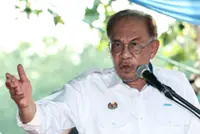
From the bilateral point of view, it is important to mention the meeting between Prime Minister Datuk Seri Anwar Ibrahim and Russian President Vladimir Putin on the sidelines of the Kazan Summit. It was not their first meeting and both referred to their previous encounters in Moscow and Kazan. Both also expressed their mutual desire to develop bilateral relations further.
As was mentioned earlier, Malaysia hosted the first Asean-Russia Summit and also supported the advancement of dialogue partnership to a strategic status.
Malaysia was represented in the summit not only at the state but also at the business level. On the sidelines of the Kazan Summit, business communities from Asean member states and Russia gathered together to exchange their opinions on the prospects of bilateral and multilateral cooperation.
The general outcomes of these discussions highlight the mutual desire to look for digital and logistics solutions to the disruptions emerging in the international system because of geopolitical limitations.
EKATERINA KOLDUNOVA
Director, Asean Centre
MGIMO University, Moscow