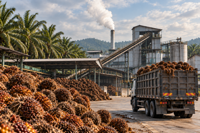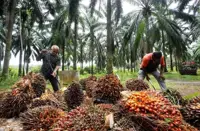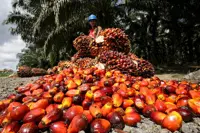
MALAYSIA'S palm oil industry has long been central to global sustainability discussions. For decades, the dominant focus has been on deforestation, traceability and land use.
While these issues remain important, the centre of gravity is shifting, and the defining question today is carbon intensity across the entire value chain.
Low-carbon palm oil milling is becoming an industrial necessity shaped by market expectations, policy signals and the increasing financialization of carbon in global trade and investment systems.
The most immediate and impactful opportunity lies in methane reduction from palm oil mill effluent. Conventional open-pond systems release significant quantities of methane, a highly potent greenhouse gas. Anaerobic digestion with biogas capture offers a proven pathway to convert this emissions source into usable energy.
However, the current situation remains mixed. A substantial proportion of Malaysian palm oil mills still operate without methane capture systems. Among those that have installed biogas facilities, utilisation is often suboptimal. In some cases, biogas is flared due to limited offtake options or the absence of nearby grid infrastructure.
This is not a failure of technology; it reflects systemic and infrastructure limitations. Where grid
connectivity is distant, export of electricity is not viable. This is precisely why alternative utilisation pathways, including upgrading biogas into biomethane, are becoming increasingly important. Such approaches allow mills to realise the full value of captured methane even without grid access while achieving greater emissions reductions than flaring alone.
Beyond effluent, biomass streams such as empty fruit bunches, palm kernel shells and mesocarp fibre represent substantial energy and material resources. Utilisation remains largely dominated by combustion for energy recovery.
More integrated approaches are emerging, including co-digestion of palm oil mill effluent with empty fruit bunches, which has demonstrated improved methane yield stability at laboratory and pilot scale. The remaining challenge is no longer technical feasibility but commercial deployment at scale.
Low-carbon milling also extends into circular resource pathways. Recent studies in Monash University Malaysia have demonstrated the feasibility of recovering oil fractions from palm oil mill effluent and converting them into crude biodiesel for internal consumption.
Rather than pursuing full-scale refining, recovered oil can be used directly as an internal fuel source, offering a practical and cost-effective pathway to reduce fossil fuel dependence.
Water and steam management are tightly interconnected with emissions performance. Strictly speaking, water consumption is not a carbon metric. In practice, however, water must be pumped, treated and heated, and each of these processes consumes energy.
Inefficiencies in water and steam systems therefore translate into higher energy demand and, indirectly, higher emissions.
Some of the most immediate decarbonisation gains may be hiding in plain sight. Every kilogram of steam unnecessarily vented, leaked or lost represents energy that must be replaced, adding both cost and carbon burden to mill operations.
Oil extraction rate is another important but often under-emphasised factor. Higher extraction efficiency reduces resource intensity per unit of output, including land use, fertiliser input, energy consumption and logistics requirements. Yet, national trends over the past decade suggest extraction rates have remained largely stagnant.
Increasing the oil extraction rate by just one percentage point, from a decade average of 19.80% to 20.80%, could reduce emissions by approximately 50kg CO₂-eq (carbon dioxide equivalent) per metric ton of crude palm oil produced. At national scale, this translates to nearly one million tonnes of CO₂-eq per year.
Malaysia’s national greenhouse gas reports reflect mitigation efforts across multiple sectors, including forestry and land use, energy and transport. Within this broader context, the land use sector remains a substantial net carbon sink of around 200 million tonnes of CO₂e.
Under Malaysia’s First Biennial Transparency Report (BTR1), methane capture and biomass utilisation in the palm oil sector continue to contribute to emissions reductions across multiple sectors. However, current figures still only partially reflect the full mitigation potential of palm oil milling. The gap between reported and technical potential is not constrained by resource availability but by system readiness.
There is therefore a growing need for enabling conditions that support acceleration. MSPO (Malaysia Sustainable Palm Oil ) standards should be strengthened to make mill-level carbon performance a requirement rather than a guideline.
Carbon pricing can then introduce direct cost exposure for high-emitting mills that have yet to act. On the revenue side, carbon credit frameworks should recognise multiple distinct value streams within the same mill.
Methane avoidance through biogas capture and the subsequent conversion of that biogas into electricity or biomethane each represent separate, verifiable emissions reductions that should qualify independently.
Targeted financing can further reduce first-mover risk for mill operators who are ready to commit to integrated low-carbon systems.
Low-carbon palm oil milling is becoming the foundation of long-term industrial competitiveness, sustainability credibility and resilience in a carbon-constrained global economy.
What is required now is coordinated action, moving from isolated solutions to fully integrated low-carbon mill systems.
HONG WAI ONN
Seri Kembangan, Selangor
(The writer is a chartered engineer and chartered environmentalist.)
Already a subscriber? Log in
Get 20% OFF The Star Digital Access
Cancel anytime. Ad-free. Unlimited access with perks.