Rethinking when STEM education should really begin


THE common perception that Science, Technology, Engineering and Mathematics (STEM) education begins at the secondary school level, where students are formally streamed into science pathways, needs a rethink.

Interest and positive attitudes towards STEM cannot be developed overnight at secondary school; they must be progressively cultivated from a young age.

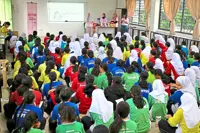
It should start from preschool and continue through primary education, where children are naturally curious and highly receptive to exploration and discovery. Early exposure to STEM-related learning is essential in nurturing curiosity, creativity, resilience and confidence in engaging with scientific and technological ideas.

Teacher preparation plays a crucial role in making this vision a reality. In particular, training programmes for primary school educators should move beyond narrow subject specialisation and instead emphasise holistic pedagogical approaches.

At the primary level, teachers are not only transmitters of knowledge but also shapers of attitude, confidence and learning identity. As such, teacher education should prioritise interdisciplinary teaching, inquiry-based learning, creativity, collaboration and authentic problem-solving that naturally integrates STEM concepts into everyday classroom experiences.

Equally important is the understanding that STEM should not be confined to Science and Mathematics subjects alone. Instead, STEM should be cultivated as a learning culture that permeates the entire schooling experience.

Critical thinking, innovation, communication, design thinking and real-world problem-solving can be embedded across language lessons, arts, humanities and co-curricular activities.

When STEM is experienced in this integrated manner, students will see it not as an isolated academic track but as a way of thinking and engaging with the world.

Ultimately, building a strong STEM nation requires a systemic and collective effort. This includes curriculum design, teacher education, school culture, parental awareness and early childhood learning experiences.

Parents, educators and the wider community all play a role in shaping how children perceive STEM in their everyday lives.

Rethinking when STEM should truly begin is not just an educational issue but a societal one as well.

DR KOMATHI JAIRAMAN

Subang Jaya

Get 20% OFF The Star Digital Access

Monthly Plan

RM 13.90/month

RM 11.12/month

Billed as RM 11.12 for the 1st month, RM 13.90 thereafter.

Best Value

Annual Plan

RM 12.33/month

RM 9.87/month

Billed as RM 118.40 for the 1st year, RM 148 thereafter.

Follow us on our official WhatsApp channel for breaking news alerts and key updates!
Education , STEM

Next In Letters

Every child's right to belong: Why Malaysia must end marriage-based citizenship discrimination
Understanding and cooperation appreciated during CRS optimisation period
A wake-up call for Malaysia’s trade strategy
No one should fall through the cracks
Should litigants write court orders?
Diving urgently needs to be regulated
Dreams are good, but success demands a blueprint
We need to address this crisis among our young people
Why good people leave a mess
Every digital service should have a human alternative

Others Also Read