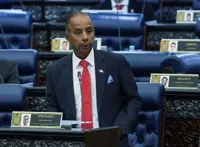
I REFER to the recent news on Public Accounts Committee (PAC) chairwoman Datuk Mas Ermieyati Samsudin calling for the Malaysia Airports Holdings Bhd (MAHB) takeover deal to be postponed. While she raised valid concerns about ensuring transparency in the MAHB deal, it is essential to address several misconceptions and provide a balanced perspective.
First, it is crucial to clarify the role of the PAC. According to its official mandate, its primary responsibility is to examine the accounts of the Federation, public authorities and Auditor-General reports, ensuring transparency and accountability.
While transparency is critical, PAC risks overstepping its mandate by delving into areas already governed by established regulatory frameworks such as the Securities Commission Malaysia (SC) and Bursa Malaysia. Both institutions are specifically tasked with overseeing corporate transactions, ensuring they adhere to strict due diligence, transparency and governance standards.
Undermining their roles by calling for a deferral of the MAHB deal could create confusion over jurisdictional boundaries, and diminish confidence in Malaysia’s regulatory ecosystem.
Moreover, such interference sets a concerning precedent for future corporate exercises. If committees like the PAC extend beyond their intended scope, it could discourage strategic transactions and deter investment, both locally and internationally. This could, in turn, impede economic growth and hinder Malaysia’s ability to compete in a rapidly evolving global market.
While PAC plays an integral role in promoting accountability, it is vital that its actions do not inadvertently delay or derail initiatives that have undergone rigorous scrutiny. Constructive collaboration with the relevant authorities would be a far more effective approach to ensuring transparency without compromising progress.
Second, the suggestion to defer the deal overlooks the urgent timeline required for Malaysia’s aviation industry to recover post the Covid-19 pandemic. Neighbouring countries like Singapore and Thailand have already implemented aggressive measures to boost their aviation sectors, positioning themselves as regional hubs.
Malaysia cannot afford to lag behind, especially with Visit Malaysia Year 2026 on the horizon. Efficient and well-managed airport infrastructure is vital to support tourism and trade, both of which are essential pillars of our economy.
Moreover, the insinuation that deferral will result in better public consultation or due diligence is unfounded. Prolonged delays often create uncertainty, deterring potential investors and partners. This is particularly true in a highly competitive industry like aviation.
Instead of advocating for deferrals, we should focus our efforts on strengthening the existing regulatory frameworks and instituting periodic reviews to ensure that public interests are protected.
This balanced approach would uphold accountability without compromising the agility required for strategic decision-making.
It is also important to consider the broader implications of a delay – or worse, a cancellation – of this deal. Malaysia risks being perceived as an unreliable investment destination, which could deter future partnerships in critical infrastructure projects.
Malaysia has seen this before with projects like the High-Speed Rail (HSR), the ESCAPE theme park in Bandar Malaysia and MRT3, where prolonged indecision either inflated costs or caused investors to lose confidence.
A similar scenario with the MAHB deal would undermine not just the airport operator’s future but also Malaysia’s broader reputation as an investment destination. Investors value predictability, and constant delays signal the opposite.
In conclusion, while I respect the PAC chief’s call for caution, I urge stakeholders to adopt a more pragmatic approach. Transparency and progress are not mutually exclusive.
Let us prioritise moving forward with this deal while instituting safeguards that address concerns constructively. Malaysia’s economic recovery and long-term competitiveness depend on the ability to make timely, strategic decisions. The stakes are too high to allow overreach and indecision to derail progress.
THIRUSINGAM MUNUSAMY
Klang
Already a subscriber? Log in
Get 20% OFF The Star Digital Access
Cancel anytime. Ad-free. Unlimited access with perks.