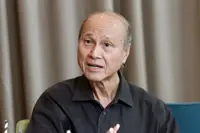
AS a 74-year-old senior citizen, I am appalled by the recent discourse on the elderly in conjunction with International Day for Older Persons. The letter “Addressing needs of seniors” (The Star, Oct 2) is an example, notwithstanding the concerns expressed.
Most people aged over 65 do not have the “issues” that are nowadays discussed in seminars, local authority public sessions, think tank papers, political speeches – everywhere really.
Actually, the vast majority of the elderly are quite capable of looking after themselves; being elderly does not imply being incapacitated or on crutches or surviving on medication.
Most “seniors” do not need welfare services either, at least not any more than people of other ages.
Unfortunately, real issues like shortcomings in public space and transport infrastructure, and supply of appropriate goods and services are ignored or sidelined by the inexorable push for geriatric medical care.
Start with decent public space in cities where people with not-quite-perfect eyesight and not-quite-perfect footing could move about safely and comfortably. This would require, among other things, getting motor vehicles as far away as possible from pedestrian spaces.
How about constructing continuous walkways (absent in Kuala Lumpur at present) that are wide enough (very few at present) and hopefully with cover from the rain and sun in the near future? Hopping on and off the walkways that we have now in Kuala Lumpur and other cities can be like running a steeplechase.
In view of the great concern expressed about “seniors”, how about banning the use of mobility devices and bicycles from walkways? Anyone who uses these things can also walk.
Businesses could also do better. Entrepreneurs must see the different demand patterns of seniors and gear up to meet them instead of throwing the same stuff to the elderly as they throw at their younger customers.
As examples, seniors want fresh or unprocessed and preferably vegetable-rich food. At restaurants, they prefer food ordered and delivered while they wait at their tables.
When the cost of catering to the elderly is higher, they are able and willing to pay a justified extra charge.
The elderly not only consume less, but they also become more friendly to the environment by generating less waste.
Seniors will appreciate KTM (Keretapi Tanah Melayu) Bhd putting the train schedules back on the platforms and concourses, and not requiring them to scan QR codes. KTM should change its misguided and misconceived policy that passengers use QR codes and smartphones to find out whether and when a train is arriving and at which platform. Many of the elderly and less literate cannot or do not wish to use smartphones.
Seniors would probably be happy to forgo discounts at cinemas if they can buy tickets at manned counters instead of from vending machines.
During the Covid-19 pandemic, the elderly were told to stay at home for months and public parks were closed, again examples of misguided and misconceived bureaucratic policy.
The initial one-month shutdown was justified to enable the authorities to set up and run public safety measures, but it became indefinite.
Seniors need to be active as much as others in order to stay healthy. The open spaces and vegetation of parks offered both a low-risk environment and an opportunity to strengthen resistance to disease by doing aerobic exercises. So, even when geriatric medical care practices were applied, the science stumbled in bureaucratic policy making.
The public discourse might improve if “seniors” are addressed and treated simply as mature human beings.
GEORGE THOMAS
Kuala Lumpur
Already a subscriber? Log in
Get 20% OFF The Star Digital Access
Cancel anytime. Ad-free. Unlimited access with perks.