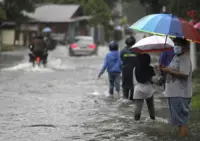
WHENEVER a flash flood occurs, the natural tendency for most people, especially those in areas that are not affected, is to view it as inevitable. But flash flooding is not inevitable and we should be prepared for realistic, long-term solutions to mitigate the problem, especially when we are responsible for causing them through our irresponsible acts.
While there have been various measures to mitigate flash floods, we are still not fully prepared as the steps are either ineffective or the related authorities are not totally committed to the issue. It is time for the responsible authorities, notably Kuala Lumpur City Hall and the Department of Irrigation and Drainage (DID), to conduct an in-depth analysis to provide an effective solution for the future irrigation and flood mitigation system in the city.
The Academy of Sciences Malaysia has given a summary of two flash flood scenarios in our country – fluvial flash flood that occurs when excessive rainfall over an extended time causes rivers to surpass their capacity, and the drainage-related flash flood, which is somewhat similar to the fluvial flash flood but is triggered by irrigation overflowing.
If we look at the recent flood that inundated Masjid Jamek on Sept 10, the existing system, especially the drainage system designed to deal with flash floods, did not seem to be very helpful.
This indicates that the system must be enhanced to cope with flash floods in Kuala Lumpur successfully.
According to the DID’s director-general Datuk Nor Hisham Mohd Ghazali, one of the reasons for the unexpected floods was existing drainage networks that could not accommodate large volumes of surface run-off.
He also said better enforcement is required to ensure that the river flows before and after development at the same capacity, and further stressed that over-development was also the leading cause of the flood.
We need to be more focused on dealing with flash floods by improving our pragmatic approaches to cope with current urban development.
The SMART tunnel that has functioned properly during previous flash floods is also not to be blamed. Its primary use to solve flash floods is mainly through forecasting, which can currently be improved through radar technology and modelling, data assimilation and decision support systems.
The Netherlands, for example, has been using flood mitigation technologies through crowd-sourced data.
Undeniably, technology does entail colossal expenditure.
But if it can assist us effectively to alleviate flash floods, then we should probably consider spending on it.
The rakyat should also play their role in flash flood mitigation by minimising/preventing rubbish dumping into the drainage system.
FARHAN KAMARULZAMAN
EMIR Research
Kuala Lumpur
While there have been various measures to mitigate flash floods, we are still not fully prepared as the steps are either ineffective or the related authorities are not totally committed to the issue. It is time for the responsible authorities, notably Kuala Lumpur City Hall and the Department of Irrigation and Drainage (DID), to conduct an in-depth analysis to provide an effective solution for the future irrigation and flood mitigation system in the city.
The Academy of Sciences Malaysia has given a summary of two flash flood scenarios in our country – fluvial flash flood that occurs when excessive rainfall over an extended time causes rivers to surpass their capacity, and the drainage-related flash flood, which is somewhat similar to the fluvial flash flood but is triggered by irrigation overflowing.
If we look at the recent flood that inundated Masjid Jamek on Sept 10, the existing system, especially the drainage system designed to deal with flash floods, did not seem to be very helpful.
This indicates that the system must be enhanced to cope with flash floods in Kuala Lumpur successfully.
According to the DID’s director-general Datuk Nor Hisham Mohd Ghazali, one of the reasons for the unexpected floods was existing drainage networks that could not accommodate large volumes of surface run-off.
He also said better enforcement is required to ensure that the river flows before and after development at the same capacity, and further stressed that over-development was also the leading cause of the flood.
We need to be more focused on dealing with flash floods by improving our pragmatic approaches to cope with current urban development.
The SMART tunnel that has functioned properly during previous flash floods is also not to be blamed. Its primary use to solve flash floods is mainly through forecasting, which can currently be improved through radar technology and modelling, data assimilation and decision support systems.
The Netherlands, for example, has been using flood mitigation technologies through crowd-sourced data.
Undeniably, technology does entail colossal expenditure.
But if it can assist us effectively to alleviate flash floods, then we should probably consider spending on it.
The rakyat should also play their role in flash flood mitigation by minimising/preventing rubbish dumping into the drainage system.
FARHAN KAMARULZAMAN
EMIR Research
Kuala Lumpur
Already a subscriber? Log in
Get 20% OFF The Star Digital Access
Cancel anytime. Ad-free. Unlimited access with perks.