THE National Day is done. And Malaysia Day is around the corner. There have been festivities for close to a month. People of all races, religion and creeds have been celebrating.
Some 20,000 people took part in the National Day parade, about 600 of them schoolchildren from Selangor. Another 80,000 came to watch.
It was a spectacle indeed, but largely confined to the peninsula.

Now, Sarawak and Sabah will join the festivities and have another party showcasing the even greater diversity on the other side of the pond.
It’s all been very patriotic and joyous. Unity has been the keyword and the Malaysian Family is stronger together.
But is it?
Unity is not just about marching, dancing or even playing football together. It’s about accepting one another as important members of one society.
And it has to start with the young, with our children at their most impressionable age. For this, educators are very important.
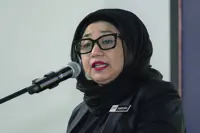
So, it came as a huge shock when a rant by a polytechnic lecturer went viral. The woman was teaching ethics and civilisation.
A lecturer? You could have fooled me. She could well have been a politician with her supremacist rant.
She spoke of pendatang “who were having it good in the country” while the Malays, who were here long before, were suffering.
She cried that Malays were being left behind and had to be helped, at the expense of the others.
But she did speak some truth. Politicians, she said, had to give “sogokan” (bribes) in order to win votes.
But then, she went on to add, Chinese politicians only help the Chinese, the Indians help fellow Indians while Malay politicians were the ones who had to help all races because they would lose otherwise.
I had to wonder if she knew anything about the country’s demographics. How many constituencies are there where the non-Malays can decide on the winner? And how many are there where the Malays have a super majority?
The answer – Malays form the majority in 128 of the parliamentary constituencies in the peninsula alone. It is they who decide the fate of the country, not the minority races. The Chinese have the majority in about 37 seats. The Indians? None.
Why would anyone need to pander to them?
She also claimed Malays were not getting scholarships, intimating that others were.
Again, has she not read the numerous cases in newspapers when top students are begging for places in universities, much less getting scholarships?
The lecturer, it has been reported, is now being investigated but little is known about what has happened.
In Singapore last year, a polytechnic lecturer was sacked after he made racist remarks with a Malay girl in his class.
The thing is: We do not need educators who feed the racial flames and cause more divisions among us, not when the government is talking about the Malaysian Family.
This lecturer is not alone. There are many like her. In a Selangor school, I am told, a gathering of Christian students during Good Friday was investigated by the district education office after a senior teacher lodged a complaint.
The lantern procession was a fun event that we as children used to happily take part in. It was not a religious thing, just a walk with a cute animal-shaped lantern with a lit candle, as smiling parents watched. Not anymore.
In many schools now, teachers are said to have barred Malay children from taking part. They fear the culture may “taint” the children. This does not help in forging unity.
Let’s be clear, this is not pointing fingers at all educators. Most are doing wonderful jobs. Many have gone the extra mile for their students, without a care for their racial or religious background.
We all know of a former colleague’s daughter, Cheryl Fernando. Her work in embracing children in rural Kedah and teaching them English even inspired a movie titled Adiwiraku.
There are many like her.
Take Khalifa Affnan. In May, this vocational teacher from the Keningau Vocational College in Sabah was named the winner of the 2022 Cambridge Dedicated Teacher Awards. He beat 7,000 other participants from 113 countries.
He was the first-ever Malaysian picked as winner at both global and regional levels.
He not only trained his students in robotics, drones and coding but also increased the active participation of female and special needs students in STEM (science, technology, engineering and mathematics) activities.
It marked a great step forward for little Keningau in the interior of the state.
He won some prizes, but to the teacher who was born in Kuala Lumpur and studied in Johor before going to work in Sabah, the biggest reward was in watching his students in the interior, most of them Dusun and Murut, succeed in life.
“It brings me joy to hear them sharing their excitement in being involved in lessons and activities, and seeing them pick up new skills. It also brings me joy when former students remember me even years after graduating,” he said.
No racism, no sogokan, no demands for scholarships. Just teachers and students who put in hard work to achieve success.
Khalifa perhaps signifies just what Malaysia needs – an all-embracing attitude and real unity among all the people of the country.
It’s also the kind of unity seen in Sarawak. Only recently, Dayak Christians in a longhouse in Sibu welcomed an Indian-Muslim who wanted to pray and gave him all the space and privacy he needed to fulfil his religious rites.
They had no qualms about turning their space over to a person of another religion. It was, well, so Malaysian.
Maybe, as we put National Day behind us and welcome Malaysia Day, we should look across the South China Sea to chart a better future for ourselves, and the country.
Already a subscriber? Log in
Get 20% OFF The Star Digital Access
Cancel anytime. Ad-free. Unlimited access with perks.