THE Middle East is no stranger to conflict, but the assassination on Wednesday of Hamas political leader Ismail Haniyeh in Teheran, Iran, is heightening tension in the region and fanning fears of a wider war.
For more than 10 months, we have watched in horror as Israel’s genocidal war on Gaza destroys the strip and kills thousands of Palestinians – almost 40,000 now, and over half of them women and children.

With the United States deploying more fighter jets and warships to bolster its defence in the Middle East after Iran vowed to avenge Haniyeh’s death on its sovereign soil, the tension has ratcheted up even further.
As more bombs threaten to fall and rockets to fly, we’re reminded of the urgent need for a ceasefire at the very least, if not peace in this troubled corner of the world.
It’s easy to get lost in the complex web of history, religion and politics that defines this conflict.
But at its core, this is a human tragedy. Families are torn apart, homes are reduced to rubble and children grow up knowing only fear and uncertainty.
On both sides of the divide, ordinary people bear the brunt of this endless cycle of violence.
The international community has been dismayed by how the loud cries for a permanent ceasefire between Israel and Hamas, coupled with a plea for a return to dialogue and diplomacy, have been falling on deaf ears.
Historically, ceasefires in Gaza have been fragile and short-lived. Each flare-up in violence is a grim reminder of the unresolved issues at the heart of the conflict.
The blockade of Gaza, the status of Jerusalem, the rights of refugees, the illegal Israeli settlements and the borders of a future Palestinian state are contentious points that have hindered peace efforts for decades.
But amid the complexity of these issues, ending the current violence is an urgent priority.
The international community has an obligation to play a role here. It’s not enough to wring our hands and express concern. Active, engaged diplomacy is needed to bring all parties to the table and keep them there until progress is made.
The United States, the European Union, the United Nations and regional powers – especially the Arab countries – must all step up using their influence to push for arms to be laid down to begin with, before instituting dialogue and working out a compromise.
Acknowledging the broader regional dynamics that influence the Israeli-Palestinian conflict is vital.
Regional players such as Egypt, Jordan, Iran, Saudi Arabia and the other Gulf states have their own interests and influence in the conflict. Engaging these countries in a comprehensive peace strategy is essential.
A regional approach that normalises relations and economic cooperation can create a conducive environment for peace.
Obviously, the path to peace will be challenging. There will be setbacks, moments of frustration and despair.
But the alternative, violence without end, is unthinkable.
And it is a good time to be reminded that peace isn’t just achieved through high-level negotiations. It’s built from the ground up, in classrooms where children learn about shared humanity rather than ancient grudges, with economic initiatives that create shared prosperity and with grassroots movements that build bridges among communities.
For the sake of all those caught unwillingly in this conflict, for the children who deserve a future free from fear, we must keep pushing for peace.
The public is invited to attend a rally for Palestine liberation at the Axiata Arena, Bukit Jalil, today at 8pm.
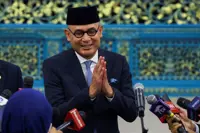
Prime Minister Datuk Seri Anwar Ibrahim and other government officials will be attending.
Already a subscriber? Log in
Get 20% OFF The Star Digital Access
Cancel anytime. Ad-free. Unlimited access with perks.