MORE than 60 years on from gaining our independence, Malaysia is still looking for that most elusive of things, true unity.
We are more than grateful that this country does not experience the kind of convulsions that many others do, with outright war and citizens killed.
We had a version of that with the racial riots of May 13, 1969, and it was enough to make those of us of a certain age wary of religious and ethnic bigotry.
But generations have grown up since then and either they’ve forgotten or they never learnt of that dark moment in Malaysian history because our interactions with each other are becoming increasingly hostile.
The hate spewed on social media is downright frightening, not to mention stories about young people romanticising May 13.
Which is why we feel the government’s Malaysia Madani Nationhood Training Module is timely.
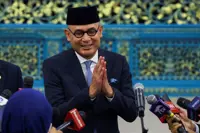
Introduced on Wednesday, the module will allow the country’s youth to learn about Malaysia’s history and appreciate the contributions of past leaders and warriors, said Prime Minister Datuk Seri Anwar Ibrahim.
The module will be administered by the newly-formed National Statehood Academy (or AKM, Akademi Kenegaraan Malaysia) in the Prime Minister’s Office.
According to AKM, the focus will be on increasing understanding of the Federal Constitution and the values of the Rukun Negara.
The module has also been tailored to suit the Madani agenda and aspirations.
All that is well and good, but what we don’t need is a learning module that teaches partisan politics.
In his speech at the launch Anwar said: “... we must be steadfast in learning about our country’s history, and that our nation is independent and sovereign because of the contributions of all parties.”
That was good to hear after decades-long controversies over history textbooks providing warped views that downplayed or even ignored how the country’s many different races and communities helped its development.
We hope the module will not overlook the contributions of all communities, from the Orang Asli and the peoples of Sabah and Sarawak, to the Indians, Chinese, Punjabis, and many more.
According to AKM, the module will include lectures and interactive activities, among others, and will be delivered through discussions, interactive videos, role play, and more.
We hope there will also be funding for activities involving the arts, culture, and volunteerism, as well as sports and games.
Because playing and working together is the best way to foster understanding of each other, to teach our youth that the “other” is not so strange after all, and that we all really want the same thing: a prosperous, peaceful nation.
Already a subscriber? Log in
Get 20% OFF The Star Digital Access
Cancel anytime. Ad-free. Unlimited access with perks.