Sound basis for national unity 


Our Merdeka Constitution was a masterpiece of compromise, accommodation and moderation.

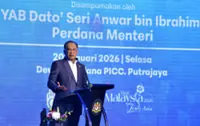
A FEW weeks ago, Prime Minister Datuk Seri Anwar Ibrahim announced that the teaching of the Federal Constitution and history shall be compulsory in all universities beginning this year.

This is a commendable decision and may help to moderate some of the racial, religious, regional and gender prejudices that afflict our society. Most of these are born out of ignorance.

It is hoped that the teaching materials for the courses will stand above the fray of race and politics, and embrace the luminous streams of civilisation that have flowed into the making of our shared rich past.

Confining this note to the Federal Constitution, let it be said that despite some flaws, our Merdeka Constitution was a masterpiece of compromise, accommodation and moderation.

Contrary to what is believed that the Reid Commission, which drafted it, was inspired by British values, the reality is that the Reid Commission showed fidelity to a 20-page memorandum drawn up by the Umno-MCA-MIC alliance.

The Commission held 118 public and private meetings. Its proposals were reviewed by a Tripartite Committee of the Malay Rulers, the Alliance and the colonial government.

Ultimately there was ratification by the Federal Legislative Council in Kuala Lumpur, the Assemblies of the Malay States, the UK Parliament and the British Crown.

In recognition of the fact that prior to Portuguese, Dutch and British colonialism, Malaya was historically the land of the Malays, the Merdeka Constitution incorporated a number of autochthonous features indigenous to the Malay archipelago. At the same time, the Malay-Muslim features were balanced by other provisions suitable for a multi-racial and multi-religious society.

The prominent Malay-Muslim features are the following:

> The Malay Sultanate;

> Islam as the religion of the Federation;

> The grant of a “special position” to the Malays and (after 1963) to the natives of Sabah and Sarawak;

> Malay reserve lands;

> Bahasa Malaysia as the national language;

> Special protection for the customs of the Malays and (in 1963) for the native laws of Sabah and Sarawak;

> Weightage for rural areas (which are predominantly Malay) in the drawing up of electoral boundaries;

> Reservation of some top posts in the state executive for Malays; and

> Legal restrictions on preaching of other faiths to Muslims and apostasy by Muslims.

The Constitution is also replete with safeguards for the interests of other communities. The notable ones are the following:

> Citizenship rights are granted on a non-ethnic and non-religious basis;

> The electoral process permits all communities an equal right to vote and to seek elective office at both federal and state levels. Race and religion are irrelevant in the operation of the electoral process;

> The chapter on fundamental liberties grants personal liberty, protection against slavery and forced labour, protection against retrospective criminal laws and repeated trials, freedom of movement, protection against banishment, right to speech, assembly and association, freedom of religion, rights in respect of education and right to property to all citizens irrespective of race or religion;

> At the federal level, membership of the judiciary, Cabinet, Parliament, the federal public services and the special commissions under the Constitution are open to all irrespective of race or religion;

> Education is free at the primary and secondary levels and is open to all irrespective of race or religion. University education is subjected to strict quotas. However, to open up educational opportunities for non-Malays, private schools, colleges and universities is allowed. Foreign education is available to whoever wishes to seek it. Government education scholarships are given to many non-Malays, though this is an area where large discontent has deve­loped over the proportions allocated;

> Even during a state of emergency under Article 150, some rights like citizenship, religion and language are protected by Article 150(6A) against easy repeal;

> The spirit of give and take between the races, regions and religions is especially applicable to Sabah and Sarawak. Many, if not most, of their special demands recognised in the Cobbold Commission Report, the Inter-Governmental Committee Report, and the Malaysia Agreement were adopted into the Malaysia Act and Federal Constitution;

> Even where the law confers special rights or privileges on the Malays and the natives of Sabah and Sarawak, there is concomitant protection for the interests of other communities. For example, though Islam is the religion of the Federation, Malaysia is not an Islamic state. The syariah does not apply to non-Muslims;

> All religious communities are allowed to profess and practise their faiths in peace and harmony. State support by way of funds and grant of land is often given to other religions. Missionaries and foreign priests are allowed entry into the country. Every religious group has the right to establish and maintain religious institutions for the education of its children;

> Under Article 12(4), the religion of a minor shall be decided by his parent or guardian. In Schedule 11, Section 2(95), words in the singular include the plural, meaning the unilateral conversion of children by one parent violates the Constitution;

> Though Bahasa Malaysia is the national language for all official purposes, there is protection for the formal study in all schools of other languages if 15 or more pupils so desire, legal protection for the existence of vernacular schools, and legal permission to use other languages for non-official purposes;

> Though Article 89 reserves some lands for Malays, it is also provided that no non-Malay land shall be appropriated for Malay reserves and that if any land is

> TURN TO PAGE 16

reserved for Malay reservations, an equivalent amount of land shall be opened up for non-Malays. Alienation of or grant of temporary occupation licences over state land to non-Malays is not uncommon; and

> Article 153 on the special position of Malays is hedged in by limitations. First, along with his duty to protect the Malays, the King is enjoined to safeguard the legitimate interests of other communities. Second, the special position of the Malays applies only in the public sector and in only four prescribed sectors and services. Third, in the operation of Article 153, no non-Malay or his heir should be deprived of what he already has. Fourth, no business or profession can be exclusively assigned to any race. No ethnic monopoly is permitted. Fifth, Article 153 does not override Article 136. Quotas and reservations are permitted at entry point but once a person is in the public service, he should be treated equally.

Sadly, a wide gap exists between the Constitution’s promises and reality. Many prejudices and constitutional violations are based on lack of constitutional literacy and absence of constitutional patriotism.

We must improve our constitutional literacy and sit together to devise a plan to restore the 1957 and 1963 constitutional scheme of things, and to bridge the wide gap between theory and practice.

Emeritus Prof Datuk Dr Shad Saleem Faruqi is senior research fellow at Universiti Malaya. The views expressed here are his own.

Get 20% OFF The Star Digital Access

Monthly Plan

RM 13.90/month

RM 11.12/month

Billed as RM 11.12 for the 1st month, RM 13.90 thereafter.

Best Value

Annual Plan

RM 12.33/month

RM 9.87/month

Billed as RM 118.40 for the 1st year, RM 148 thereafter.

Follow us on our official WhatsApp channel for breaking news alerts and key updates!

Next In Columnists

The incredible star power rising from the East
Make Penang AI plan a bridge for majority
Giants fall, England survive – World Cup quarter-finals take shape
Who shapes global AI rules: Asean-China cooperation role
Why the Johor election is good for Malaysian democracy
Confessions of a durian season sinner
Looming threat to social security
More predictable than the World Cup
America at 250
Coexistence with wildlife key for public safety

Others Also Read