THE PhD is supposed to be a status that signifies a “scholar”. But what actually is a scholar is now a questionable issue from my perspective. I have met many graduates with PhDs and examined my fair share of these “scholars”.
Talking to these graduates, particularly from local institutions, I have come to acknowledge and respect most of what they have achieved such as journal publications, research method discipline and writing ability.
I say “most” – there is one aspect that is an exception. These graduates, to me, possess no “philosophy construct” whatsoever.
Why do I say so? These conversations I had with young local doctorates in the country will show you what I mean.
“So, Dr X, you have studied the effect of computer exposure on preschoolers and their early education, how would you advise parents with respect to this issue?”
“Well Prof, to tell you the truth, my supervisor and I never discussed this question!” There you go.
Next conversation: “So, Dr Y, you have managed to map out children’s play preference in schools as an additional tool of learning. How would you advise the Education Ministry on public school landscaping strategies?”
“Er, I am sorry, Prof, my supervisor and I are not allowed to talk politics or criticise the government on any issue.”
Really? I looked at the supervisor and he just looked down.
OK, one last example: ‘So, Dr Z, you are analysing Muslim congregational preferences in relation to creating a more spiritually conducive prayer space, but tell me first, what is your opinion of the mosque in relation to its role in the larger community of Muslims and non-
Muslims towards nation-building?
“Do you have an opinion on this issue because the role of the prayer space depends on your idea of what the primary role of the mosque is as a community building?”
The candidate’s response was complete silence.
“Did you not read my book Rethinking the Mosque in Modern Muslim Society?” Obviously not.
I always have fun with engineering doctorates. Their minds are so efficiently small to the point that philosophising about how their research could change lifestyles and impact policies of governance is totally outside their perspective.
And forget about asking what books they’ve read to predict future outcomes 20 years from now.
When they stare blankly at me, I just show them five books by Prof Dr Michio Kaku, the scientist and science populariser. I also point them towards books by the late, great Stephen Hawking. None of them have ever heard of these books.I have caused many associate professor candidates much distress and failure when I ask them these two questions: “Which book have you read that could change our way of looking at the world within the area of your expertise?” And, “If you were the Science Minister of Malaysia, what important policy would you recommend to drive the country’s economy towards greater prosperity and keep the people safe from harmful industry products?”
Several deans of faculties have commented that my questions are too difficult. I told them that I do not expect any “correct” answers but I do expect some kind of an answer! Any kind of idea or vision, however unworkable, would at least show me that the candidate has thought about these things beyond their little laboratory mindsets.
Are you wondering what point I’m trying to make, dear reader? It is this: I fear that we have succeeded in producing PhD graduates who are more akin to research assistants than full-fledged “scholars”.
Showing 40 publications in refereed (i.e. peer-reviewed) journals does not impress me. Bearing the title “Doctor of Philosophy” necessitates a philosophical construct larger than the items investigated.
PhD scholars must be able to show that they can think about future studies that impact a large spectrum of areas and perhaps strategise how to link his or her small field with a larger, life-changing construct.The nation has produced thousands of PhD graduates, but not thinkers who can challenge the cultural norm of things. They can only produce research “at the end of things” and not research about reconfiguring things towards a different way of looking at the world.Ask yourself this question, dear reader: Have you ever read a book by a Malaysian scholar that changes the way you think about our economy, our history, our society, our education philosophy or our industry? A book written by a PhD scholar that is both comprehensible to the university educated populace as well as politicians. Have you?
I don’t really expect our scholars to rival Hawking or Kaku, but I do expect them to say something about the future of this small nation. Itu pun tak boleh kah? (Is that too much to ask for?)
But here I would like to say that the graduates who pursue their PhD degrees are young, enthusiastic and always ready to work. It is the university, supervisors and examiners who force the issue of scholarly competency down to an elemental level of research methodology and data collection.
Most ignore the philosophical construct that would benefit the larger community and nation, thus setting a path of narrowness and shallowness.
That is why we seem to be “progressing” with speed and quantity, but are still going round and round in a circle that remains static and digs a hole in the ground instead of spiralling upwards and beyond.
I sincerely hope that “PhD” in Malaysia will one day have the true meaning of “Doctor of Philosophy” because if we are not careful, it could just as well be read as “Pizza Hut Delivery”.
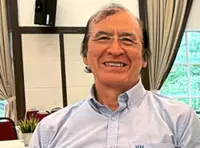
Prof Dr Mohd Tajuddin Mohd Rasdi is Professor of Architecture at UCSI University. The views expressed here are entirely the writer’s own.
Already a subscriber? Log in
Get 20% OFF The Star Digital Access
Cancel anytime. Ad-free. Unlimited access with perks.