FOR a long time, we have wished our Indian friends “Happy Deepavali”, our Malay friends “Selamat Hari Raya” and our Chinese friends “Kong Hei Fatt Choy” in Cantonese or “Keong Hee Huat Chye” in Hokkien.
Today, even the names of festivals can become controversial: Deepavali versus Diwali, Hari Raya versus Lebaran, buka puasa versus iftar, and Kong Hei Fatt Choy versus Gong Xi Fa Cai.
Call them what you will; the celebrations remain essentially the same. But identity matters, and we know how sensitive cultural and ethnic issues can be.
The irony is that Malaysia’s multicultural character has always rested on shared celebrations, open houses, exchanged greetings and food from different communities. Yet social media can turn almost every linguistic difference into a dispute.
Take Deepavali and Diwali. Both refer to the Hindu festival of lights, with the names shaped by regional, linguistic, and cultural traditions. Deepavali is widely used in Malaysia, Brunei, and Singapore, while Diwali is more common in parts of India and among Indian communities in countries such as the United States and Britain.
Neither should be treated as a threat to the other.
The same applies to Hari Raya and Lebaran. Hari Raya Aidilfitri is familiar in Malaysia, while Lebaran is widely used in Indonesia, alongside Idulfitri.
Shared traditions do not require identical vocabulary. We can appreciate our neighbours’ expressions without abandoning our own.
Buka puasa and iftar likewise refer to breaking the Ramadan fast. One term is a deeply familiar one in Malaysia, while the other is the Arabic term widely used across the Muslim world. Neither makes someone more religious or authentic.
The spirit of Ramadan lies in generosity, compassion, and fellowship, not in policing the words used at the dining table.
Among Malaysian Chinese, “Kong Hei Fatt Choy” and “Gong Xi Fa Cai” reflect different linguistic traditions. Cantonese, Hok-kien, Hakka, and other Chinese dialects have shaped local speech, while Mandarin has become increasingly prominent through education and the media.
A Cantonese greeting is not outdated, just as a Mandarin greeting does not erase local heritage. Both have a place in our linguistically diverse society. Ultimately, the choice may come down to personal preference, family tradition, or simply what is most convenient.
But the growing dominance of Mandarin worries me, parti-cularly in Penang, where the distinctive local variety of Hok-kien risks being lost.
Many younger Chinese Malay-sians, having attended Chinese primary schools, are more comfortable speaking Mandarin than Hokkien. For Baby Boomers like me, who received our education in English-medium schools, navigating conversations in Penang can sometimes be a struggle.
I insist on speaking my distinctive Penang Hokkien, which I am proud of, but it may be a losing battle.
Then there is the wider debate over Christmas greetings.
In many Western countries, “Merry Christmas” was once the standard seasonal greeting, used freely in public spaces, workplaces, and schools. Increasingly, some institutions and corporations have adopted “Happy Holidays” instead.
There is a reasonable explanation for this. Christmas falls during a period when people also observe Hanukkah, New Year, and other religious or cultural occasions. “Happy Holidays” is intended to include everyone, including those who do not celebrate Christmas.
It can be a courteous gesture, although commercial considerations may have also played a part. The intention is to avoid assuming that everyone shares the same faith or tradition.
However, the growing use of “Happy Holidays” has also led to debates over what is commonly called woke culture, particularly the argument that public language should be adjusted to avoid excluding or offending particular groups.
In the United States and parts of Europe, critics argue that traditional Christian greetings are being abandoned in the name of diversity, sometimes creating the impression that the majority must set aside its customs to accommodate others.
There is a distinction between being considerate and becoming excessively anxious about causing offence.
In its best form, inclusive language encourages sensitivity and respect. In its worst form, it can make ordinary expressions seem unacceptable simply because not everyone shares the same beliefs.
There is nothing inherently wrong with saying “Happy Holidays” when addressing a mixed audience. Nor is there anything wrong with wishing someone “Merry Christmas”.
The problem begins when one greeting is presented as morally superior to the other, or when people are made to feel that saying “Merry Christmas” is insensitive, outdated, or politically incorrect.
Christians should not have to apologise for saying “Merry Christmas”, just as non-Christians should not be pressured to use the greeting.
Courtesy should leave room for both. A company may choose “Happy Holidays” for a general advertisement, while an individual may warmly wish a Christian friend “Merry Christmas”. There is no contradiction.
The purpose of inclusive language should be to widen the circle of respect, not erase familiar traditions. If every religious greeting is replaced by a neutral phrase for fear of offending someone, public life may become less contentious but also less meaningful.
Diversity should not require us to remove all references to faith and culture from our shared vocabulary.
The larger problem is not that different names exist, but that we sometimes treat those differences as challenges to our identity.
Learning another community’s preferred terminology is respectful. Humiliating someone for using a familiar expression in good faith is not.
If someone wishes us Happy Deepavali, Selamat Hari Raya, Kong Hei Fatt Choy or Merry Christmas, our first response should be to appreciate the goodwill behind the greeting.
Of course, precise terminology matters in certain contexts, including official documents and educational materials. Commu-nities should also be free to explain how they prefer their festivals to be named.
But respect must work both ways. We should not belittle another community’s language or demand that people abandon expressions rooted in family, heritage, and memory.
We must also distinguish genuine courtesy from compulsory conformity. It is courteous to ask how someone prefers to be addressed or to learn the name a community uses for its celebration. It is unreasonable to assume that every traditional expression is offensive simply because it is not universally shared.
Our multicultural identity is not built on having identical words for everything. It is built on understanding differences without feeling threatened by them.
Deepavali can co-exist with Diwali, Hari Raya with Lebaran, buka puasa with iftar, Kong Hei Fatt Choy with Gong Xi Fa Cai, and Merry Christmas with Happy Holidays.
Cultural pride should give us the confidence to cherish our own traditions while making room for others. If we can share our homes, food, friendships, and celebrations, surely we can accommodate different names for the same joy.
More importantly, Malaysia’s tradition of holding open houses during festive occasions remains one of our greatest strengths. Malaysians of different ethnicities and faiths visit one another, share meals, and celebrate together.
We do not need to turn every festival greeting into a religious or ideological debate. Sometimes, all it takes is common sense and a willingness to appreciate one another as fellow Malaysians.
Our country has long shown that people can live together without speaking, praying, or celebrating in exactly the same way. We should not allow excessive sensitivity to turn every greeting into a test of political correctness.
Good manners are not about finding one approved phrase for everyone. They are about understanding the person, the occasion, and the goodwill behind the words.
In Malaysia, we do not need to speak exactly the same language to understand one another. Sometimes, the most Malaysian response is also the simplest: smile, say thank you, and wish one another well.
After all, whatever names we use for our festivals, the spirit remains the same. We are Malaysians celebrating together, sharing goodwill, and embracing the goodness that brings us closer.
National Journalism Laureate Datuk Seri Wong Chun Wai is the chairman of Bernama. The views expressed here are solely the writer’s own.
Already a subscriber? Log in
Get 20% OFF The Star Digital Access
Cancel anytime. Ad-free. Unlimited access with perks.
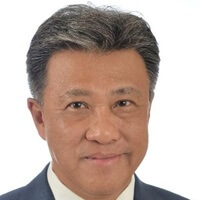
Wong Chun Wai
Wong Chun Wai began his career as a journalist in Penang and served Star Media Group for nearly four decades in various capacities and roles. He was group editorial and corporate affairs adviser to the group, after having served as group managing director/chief executive officer. "On The Beat" debuted on Feb 23, 1997. Chun Wai has penned the column weekly without a break, except for occasional press holidays when the paper was not published. In May 2011, a compilation of selected articles of On The Beat was published as a book and launched in conjunction with his 50th birthday. Chun Wai also comments on current issues in The Star. He is now chairman of national news agency Bernama.