The age of the political frenemy


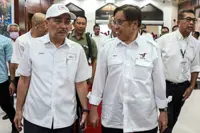
Voting puzzle: Voters queuing to cast their ballots at a polling centre in Negri Sembilan yesterday. As the political map grows more fragmented and alliances and divisions shift, voters will need to adjust expectations. — Bernama

POLITICAL friend + political enemy = political frenemy. I define the term as a party/coalition that functions simultaneously as a partner and a rival, entering alliances out of strategic necessity when competing for power, seats, or influence.

In other words, what we are witnessing today is the rise of the frenemy: a political party or coalition that acts as a friendly partner on one stage, but turns into an outright rival the moment they step onto another.

Take the current dynamics between Barisan Nasional and Pakatan Harapan. At the Putra-jaya level, their members sit side by side in the unity government, managing federal affairs and maintaining Cabinet discipline. But look at the state elections – in Johor or Negri Sembilan – and we can see how the gloves came right off. Ministers on the ceramah circuit had no problem criticising fellow ministers of another party who might sit next to him or her in Cabinet meetings.

Another clear example of the frenemy dynamic in action is the complex, ever-shifting relationship between Umno and PAS – a partnership governed purely by arithmetic, leverage, and mutual vulnerability. Oh, and of course, the ever-useful rallying cry of defending Malay rights.

Before 2018, Umno and PAS were fierce rivals fighting for the heart of the Malay-Muslim electorate, with Umno anchoring the federal government and PAS leading the opposition in its northern strongholds. They fought each other head-to-head in the 14th General Election (GE14) in 2018.

However, after the Sheraton Move infamously brought down the Pakatan administration in 2020, Umno and PAS suddenly found themselves sitting side by side in the same federal government under appointed prime minister Tan Sri Muhyiddin Yassin and later prime minister Datuk Seri Ismail Sabri Yaakob.

That truce was short-lived.

By the time GE15 arrived in 2022, the alliance fractured over seat allocations and competing ambitions, leading both parties back to open warfare on the campaign trail. Fast forward to the post-GE15 landscape: Umno joined the federal unity government alongside Pakatan (which had defeated it in GE14), while PAS anchored the opposition bench under Perikatan Nasional.

Yet, even with that clear federal split, the frenemy dynamic refuses to stay in a neat box.

In the Johor state elections, PAS instructed its supporters to vote for Barisan in seats where PAS was not contesting, aiming to block Pakatan. In Negri Sembilan (where voting is ongoing as I write this), pragmatic calculations led to electoral pacts, with Barisan and Perikatan negotiating seat fights to avoid splitting the vote.

To the average voter watching from the sidelines, it can be deeply baffling. Are they pretending? Are they serious? Or are we just watching a high-stakes game of political theatre?

The truth is, when we use the word “enemy” in political discourse, it clouds our minds. To the rakyat, two politicians who tear each other apart on the campaign trail or in the august halls of Parliament ought to be sworn enemies. Yet, walk into the Parliament cafeteria during a break and you will see those same politicians sharing a table, having tea together, laughing.

Just as artificial hostility misleads the public, so too does assuming that current Cabinet partners are permanent allies. Much of the confusion on the ground stems from this ambiguity over what political alignments are actually meant to achieve.

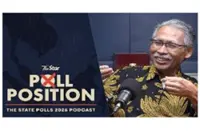
In a podcast I recently hosted, Bersama co-founder and former Natural Resources and Environ-mental Sustainability minister Nik Nazmi Nik Ahmad reflected on this very dilemma. Looking back, he noted that what Pakatan should have done from the very beginning was simply admit that its partnership with Umno is a one-term marriage of necessity rather than a permanent pact.

By failing to set those boundaries early, Pakatan and Barisan now find themselves entangled in a confusing array of arrangements on the ground. In state polls, Umno insists on testing its strength solo to satisfy its grassroots, knowing full well that once the ballots are counted, rivals must return to sit side by side in Cabinet meetings.

The relationship between PAS and Umno remains another volatile front. While some romanticise the idea of a unified Malay-Mus-lim bloc, Nik Nazmi noted that the two will always clash because they fight for the same voter base. The arithmetic speaks for itself: In GE15, Perikatan swept 71 seats while Umno was reduced to 26.

Right now, parties often align when they feel vulnerable. As Nik Nazmi observed of the Umno-PAS dynamic: “When one is weak, they will work together. But when one is strong ... one will stab the other in the back.”

That same dynamic of vulnerability is now playing out for PAS’ coalition partner, Bersatu. The party is trapped between an increasingly dominant PAS within Perikatan – where Bersatu has been relegated to stepchild status – and the ruling Pakatan coalition.

Bersatu, in fact, is facing what Nik Nazmi described as an existential crisis. Having never intended to stand on its own, it now finds itself squeezed in an overcrowded Malay political market, struggling to justify its relevance while its allies look elsewhere.

Coming full circle, I wouldn’t be surprised if Bersatu eventually ends up back in the Pakatan fold, having originally joined the coalition in 2017 to defeat Bari­­san in GE14. Alternatively, it may settle into the role of a spoiler, getting the Malay vote away from Perikatan and Barisan, much as we were seeing in early predictions in the Negri Sembilan polls.

As the political map grows more fragmented before GE16, voters will need to adjust their expectations. The lines between government and opposition, ally and opponent, will remain blurred.

If there is one cardinal rule to remember as we navigate this era of the political frenemy, it’s one of the oldest cliches in the handbook: In politics, there are no permanent friends, and no permanent enemies. There are only shared interests – and a whole lot of frenemies.

Get 20% OFF The Star Digital Access

Monthly Plan

RM 13.90/month

RM 11.12/month

Billed as RM 11.12 for the 1st month, RM 13.90 thereafter.

Best Value

Annual Plan

RM 12.33/month

RM 9.87/month

Billed as RM 118.40 for the 1st year, RM 148 thereafter.

Follow us on our official WhatsApp channel for breaking news alerts and key updates!

Next In Columnists

Breast intentions: Is breast milk really nature's best birth control?
The misquote epidemic
One-time F1 stop more than just a nostalgic return to Sepang
Trading reporting on local politics for big business
Another shot at safer roads
Do-or-die battle in Chennah
Don’t let Johor become scam hub
Uneasy pause in US-Iran conflict
How about a PhD, people?
China-Malaysia Air Silk Road: Strengthening regional connectivity

Others Also Read