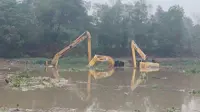
THE scene was heart-wrenching. Dozens of flood victims were on the rooftop of their homes in Segamat, screaming for help.
I was on a Fire and Rescue Department helicopter trip from Subang to Segamat and could only watch in horror at what has since been dubbed the Great Johor Floods.

Flood victims had no clean water or electricity, and cases of water-borne diseases rose. Looting was even reported.
When it happened in 2006 – 17 years ago – they called it a once-in-a-100-years occurrence. But they were dead wrong. It happened again, and again in less than 20 years.
The floods hit again after the Tenang by-election in Labis 2011, displacing almost 50,000 people statewide, and has been happening regularly since.
This year, the floods are back with a vengeance.
Last Wednesday, people in Segamat were on their rooftops again due to the rapidly rising waters.
Since that day, Johor, along with several other states, has been experiencing widespread flooding due to torrential rains.
Almost 50,000 people have been evacuated in Johor alone, and there has been colossal losses to businesses, farmers and livestock owners, as almost all 10 districts have been hard-hit.
The floods have also damaged infrastructure, resulting in the partial or full closure of 40 federal and state roads in Johor, Pahang and Negri Sembilan.
The other states affected this time were Melaka and Selangor.
A total of six people, including a 10-year-old boy, have drowned in the latest series of floods while a 23-year-old woman is still missing in Pahang.
Each time there is major flooding, it almost always begins in Segamat and Kota Tinggi, before spreading to other districts.
Why is this happening so frequently? What happened to the billions spent on flood mitigation and river widening or deepening projects in the state all these years?
Is this a warning from Mother Nature for Johor and the nation to pay more attention to climate change? Or is this just human folly? Is there too much deforestation or industrialisation in Johor?
Last Friday, Johor Mentri Besar Datuk Onn Hafiz Ghazi appealed for more Federal Government assistance and aid after the number of flood victims swelled to about 30,000 in just three days.
After each major flooding, huge allocations are poured into agencies to buy boats, rescue equipment and tents. Yet, when the next round of floods hits, it’s back to square one.
Flood victims are just fed up with all the pain and hardship they have to undergo.
Those in tents at relief centres can at least have a warm blanket and meals – even the quality of those have been questioned – but there are those who get little help.
Areas like Chaah in Labis have been cut off and did not have water supply for days in the initial stages of the floods.
In Segamat or Kota Tinggi, there was no electricity as the substations had been submerged. People also had no access to food as all the shops were flooded.
There is another nightmare that awaits. Even when the waters recede and they are allowed home, there will be the terrible mess that needs to be cleaned up.
This is usually backbreaking work, and means discarding many belongings, electrical items and furniture destroyed by the floods.
The government cash aid can only cover the basic needs of a family. What about those whose houses have been structurally damaged or washed away?
The time has come for the governments – both state and federal – to come up with a proper flood mitigation plan nationwide and spend on long-term mitigation projects. Flood mitigation should be on the national agenda, instead of the usual ad hoc handouts whenever disaster strikes.
Efforts should be made to create a national flood insurance scheme to cover not only lives of flood victims, but also their belongings.
The government should ensure the premiums are affordable, especially for those in the 4,795 flood hotspots nationwide.
Tackling floods should be a national priority as each episode causes huge losses to the country.
And that’s not taking into account the people’s suffering, which is only going to worsen if the floods continue to happen frequently.
Already a subscriber? Log in
Get 20% OFF The Star Digital Access
Cancel anytime. Ad-free. Unlimited access with perks.