ONE of my favourite comfort meals is ayam penyet, an Indonesian dish.
Once a month I indulge in a serving from a stall at a food court in Ampang Jaya, Selangor.

The essentials are all there; crispy chicken, fiery sambal mentah, fried tofu and tempeh that soaks up just enough flavour.
Mostly, I order through a food delivery app as it is convenient and saves me the hassle of driving and finding parking.
One day however, curiosity got the better of me and I decided to visit the food court in person.
One visit was enough to put me off ever dining there again – the food was fine but the surroundings were not.
The facility felt tired and neglected, with worn flooring, dim lighting and poor ventilation that trapped heat and cooking smells.
That experience sums up the complicated state of many local council-run food courts today.
These are spaces meant to serve communities, but which increasingly struggle with relevance, accessibility and basic upkeep.
Food courts and hawker centres play an important role by offering affordable meals and supporting small traders.
In the course of writing a report on the state of food courts in Kuala Lumpur and Ampang Jaya, I found many of these facilities half-empty despite being located near residential areas.
Stalls are unused for years, while others are repurposed as storage spaces or bases for catering and delivery businesses.
This deprives active traders of opportunities and reduces variety for customers.
Even after costly upgrades, some centres remain underutilised because deeper issues such as poor accessibility, lack of parking and limited food choices are not addressed.
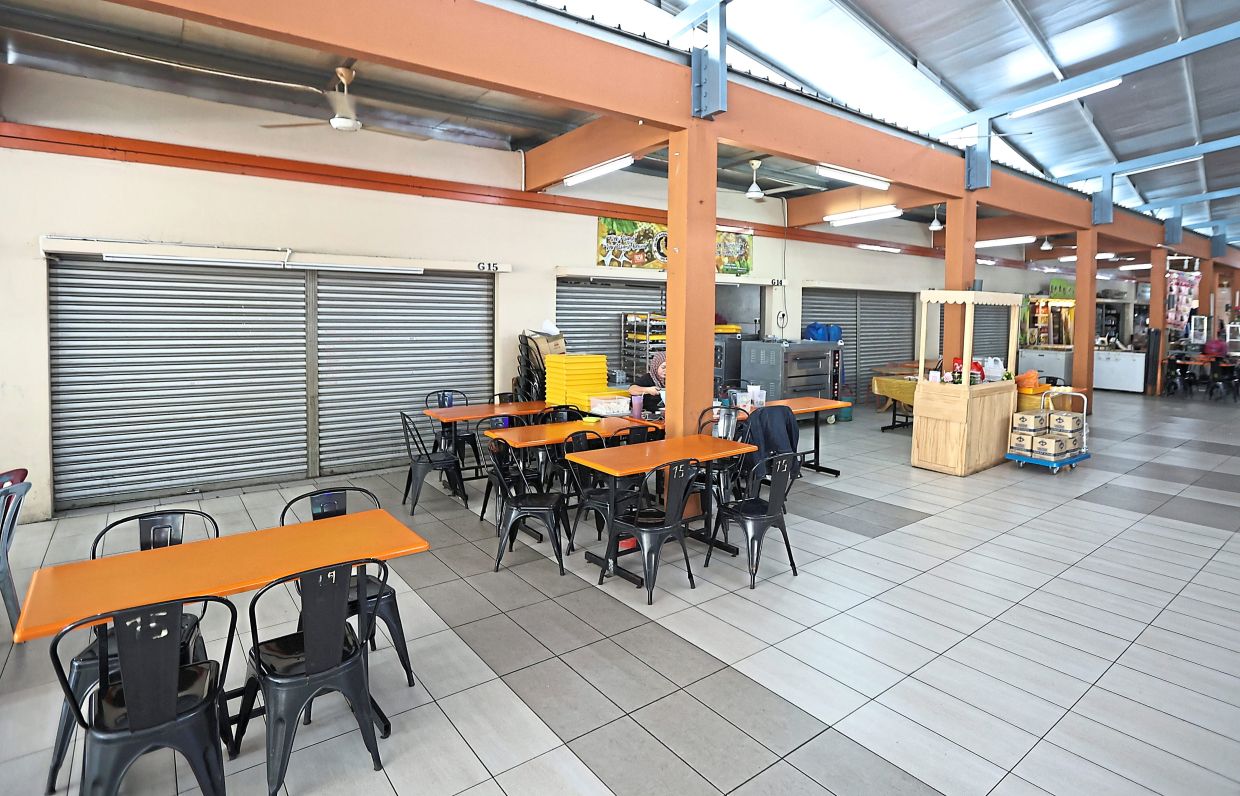
The recent announcement of a RM200mil injection under Budget 2026 to redevelop ageing hawker centres and food courts across the capital should prompt a broader rethink of how these spaces are used, managed and maintained.
While the funds will be channelled to Kuala Lumpur City Hall (DBKL) for upgrade works, improvements must go beyond cosmetic fixes.
A proper inventory of locations and traders should be carried out before any upgrading begins, to ensure resources are directed where they are truly needed.
Upgrades must also be tailored to conditions and challenges of each site, so that public money is spent effectively and does not end up revitalising spaces that remain underused.
However, upgrades alone will not solve structural problems.
Accessibility remains a major challenge.
Many food courts lack parking yet are poorly connected to public transport services.
In an era where convenience often determines dining choices, these factors matter.
If customers find it easier to tap an app than to patronise dimly lit, rundown premises, food courts will continue to lose foot traffic.
There is also the issue of misuse by traders themselves; when stalls are kept idle, used for non-food purposes or left in disrepair, the entire ecosystem suffers.
This is why calls for proper inventories and a trader census before upgrading should be heeded.
Authorities need to know who is actually operating, who has stopped trading and whether locations still make sense based on surrounding catchment areas.
Without this groundwork, public funds risk being spent on facilities that remain empty.
That said, there are clear examples of food courts that thrive when planning is done right.
Well-maintained food courts can become a vibrant community hub, as seen in parts of Kuala Lumpur.
The question then is not whether food courts should be kept, but how.
Letting them decay further is not an option, while closing them outright risks cutting off affordable food access and livelihoods.
With appropriate upgrades, improved monitoring and a better understanding of community needs, food courts can remain relevant to the neighbourhoods they serve.
Already a subscriber? Log in
Get 20% OFF The Star Digital Access
Cancel anytime. Ad-free. Unlimited access with perks.