BETTER facilities, more permanent structures and longer operating hours are among the improvements small traders in Ampang Jaya, Selangor, hope to see as the local council makes space for them to operate sustainably.
They were among those who shared their views during the “Revolusi Mikro Ekonomi” survey by Ampang Jaya Municipal Council (MPAJ) to gather public feedback on the suitability of potential locations for micro-entrepreneur activities within its administrative area.
MPAJ said feedback from the survey, which ended on Sept 16, was intended to help improve the support and facilities available to small traders and guide future planning.
The council is allocating RM3mil as part of its 2027 budget to make improvements based on traders’ feedback once its survey findings are reviewed.
They comprise some 5,000 street vendors as well as operators of market stalls and food courts in Ampang Jaya.
Wish list
In Ukay Perdana, traders are happy with their present location, but want MPAJ to provide better basic facilities.
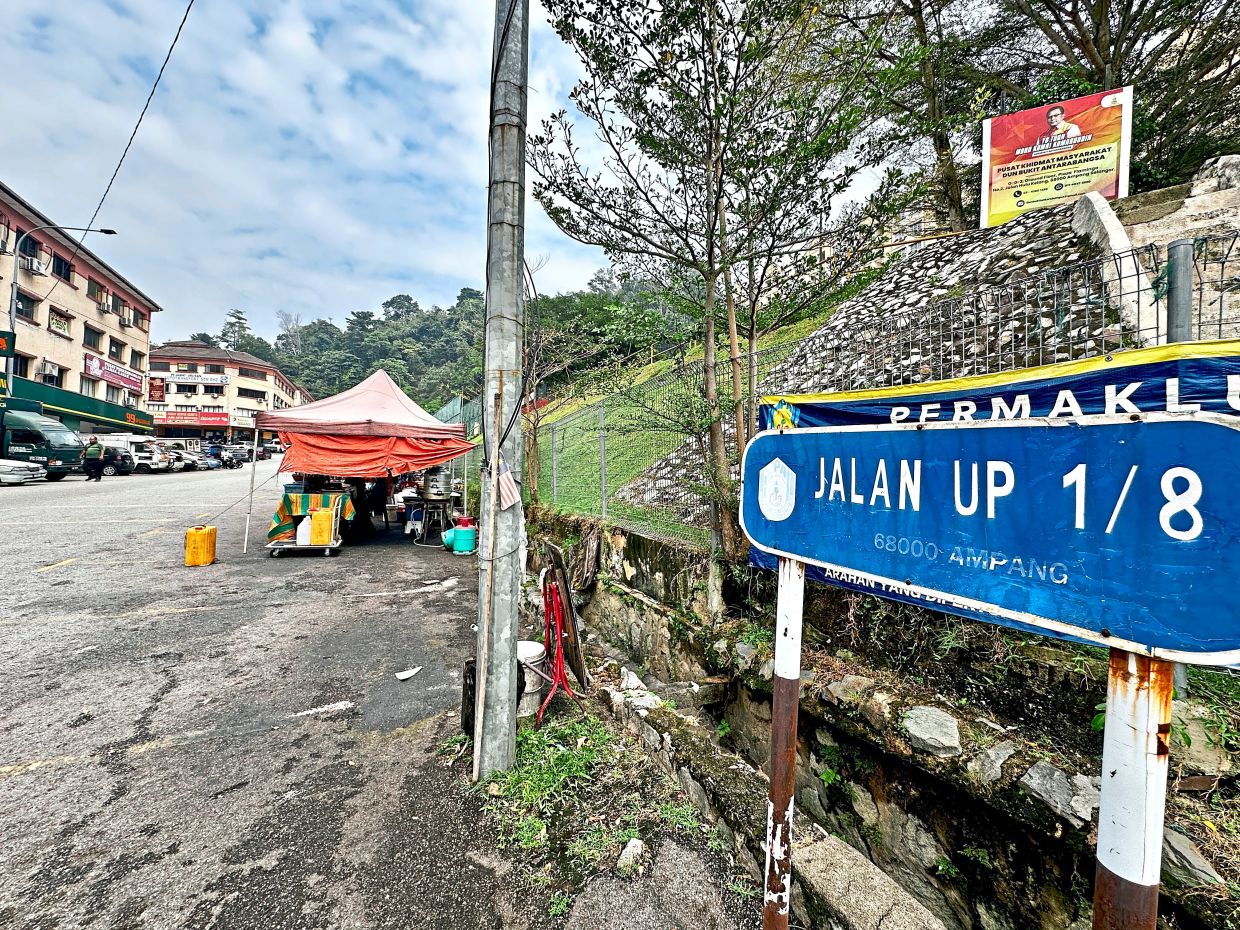
Jamaliah Sahadan, 55, who has been trading at various roadside locations in Ampang for more than 20 years, said the present location at Jalan UP 1/8 was strategic.
However, she said the current canopy set-up was inadequate.
Jamaliah, who sells nasi kukus ayam berempah, hoped a permanent structure could be considered as the area had already been gazetted for stalls.
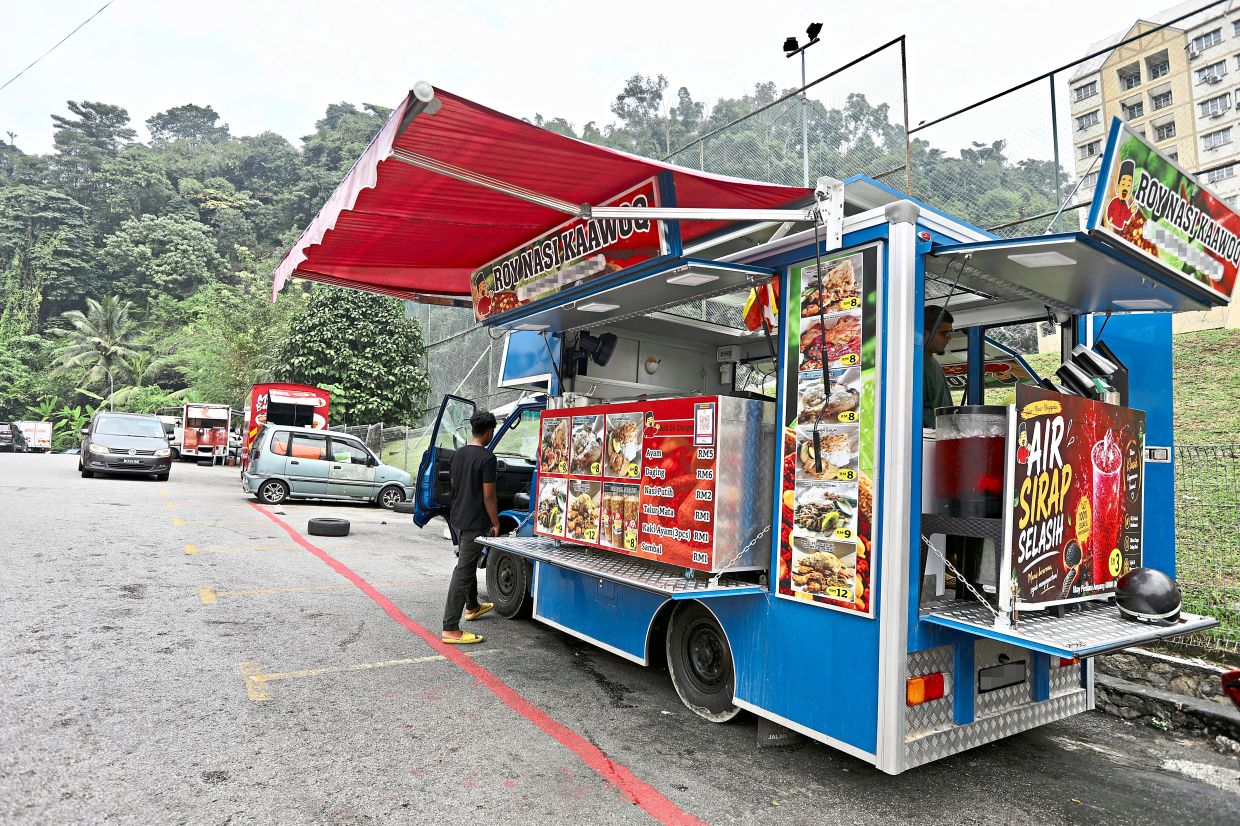
“Having running water and electricity would also make things much easier.
“For now, I have to pay one of the shops nearby to collect water whenever I need it,” said Jamaliah who opens for business from 9am to 3pm daily.
She said rain could make trading difficult.
Cendol seller Md Yusof Ujang, 66, who has been at the location for six years, said the facilities were generally satisfactory but improvements to the road would be welcome.
“There are some potholes and uneven sections, so hopefully the road can be resurfaced,” he said.
He also hoped the monthly rental could be reduced from RM120 to RM80, saying this would ease the burden on small traders.
Newcomer Rehana A. Rahim, 38, who only started trading there almost three months ago, sees potential in the location.
She said business had been mixed but the presence of several stalls and food trucks helped attract customers.
“The crowd here so far is okay. There are good days and bad days.
“But with several stalls and food trucks concentrated here, it attracts customers,” she said.
Rehana, who sells fried chicken, currently operates from around noon to 7pm.
She said better lighting and electricity supply could allow traders to stay open later, particularly those whose businesses perform better at night.
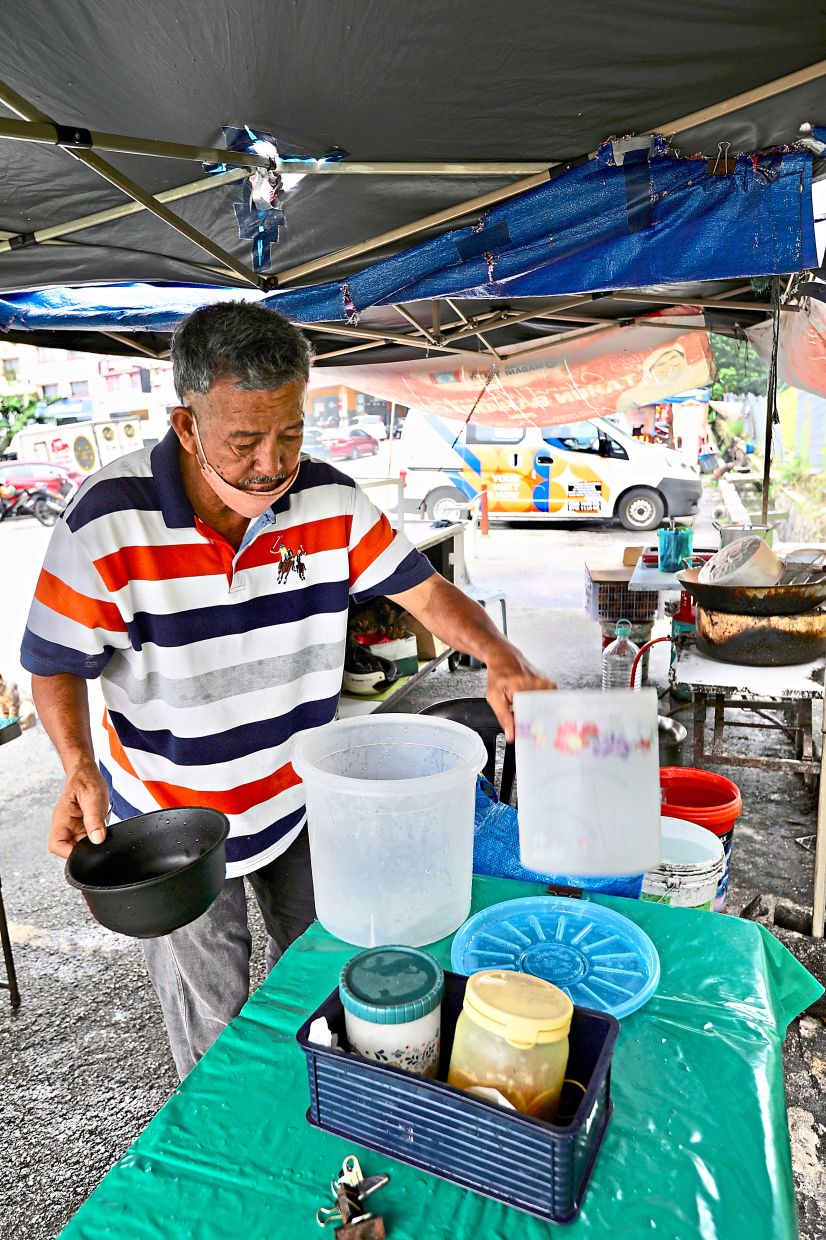
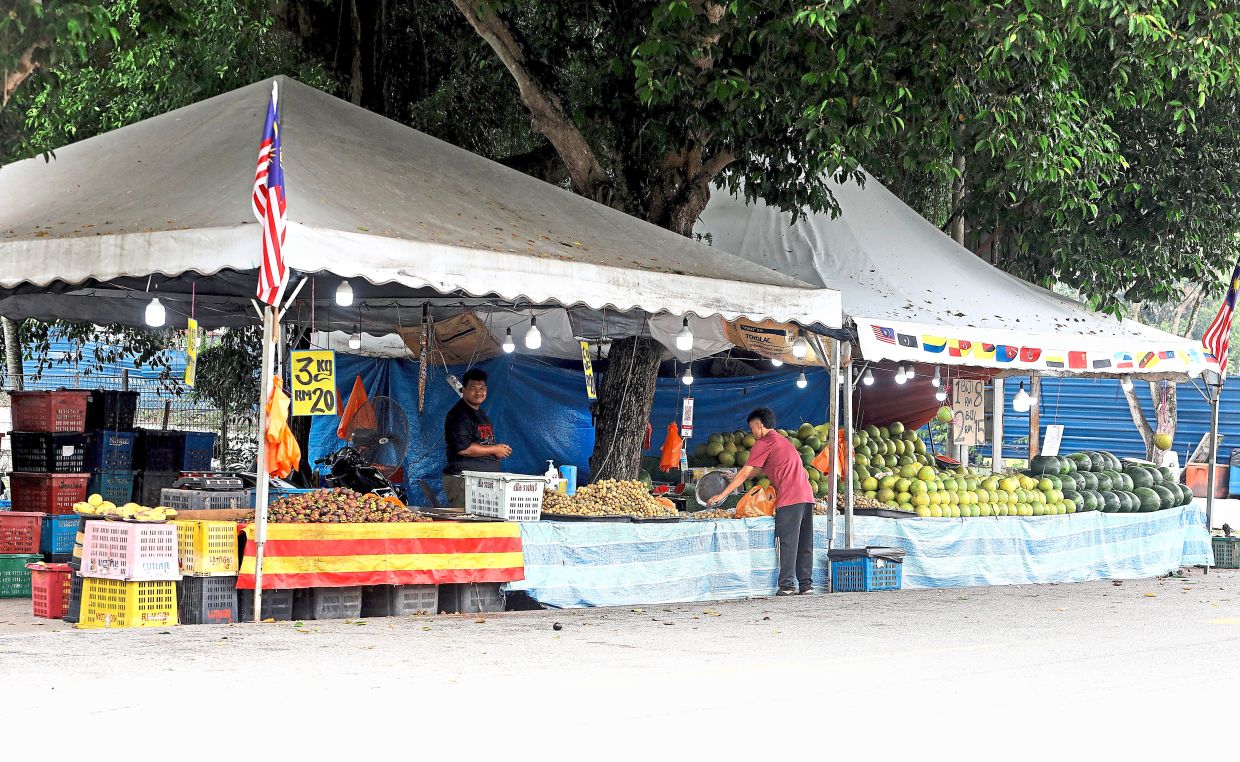
In Lembah Keramat, seasonal fruit seller Mohd Imran, 24, said better waste management facilities would make the area more convenient for traders.
He hoped the council could provide designated bins or a proper rubbish collection area.
“We sometimes sell pre-cut and packaged fruits, which can generate quite a bit of waste.
“Sometimes we also have to dispose of rotten fruit at the end of the day.
“It would be easier if there is a designated bin or rubbish area nearby,” he said.
He added that having a proper disposal point would help keep the trading area clean and make it easier for traders to manage waste during busy periods.
At a designated food trading area in Pandan Perdana, trader KM Loh said having toilet facilities at the site would make it more convenient for both traders and customers.
The trader said several stall operators currently paid a small fee to use the toilet at a nearby restaurant.
“Since this is a designated food trading area, it would be helpful if there is a toilet here,” she said.
Meanwhile, several residents StarMetro spoke to said they did not have any serious issues with roadside traders.
Some suggested that uniformity in stall size and canopies would make the stalls look more organised.
They said it would also help identify those who were licensed by the council and those who were not.
Making room for traders
MPAJ deputy president Hasrolnizam Shaari said the council was looking to reorganise and improve trading locations for small businesses.
This was so they could operate without creating conflicts with residents or affecting traffic and parking, he said.
He said MPAJ had identified almost 5,000 micro traders in Ampang Jaya, with some operating at established locations such as markets, food courts and council premises, while others were operating through programmes such as MyKiosk, Mara kiosks as well as stalls under the state economic planning unit (Upen) known as Gerai Upen.
“We see these activities as part of the community’s need to earn an income, but we also need to ensure they are carried out in a way that does not create problems for the surrounding community,” he said.
He said MPAJ had allocated RM3mil in its 2027 budget to improve and create suitable trading spaces for small traders, as part of efforts to reorganise the micro-businesses.
Hasrolnizam said the council wanted to ensure traders were placed at suitable locations based on the needs of the area, while avoiding issues such as traffic congestion, lack of cleanliness and the loss of parking spaces.
“We do not want traders to be left out or forced to stop trading because they are no longer allowed to operate at a particular location,” he said.
At the same time, the council also wanted to avoid situations where parking spaces were simply taken over by traders.
Instead, Hasrolnizam said MPAJ was looking at solutions that could accommodate both trading and parking needs, including redesigning spaces and reorganising traffic flow.
He said the council was also exploring dual-use spaces, such as developing trading areas above existing drains or using portions of road verges that were currently landscaped, where suitable.
Hasrolnizam said MPAJ had detailed the various trading locations and identified those involved in micro-enterprise activities, while discussions had also been held with local traders, councillors and elected representatives.
He added that feedback from the survey would be collated and analysed before finalising the plans, with implementation targeted for early next year.