Many theories, so little evidence


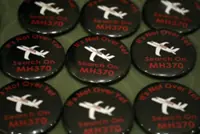
LAST Friday marked a decade since Malaysia Airlines Flight MH370 disappeared with 227 passengers and 12 crewmembers, ranking it among the world’s greatest aviation mysteries that remain unsolved.

After waiting 10 years for some sort of closure, hope has been rekindled for the victims’ grieving families. On March 4 during his visit to Melbourne, Australia, Prime Minister Datuk Seri Anwar Ibrahim told journalists that the government is willing to resume the search for the plane provided there is convincing new information on where it can be located.

“We have taken the position that if there is a compelling case, evidence that it needs to be re-opened, we’re certainly happy to re-open,” he said. “Whatever needs to be done must be done.”

A day earlier, at a gathering in Kuala Lumpur to commemorate the 10th year of the disappearance of MH370, Transport Minister Anthony Loke said the government was committed to finding the aircraft and cost was not the issue.

Loke confirmed that he would meet the management of US marine exploration firm Ocean Infinity, which conducted the last unsuccessful search in January 2018 under a “no find, no fee” arrangement. He disclosed that there was some progress in the new research and technologies presented.

MH370 disappeared after its pilot, Zaharie Ahmad Shah, sent this cryptic message to air traffic controllers (ATC) in Malaysia less than half an hour into the flight: “Good Night, Malaysian Three Seven Zero.”

The Beijing-bound Boeing 777 took off from KLIA at 12.41am, but just after entering Vietnam’s airspace, it abruptly changed the direction of its north-bound flight path. It was tracked going towards the Andaman Sea and turning south before all traces were lost.

There was no distress signal nor any mayday message from the plane, but its transponder, an electronic device which sends out regular location updates, was switched off, causing it to vanish from the ATC secondary surveillance radar screens in Vietnam and Malaysia.

However, the Royal Malaysian Air Force’s primary military radar tracked what it described as a “non-hostile” aircraft for an hour but did not intercept it on the assumption that it turned back at the instructions of the ATC.

The radar showed that the plane flew back over the north of the peninsula and Penang Island, heading towards the Andaman Sea before contact was lost. Based on data from automatic links from the British Inmarsat satellite, MH370 made another detour to the south, after which all contact was lost.

The majority of the passengers on board –153 – were Chinese nationals. There were also Malaysians, and citizens of Australia, Canada, France, India, Indonesia, Holland, Russia, Taiwan and the United States in addition to two Iranian men, who were alleged to have used stolen passports to migrate to Europe, and 20 employees of US chip tech firm Freescale Semiconductor (12 from Malaysia and eight from China).

Between 2014 and 2017, Malaysia, Australia and China led the biggest and costliest – US$157mil (RM735.16mil) – underwater search ever undertaken, covering some 120,000sq km of seabed off Western Australia, using 50 aircraft, 60 ships and high-tech robotic submarines, looking for the wreckage.

The first piece of debris, the right wing flaperon of the plane, was found on July 29, 2015, on a beach on the French island of Réunion, about 3,700km west of the Indian Ocean area being searched by Australian authorities.

The underwater search ended in January 2017, and resumed a year later with Ocean Infinity chartering a Norwegian ship. However, after covering a 25,000km “priority area”, the search operation ended without any success.

What actually happened to MH370 remains an enigma. There are boundless theories, but evidence is scarce. Among the theories include the possibility that it was hijacked and flown to North Korea or Russia; flown via remote control by the Central Intelligence Agency (CIA) to the US airbase on the British-owned island of Diego Garcia; and it was shot down near the remote island because of some “sensitive cargo” on board.

People on the Maldives island of Kudahuvadhoo, 5,000km from the search area, claimed they saw a jet with the colours of the Malaysian plane on the morning of its disappearance. They said it was flying so low they could see the aircraft’s doors.

The plane’s disappearance became the subject of a Netflix documentary titled MH370: The Plane That Disappeared, which postulated several theories, including one of mass murder and suicide, implying that pilot Zaharie was responsible.

Based on reports that Zaharie had conducted a simulated flight along the route where the plane went missing, it was speculated that he switched off radar communications and depressurised the cabin, leaving the aircraft on autopilot until it ran out of fuel and fell into the ocean.

But according to media reports, lead investigator of the Malaysian ICAO (International Civil Aviation Organisation) Annex 13 Safety Investigation Team, Kok Soo Chon, dismissed the notion in an official report from the Malaysian government.

He said the probe examined the pilot and the first officer and the investigation team was “quite satisfied” with their background, training and the state of their mental health, and was not of the opinion that it could have committed by the pilot.

Zaharie’s family also vehemently denied such a conjecture, stating that such action was contrary to his character.

According to the official report on MH370, the people on board most probably died from suffocation as the cabin ran out of oxygen, and the aircraft went on autopilot until it ran out of fuel and plunged into the ocean.

It is baffling that the disappearance of MH370 remains unsolved despite the extensive satellite systems covering the entire globe and given the unparalleled capabilities of most major powers to monitor air and marine traffic. It’s unbelievable, to say the least. Media consultant M. Veera Pandiyan likes this piece of wisdom from Confucius: Three things cannot long be hidden – the sun, the moon and the truth. The views expressed here are the writer’s own.

Get 20% OFF The Star Digital Access

Monthly Plan

RM 13.90/month

RM 11.12/month

Billed as RM 11.12 for the 1st month, RM 13.90 thereafter.

Best Value

Annual Plan

RM 12.33/month

RM 9.87/month

Billed as RM 118.40 for the 1st year, RM 148 thereafter.

Follow us on our official WhatsApp channel for breaking news alerts and key updates!
MH370 , Facts , Conspiracy Theories

Next In Columnists

The incredible star power rising from the East
Make Penang AI plan a bridge for majority
Giants fall, England survive – World Cup quarter-finals take shape
Who shapes global AI rules: Asean-China cooperation role
Why the Johor election is good for Malaysian democracy
Confessions of a durian season sinner
Looming threat to social security
More predictable than the World Cup
America at 250
Coexistence with wildlife key for public safety

Others Also Read