




A VIRAL post claims that a Japanese sushi chain owner flew to Somalia in 2012, taught pirates to catch tuna and single-handedly ended Somali piracy.
The man in question is Kiyoshi Kimura, whose sushi empire has made him one of Japan's best-known businessmen.
Did a Japanese sushi boss single-handedly end Somali piracy?
Verdict:

FALSE
Kimura did help former pirates in Somalia take up tuna fishing, but the sharp fall in Somali piracy has been credited mainly to international naval patrols and armed guards on ships rather than to one businessman.
Known in Japan as the "Tuna King", Kimura heads Kiyomura Corporation, which runs the Sushi Zanmai restaurant chain.
According to Monocle magazine, he left Japan's Air Self-Defense Force to join the fish trade in 1974, set up his own company a decade later and opened the first Sushi Zanmai in 2001.
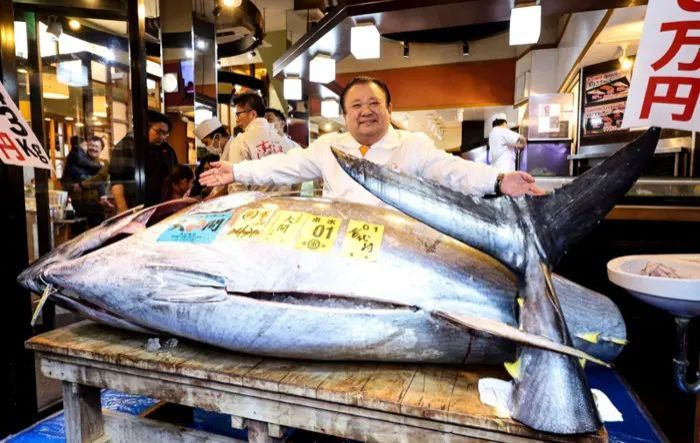
His real claim to fame, however, is the New Year tuna auction at Tokyo's Toyosu fish market, where he has repeatedly paid eye-watering sums for the first bluefin of the year.
In January, Kiyomura paid a record 510 million yen (US$3.24mil) for a single 243kg bluefin tuna, as reported by Reuters.
His Somalia story began with that same appetite for tuna.
In a 2016 interview with Japanese business site Harbor Business Online, Kimura said the waters off Somalia were good fishing grounds for yellowfin tuna, but piracy had made them too dangerous to fish.
He said that when he asked around, nobody had actually spoken to the pirates, so he used his contacts to meet them.
What he found, he said, was that they were not pirates because they wanted to.
"So why not catch tuna in this sea instead? They should be living a life of pride, feeding their families with money they earned themselves," said Kimura.
Kimura said the men had no boats, no tuna fishing skills and no working cold storage, and could not export their catch because Somalia was not a member of the Indian Ocean Tuna Commission (IOTC).
His company sent four of its boats, taught fishing techniques, got the cold storage running, urged the Somali government to join the IOTC and bought the tuna itself so the fishermen had a buyer, he said.
At the time of the interview, he admitted the venture was not yet turning a profit.
Among the keepsakes Kimura showed Monocle in 2019 was a medal from Djibouti, Somalia's neighbour.
"I received this medal from the government. Our work with fishermen in the Indian Ocean is improving livelihoods and reducing piracy," said Kimura.
Notably, Kimura himself has never claimed to have beaten the pirates alone.
Japanese magazine Gendai Business once asked him about online claims that he had wiped out Somali piracy.
"It's not such a grand story," said Kimura.
Events at sea tell a bigger story.
Somali pirates launched 237 attacks at their peak in 2011, according to the International Maritime Bureau (IMB), as reported by Reuters.
Navies from around the world were sent to the region, with Japan deploying its Self-Defense Forces on anti-piracy operations from 2009 and later setting up a base in Djibouti, according to Japan's Foreign Ministry.
By the first half of 2012, attacks off Somalia had fallen to 69 from 163 a year earlier, the IMB said at the time.
The bureau credited tougher action by international navies, including strikes on pirate bases, along with the growing use of private armed guards, razor wire and heightened watches on ships.
"The naval actions play an essential role in frustrating the pirates. There is no alternative to their continued presence," said IMB director Pottengal Mukundan, as reported by Reuters.
That decline was already under way in 2012, the year the viral post says Kimura arrived.
Somalia then went years without a successful hijacking of a cargo ship, from 2017 until pirates seized the Maltese-flagged bulk carrier MV Ruen in December 2023, as reported by AFP.
Since then, piracy off Somalia has crept back.
Two Somali gang members told Reuters in 2024 that they were using the distraction caused by Houthi attacks on shipping in the Red Sea to return to piracy after nearly a decade.
As some navies shifted to deal with the Houthis, the motorised dhows and fishing trawlers that pirates seize as mother ships for longer raids became more vulnerable, analysts told AFP.
Illegal fishing by foreign fleets remains another long-running grievance along the coast.
"The reason why the pirates are re-emerging is because of the widespread illegal fishing on the coast," said Ahmed Abdi Nuh, an elder from the coastal town of Eyl, as reported by AFP.
"The coastal economy is fragile. Fishing livelihoods remain under pressure from foreign fleets. There's minimal state presence in many littoral zones [parts of the sea that are close to the shore]. Put that together; grievance, opportunity and the means to act, and piracy starts to make sense again," said Danish Institute for International Studies senior researcher Jethro Norman, as reported by The Telegraph.
The IMB's latest figures show global piracy fell to its lowest level since 1992 in the first half of 2026, but with a slight resurgence off Somalia.
Somali pirates were responsible for 94% of all crew taken hostage during that period, the bureau said.
"Crew safety remains at risk, and the slight uptick of Somali piracy is a reminder that continued vigilance and regional cooperation remain essential to protect seafarers, global shipping and trade," said IMB director Michael Howlett.
Which suggests the Tuna King had a point: warships can chase pirates off the sea, but it takes a decent living on land to keep them away.
Sources:
2. https://gendai.media/articles/
3. https://monocle.com/food-
4. https://en.aletihad.ae/news/
5. https://www.businessinsurance.
6. https://www.arabnews.com/node/
7. https://www.mofa.go.jp/mofaj/
8. https://www.pressreader.com/
9. https://www.dhakatribune.com/
10. https://www.yahoo.com/news/


