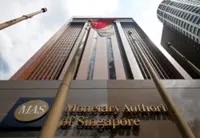
SINGAPORE: Business activity in Singapore plunged to a record low in April due to a lockdown and the impact of the Covid-19 (coronavirus) pandemic, according to a widely-cited survey.
The monthly purchasing managers index (PMI) showed a fall to 28.1 from March's 33.1 - "yet another unprecedented month-to-month deterioration," according to IHS Markit, which conducts PMI surveys in 40 countries.
Anything below 50 suggests that businesses are cutting back. A locally-published PMI on Monday suggested a less-precipitous decline, though the 44.7 recorded was nonetheless the lowest since the 2008-2009 global financial crisis.
Singapore was the first Asian country to fall into recession in 2008 and the government has repeatedly warned that as a trade-dependent city-state, Singapore could face a 4 per cent gross domestic product contraction in 2020.
"Small open economies are undoubtedly going to be some of the worst hit," said Joe Hayes of IHS Markit.
Last week, Singapore's official retail sales data for March showed a 13.3 per cent fall - to a level unseen in 22 years. Coming before the imposition of a "circuit breaker" lockdown on April 7, the retail numbers hint at worse to come in April for the city-state, which has the world's fourth-highest GDP per head, according to an International Monetary Fund ranking.
Singapore imposed a lockdown after cases of Covid-19, the disease caused by the new coronavirus, surged in late March and early April.
On Sunday (May 10), Siingapore identified nine more new Covid-19 clusters and confirmed 876 new positive cases, bringing the infection tally to 23,336.
Its Ministry of Health (MOH) said the preliminary data as at noon today showed that only three cases involved Singaporeans or permanent residents while the rest were foreign workers at dormitories. - dpa
The monthly purchasing managers index (PMI) showed a fall to 28.1 from March's 33.1 - "yet another unprecedented month-to-month deterioration," according to IHS Markit, which conducts PMI surveys in 40 countries.
Anything below 50 suggests that businesses are cutting back. A locally-published PMI on Monday suggested a less-precipitous decline, though the 44.7 recorded was nonetheless the lowest since the 2008-2009 global financial crisis.
Singapore was the first Asian country to fall into recession in 2008 and the government has repeatedly warned that as a trade-dependent city-state, Singapore could face a 4 per cent gross domestic product contraction in 2020.
"Small open economies are undoubtedly going to be some of the worst hit," said Joe Hayes of IHS Markit.
Last week, Singapore's official retail sales data for March showed a 13.3 per cent fall - to a level unseen in 22 years. Coming before the imposition of a "circuit breaker" lockdown on April 7, the retail numbers hint at worse to come in April for the city-state, which has the world's fourth-highest GDP per head, according to an International Monetary Fund ranking.
Singapore imposed a lockdown after cases of Covid-19, the disease caused by the new coronavirus, surged in late March and early April.
On Sunday (May 10), Siingapore identified nine more new Covid-19 clusters and confirmed 876 new positive cases, bringing the infection tally to 23,336.
Its Ministry of Health (MOH) said the preliminary data as at noon today showed that only three cases involved Singaporeans or permanent residents while the rest were foreign workers at dormitories. - dpa
Already a subscriber? Log in
Get 20% OFF The Star Digital Access
Cancel anytime. Ad-free. Unlimited access with perks.