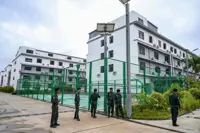
Tokyo: Japanese medics are warning more must be done to prevent Covid-19 from overwhelming the country’s healthcare system as confirmed cases passed 10,000, despite a nationwide state of emergency.
Experts have been alarmed by a recent spike in infections, with hundreds detected daily. Japan’s outbreak remains less severe than in hard-hit European countries, but its caseload is one of Asia’s highest after China and India, and is roughly on par with South Korea.
There have been 171 deaths recorded so far in Japan and 10,751 cases, with the country under a month-long state of emergency, initially covering seven regions but now in place nationwide.
Prime Minister Shinzo Abe has urged residents to reduce contact with other people by 70 to 80%, and the number of people on Tokyo’s normally packed transport system has dropped significantly.
But the measures do not prevent people from going out, and many shops and even restaurants remain open, even as medical associations warn the country’s healthcare system is struggling to cope.
“The system is on the verge of collapse in many places in Japan,” said Kentaro Iwata, an infectious diseases specialist from Kobe University who has repeatedly criticised the government’s response to the crisis.
Iwata told the press yesterday Japan’s strategy of limited testing and intensive contact-tracing worked well in the initial phase of the local outbreak, when numbers were small.
But he charged that Japan failed to adapt as the outbreak grew.
“We needed to prepare for once the situation changes, once the cluster-chasing became not effective and we needed to change strategy immediately. But traditionally speaking, and historically speaking, Japan is not very good at changing strategy,” he added.“We are very poor at even thinking of plan B because thinking of plan B is a sign of admitting failure of plan A.”
Japan’s government argues it has adjusted its strategy, boosting testing capacity, changing rules that required all positive cases to remain in hospitals where wards quickly became full, and imposing the state of emergency to reduce the spread.
But medical experts have called the measures insufficient.
“Beds for Covid-19 patients continue to be almost full,” Tokyo Medical Association president Haruo Ozaki warned last week.
The health minister has acknowledged that hospitals have in some cases turned away suspected patients in ambulances.
“Japan hasn’t built a system in which ordinary hospitals can take infectious disease patients when designated hospitals can’t cope,” Ozaki said on Friday. — AFP
Experts have been alarmed by a recent spike in infections, with hundreds detected daily. Japan’s outbreak remains less severe than in hard-hit European countries, but its caseload is one of Asia’s highest after China and India, and is roughly on par with South Korea.
There have been 171 deaths recorded so far in Japan and 10,751 cases, with the country under a month-long state of emergency, initially covering seven regions but now in place nationwide.
Prime Minister Shinzo Abe has urged residents to reduce contact with other people by 70 to 80%, and the number of people on Tokyo’s normally packed transport system has dropped significantly.
But the measures do not prevent people from going out, and many shops and even restaurants remain open, even as medical associations warn the country’s healthcare system is struggling to cope.
“The system is on the verge of collapse in many places in Japan,” said Kentaro Iwata, an infectious diseases specialist from Kobe University who has repeatedly criticised the government’s response to the crisis.
Iwata told the press yesterday Japan’s strategy of limited testing and intensive contact-tracing worked well in the initial phase of the local outbreak, when numbers were small.
But he charged that Japan failed to adapt as the outbreak grew.
“We needed to prepare for once the situation changes, once the cluster-chasing became not effective and we needed to change strategy immediately. But traditionally speaking, and historically speaking, Japan is not very good at changing strategy,” he added.“We are very poor at even thinking of plan B because thinking of plan B is a sign of admitting failure of plan A.”
Japan’s government argues it has adjusted its strategy, boosting testing capacity, changing rules that required all positive cases to remain in hospitals where wards quickly became full, and imposing the state of emergency to reduce the spread.
But medical experts have called the measures insufficient.
“Beds for Covid-19 patients continue to be almost full,” Tokyo Medical Association president Haruo Ozaki warned last week.
The health minister has acknowledged that hospitals have in some cases turned away suspected patients in ambulances.
“Japan hasn’t built a system in which ordinary hospitals can take infectious disease patients when designated hospitals can’t cope,” Ozaki said on Friday. — AFP
Already a subscriber? Log in
Get 20% OFF The Star Digital Access
Cancel anytime. Ad-free. Unlimited access with perks.