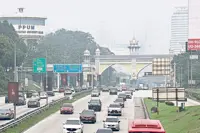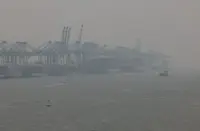
PETALING JAYA: Prolonged exposure to haze could take a toll not only on human health but also on vehicle engines, potentially contributing to engine wear and affecting performance, says an automotive engineering expert.
Universiti Teknologi Malaysia’s Institute for Sustainable Transport Associate Prof Dr William W.F. Chong said modern vehicles with internal combustion engines were equipped with air filters to prevent dust and other particles from entering the engine.
However, some fine particles, including those classified as PM2.5, could pass through conventional air filters, potentially affecting engine performance if they came into contact with moving components, he said.
“Prolonged exposure to such fine particles could contribute to wear over time, especially if they find their way into the engine oil, which helps reduce friction and protect moving components.
“Engine oil contains special additives designed to protect metal surfaces from wear. Previous research has shown that certain particles, particularly soot, can interfere with the protective function of these additives when they accumulate in the oil. Clogged or dust-contaminated air filters may also restrict airflow and affect engine performance,” said Chong, who specialises in engine wear and lubrication.
However, he said it remained unclear whether haze particles entering through a vehicle’s air intake could reach levels high enough to cause premature deterioration of moving parts.
“While the effects of dust and particulate contamination on engine wear are well established, scientific evidence on the extent to which the current regional haze affects engine wear, performance and maintenance costs remains limited,” he said.
Further research was needed to determine which types of haze particles could pass through vehicle air filters, he added.
Chong advised motorists to maintain their engine air filters properly and consider having them inspected after prolonged exposure to severe haze.
He said similar engineering principles applied to other machinery and air-conditioning systems that relied on air intake or airflow for cooling and operation.
“Air filters in such equipment are designed to capture dust and other contaminants, but their effectiveness against very fine haze particles varies according to filter design and particle size.
“Over time, airborne particles could also accumulate on filters and cooling surfaces, potentially restricting airflow and reducing efficiency. The actual impact would depend on the equipment’s design, operating conditions and duration of exposure,” he said.
Automotive influencer Gu Lee agreed that prolonged haze conditions could cause air-conditioning filters to become clogged, depending on driving conditions.
“Cabin air filters are particularly prone to getting dirty sooner if we drive with the windows open or the ventilation mode is set to allow outside air in. A clogged filter will reduce air-conditioning efficiency,” said the veteran mechanic.
Gu Lee advised motorists to have their engine oil and air filters checked at the end of the current haze episode.
“Flush the engine oil and change the filters. For most cars, it costs less than RM200, but the service will help ensure that air filtration and engine lubrication are not compromised,” he said.
Another car workshop owner, who declined to be named, said haze-related dust accumulating on vehicles could also accelerate paintwork deterioration.
As of 5pm yesterday, 14 of the 68 air quality monitoring stations operated by the Department of Environment nationwide recorded unhealthy air quality, with Air Pollutant Index readings ranging from 104 to 161.
Nilai, Seremban, Petaling Jaya, Johan Setia and Klang were among the areas recording unhealthy air quality, while 52 stations recorded moderate readings.
Kimanis in Sabah and Limbang in Sarawak were the only two areas recording good air quality.