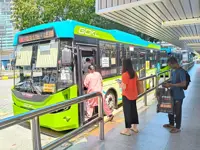
PRASARANA Malaysia Bhd expects to finalise its procurement decision for the open payment system (OPS) for public transport services by the end of this year, following delays as the first tender was not awarded.
Transport Minister Anthony Loke said the project was now in the final stages of the procurement and evaluation process.
The OPS is an upcoming initiative to let commuters pay for Rapid KL rail and bus services using bank cards, digital wallets and QR codes instead of relying solely on Touch ‘n Go cards or physical tokens.
“The delay occurred because the first tender was not awarded. So there was a retendering process, and that took time,” he said during the question and answer session in the Dewan Rakyat yesterday.
He added that the procurement process fell under Prasarana, which had autonomy over its tendering procedures, and that the project was fully funded by the company.
The lengthy implementation timeline, he said, was necessary to ensure compliance with Prasarana’s internal procurement procedures and standard operating procedures, as well as transparency, competitiveness and value for money.
He was responding to a question from Zahir Hassan (PH- Wangsa Maju) on the delay in implementing the open payment system, which was initially targeted for bus services by the end of 2024 and rail services by August 2025.
Loke said the system would cover Prasarana’s public transport networks in the Klang Valley and Penang, including rail and bus services operated by Rapid Rail and Rapid Bus.
He added that the project would be implemented in phases, with 30% of passenger access and fare collection equipment at each Rapid KL rail station expected to support open payments within the first 12 months after the project begins.
Full implementation across the rail network is targeted within 30 months, he said.
“The open payment system for Rapid Bus services in the Klang Valley is expected to be fully implemented within 15 months of the project commencement date,” he said.
Payment methods would include MyDebit cards, international credit and debit cards, contactless payments using C-enabled devices, digital wallets such as Apple Pay, Google Pay, Samsung Pay and Alipay, QR codes and Touch ‘n Go cards, he said.