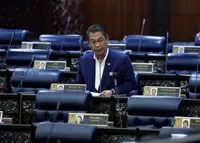
KUALA LUMPUR: Baggage scanners at Kuala Lumpur International Airport (KLIA) and other airports nationwide are not equipped to detect contraband such as drugs, says Datuk Seri Saifuddin Nasution Ismail.
The Home Minister said the scanners were designed mainly to detect explosives, weapons and dangerous metal objects to ensure aviation safety. Detecting drugs, however, depends on screening officers’ expertise, visual assessments and risk profiling.
“The existing baggage screening systems are not equipped with technology to detect contraband such as drugs,” he said in a written parliamentary reply to Batang Sadong MP Rodiyah Sapiee.
The question followed the arrest of a Malaysian co-pilot in Jakarta in July over alleged drug smuggling involving drugs believed to have passed through KLIA.
Saifuddin said the government had approved 17 recommendations under a joint memorandum by the Home Ministry and Transport Ministry on Aug 19 to strengthen security at the country’s entry points.
The action plan covers three areas: aviation security, national and border security, and physical security and protection. It will be implemented in phases, with short-term measures to be carried out within six months, medium-term measures within six to 24 months, and long-term measures beyond 24 months.
To prevent airline crew and airport personnel from abusing dedicated access lanes, the government has tightened security vetting for new and renewed airport passes through an enhanced e-Vetting system.
Regular job rotation has also been introduced for personnel working in security-restricted areas to reduce the risk of collusion and manipulation of security controls, he said.
In the longer term, the government plans to upgrade baggage and body scanners at international entry points in phases. The new technology will incorporate artificial intelligence (AI) analytics and capabilities to detect anomalies involving prohibited substances.
The measures follow concerns over how the co-pilot passed through KLIA’s screening process before being detained at Jakarta’s Soekarno-Hatta International Airport.
In August, Malaysian authorities said the co-pilot had undergone the required screening at KLIA, but his baggage had not been flagged for further inspection. Police subsequently investigated possible links involving airport personnel and a drug syndicate.
In October, Bukit Aman said the co-pilot’s detention in Jakarta had been extended by another 30 days. Another pilot and six other people suspected of links to the same drug syndicate had also been detained in Malaysia.