
PETALING JAYA: The nearly half billion ringgit allocated to border protection should be used to address critical areas holistically, rather than just focusing on purchasing new assets, said experts.
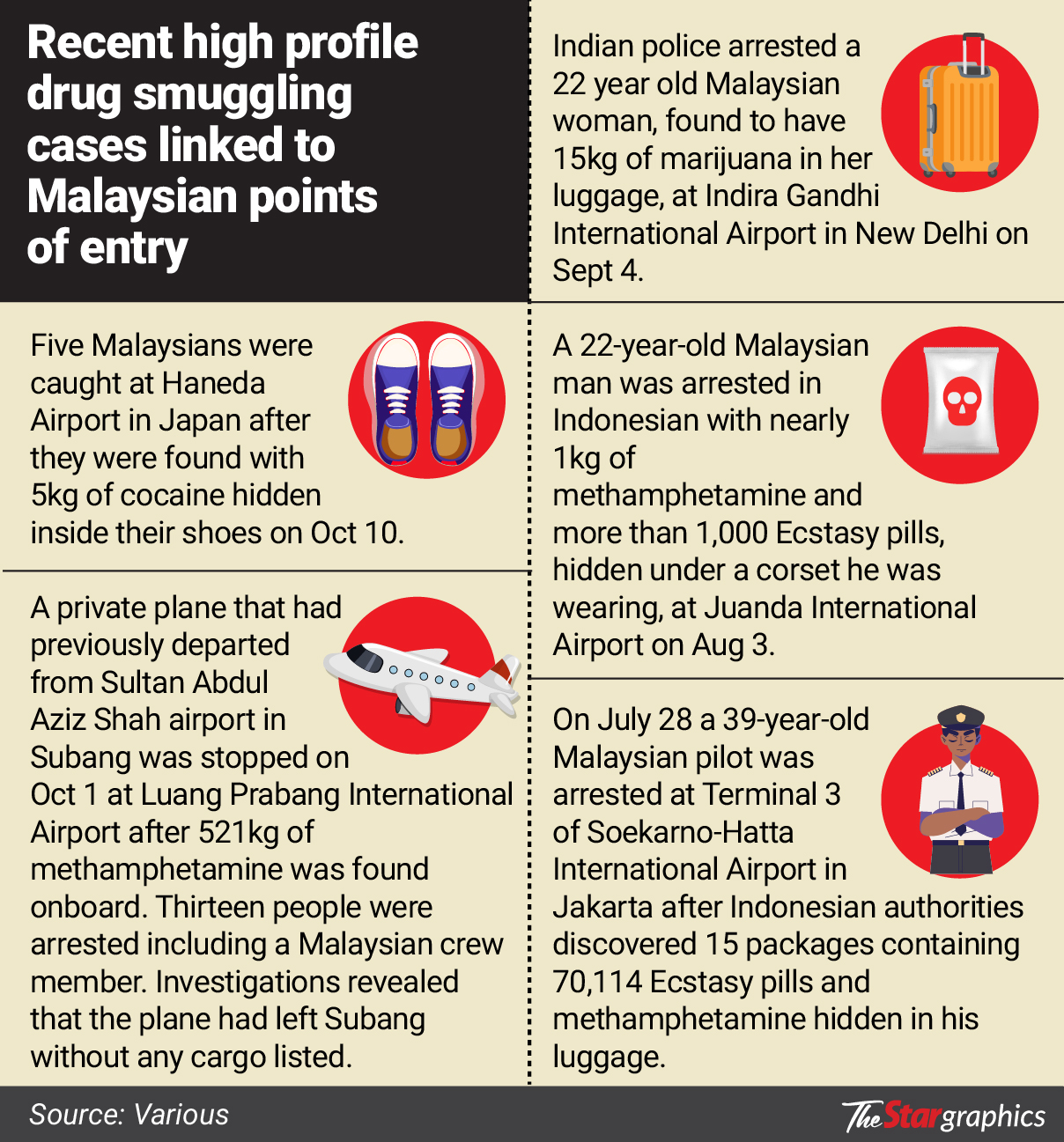
The increase in the national budget allocation from RM37mil in 2026 to RM490mil next year, follows the recent surge in cases of Malaysians nabbed abroad after being caught working as drug mules.
Criminologist Datuk Dr P. Sundramoorthy said that the effectiveness of the RM490mil allocated to the Malaysia Border Control and Protection Agency (AKPS) should not be measured solely on new machines bought, but on how effective such tools will be in improving detection rates.
“First, we need to move from conventional inspection towards intelligence-led border control. The AKPS must therefore strengthen intelligence-sharing with the police, Customs, Immigration, the National Anti-Drug Agency and international counterparts.
“Passenger-risk assessment should be informed by credible intelligence, travel patterns and other lawful indicators, rather than nationality, ethnicity or profiling based on appearance alone.
“Secondly, technology must be matched by trained personnel and effective operational procedures. Purchasing sophisticated equipment without ensuring that officers can use it effectively would be a poor return on public investment,” he said.
ALSO READ : Drug syndicates employ new tactics when using mules
He said that the human element was imperative as no border-control measure can be entirely effective if procedures are inconsistently enforced and personnel are vulnerable to corruption and syndicate infiltration.
“There is also a strong case for the AKPS to serve as the lead coordinating agency for border control and entry-related operations, provided its mandate, authority and accountability are clearly defined.
“Fragmented responsibilities, overlapping jurisdictions and gaps in communication can create opportunities for transnational criminal networks to exploit weaknesses between agencies,” he said.
Crime analyst Datuk Shahul Hamid Abd Rahim proposed that adequate manpower be combined with advanced technology to increase effectiveness of enforcement operations.
He also said key locations that could become targets should be identified and strengthened.
“Authorities must identify these locations and ensure they are adequately prepared,” he said.
“The necessary infrastructure must also be provided, including secure private inspection rooms, safe facilities for storing seized evidence and better working facilities for personnel,” he said.
Investments into detection systems at entry points are also important due to recent high profile drug smuggling cases, he added.
“Part of the allocation must also be used to establish oversight systems, control access to sensitive information systems, record inspection procedures and create independent complaint mechanisms,” he said.
Security expert Jamil Ghani said the government’s announcement of 48 new body and baggage scanners was a positive development, but that alone would not guarantee stronger enforcement.
Jamil said intelligence-sharing should be supported by stronger risk-assessment capabilities, including the use of advance passenger information and travel-pattern analysis to identify potential threats before they arrive.
Such measures, he said, should be backed by appropriate data safeguards.
He said AKPS should also strengthen coordination among enforcement agencies through clear procedures for joint operations, case referrals and incident response.
Existing mechanisms, including the Home Ministry-Transport Ministry Technical Committee, should be implemented effectively to ensure agencies work as an integrated system while retaining their respective responsibilities.