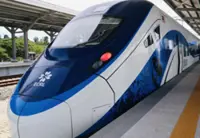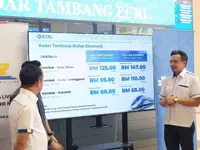
PETALING JAYA: The East Coast Rail Link (ECRL) is an opportunity for authorities to rethink how rail and buses can complement, rather than compete with each other, for passengers.
Wan Agyl Wan Hassan, the chief executive officer of Mara Liner Sdn Bhd, whose company offers bus connections to Kuantan, Temerloh, Kuala Terengganu, Dungun, Kota Baru, Gua Musang and Kuala Krai, among others, said the challenge is to ensure ECRL strengthens, rather than weakens, our existing public transport network.
“The ECRL should be part of a more integrated network, supported by feeder services, coordinated schedules and better station accessibility.
“This would allow both modes of transport to contribute more effectively,” he said, calling for a review of existing transport planning and regulatory frameworks to ensure affordability and accessibility for passengers, as well as commercial sustainability for operators.
The objective should not be to prevent competition, but to create an environment where different transport modes can operate efficiently and sustainably, he said.
“Much more needs to be done to create a holistic public transport ecosystem. The challenge is ensuring this national investment strengthens the entire public transport ecosystem.
“The future of public transport should not be about which mode wins the passenger, but whether the entire network works better for the rakyat,” he said, adding that Malaysians deserve better connectivity, greater convenience and more travel choices.
However, he said express buses may still remain the more practical and affordable choice for price-sensitive passengers and those travelling beyond the railway network.
Both Wan Agyl and Pan Malaysian Bus Operators Association president Datuk Mohamad Ashfar Ali agreed that it is too early to gauge how the ECRL passenger services will affect passenger load on express buses plying the east coast of peninsular Malaysia.
While it is true that express buses suffered a drop by about 30% when KTM Bhd launched its ETS services to the north (Padang Besar) and the south (Johor Baru), travel pattern to the east coast is a different kettle of fish, said Mohamad Ashfar.
“Firstly, ECRL does not stop at every major town along the east coast, unlike the ETS.
“More importantly, express buses plying the east coast make many journeys at night, allowing their customers to skip paying for hotel rooms.
“It is quite common for our customers to take an overnight bus from Kota Baru, arrive in Kuala Lumpur, conduct their businesses and then return in the evening,” he said.
While the train schedules have not been released, Malaysia Rail Link Sdn Bhd (MRL) chief executive officer Datuk Seri Darwis Abdul Razak said ECRL passenger services will typically begin around 6am and end around midnight, suggesting that there will not be any overnight services.
A check did not show any sleeping bunks fitted on the ECRL with the most “luxurious” being business class seating in the 2+2 configuration.