JERTIH: Regulations and conditions for home detention are in the final stages of drafting following a conditional pardon allowing former prime minister Datuk Seri Najib Razak to serve the remainder of his prison sentence at home.
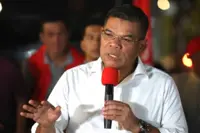
Home Minister Datuk Seri Saifuddin Nasution Ismail said the matter was being pursued following a letter from the Pardons Board secretariat empowering the Prisons Department to set conditions for the implementation of house arrest.
“The Prisons Department is in the final phase of drafting the regulations. Our country has never had (house arrest) before, but suddenly there is... In the letter from the Pardons Board secretariat to the department, it is stated that the Prisons Department can impose any conditions.
“So our task is to develop a set of regulations, which are currently being worked on,” he told reporters after launching the National Anti-Drug Agency’s Madani Adopted Village and Madani Adopted School initiatives in Felda Tenang here yesterday.
However, Saifuddin Nasution said Najib remained in Kajang Prison because he had not paid the RM50mil fine, one of the conditions for serving the remainder of his sentence under house arrest, Bernama reported.
Last month, His Majesty Sultan Ibrahim, King of Malaysia, granted Najib a conditional pardon allowing him to serve the remainder of his sentence under house arrest until Aug 23, 2028, subject to the payment of a RM50mil fine.
Najib’s lead counsel, Tan Sri Muhammad Shafee Abdullah, recently said his client would spend the remainder of his prison sentence for the SRC International case with his family at his residence in Langgak Duta, Kuala Lumpur, under a home detention order granted by the King.
He also confirmed his client had received the home detention order, including an appendix detailing its conditions and implementation mechanism.
However, he said Najib had been advised by the Prisons Department not to disclose the contents of the order to avoid public and media speculation.
The decision was made at the 64th meeting of the Federal Territories Pardons Board.