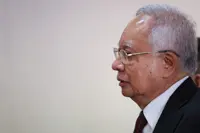
PETALING JAYA: A decade of relentless campaigning against 1MDB left DAP with little choice but to respond to Datuk Seri Najib Razak’s house arrest with the resignation of its secretary-general, Anthony Loke, from the Cabinet, political analysts say.
However, analysts downplayed the ultimate impact of the move, noting that a joint resignation by all DAP ministers would have sent a far stronger political signal than Loke stepping down alone as Transport Minister.
Universiti Sains Malaysia political analyst Prof Datuk Dr Sivamurugan Pandian described the move as a calculated compromise, allowing DAP to register its stance without triggering a full-blown administration collapse.
ALSO READ: Loke offers to resign
"Loke's resignation is best seen as DAP's institutional response and a symbolic expression of disagreement over the decision," Sivamurugan said, adding that it remains Prime Minister Datuk Seri Anwar Ibrahim's prerogative to accept or reject the resignation, given that it could be interpreted as challenging the King's royal pardon authority.
Sivamurugan noted that while a total walkout by all DAP ministers would have been a powerful collective rejection, it could have severely threatened the government's parliamentary majority and political stability.
"DAP has chosen the middle ground: protest, but remain in government. As secretary-general, Loke is the party's principal political voice, so his resignation carries their message directly," he said.
Echoing this sentiment, Nusantara Academy for Strategic Research senior fellow Dr Azmi Hassan said placing the burden squarely on Loke avoided a scenario where DAP either abandoned the unity government entirely or forced a mass Cabinet exit.
"If DAP left, it would give Umno a huge advantage by remaining in government while their primary rival is on the outside," Azmi said. "Mass resignations would also weaken the Prime Minister's standing when faced with mounting pressure from Umno."
Meanwhile, Universiti Malaya socio-political analyst Prof Datuk Dr Awang Azman Awang Pawi observed that DAP is attempting to separate its ideological stance on Najib's pardon from its commitment to executive stability.
Awang Azman described Loke’s resignation offer as a delicate political balancing act between party principles and coalition continuity.
“It is sufficiently significant to demonstrate DAP’s disagreement, but deliberately limited so that the party does not precipitate a broader crisis within the Unity Government,” Awang Azman said. "The more important question from this point onward is whether this arrangement remains politically sustainable."
Loke announced his decision to step down as Transport Minister on Saturday (Sept 19) following an emergency meeting of the DAP Central Executive Committee. The party's remaining Cabinet ministers will stay in their posts to ensure government continuity.