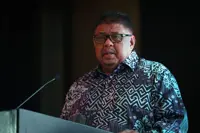
KUALA LUMPUR: Islamic scholars need to understand technological developments and current changes to help Muslims navigate the challenges posed by artificial intelligence (AI), algorithms and social media, says Datuk Seri Dr Ahmad Zahid Hamidi.
The Deputy Prime Minister said technological developments had transformed the landscape of knowledge dissemination, with religious issues now no longer discussed solely from the pulpit or at religious gatherings, but also influenced by social media and AI applications.
"The landscape has changed. In the past, people sought out teachers. Today, algorithms find them first. It is also shaped by ChatGPT, TikTok and many other social media platforms and AI applications,” he said.
Ahmad Zahid, who is also Umno president, said access to knowledge and education had become increasingly broad, while the field of preaching had become more open as technology enabled knowledge to be conveyed to anyone in the blink of an eye.
However, he said this development also brought challenges, as society continued to grapple with confusion over beliefs, breakdowns in family institutions and young people seeking answers from sources that were not necessarily accurate.
He said this in his speech at the closing ceremony of the Multaqa Ilmuwan Islam Malaysia 2.0 here on Tuesday.
Ahmad Zahid said these developments required Islamic scholars not only to master religious knowledge and sacred texts, but also to be able to "read the times” by understanding technology and current realities without neglecting the fundamentals of religious knowledge.
He said this approach was important to ensure scholars could guide society while taking into account changes taking place in everyday life.
"Be firmly grounded in the turath (traditions) while understanding technology. Stand firm on the religious texts, but understand reality. Be clear on the rulings, but do not lose wisdom in guiding society,” he said.
Ahmad Zahid said the role of scholars today should also not be limited to answering questions that arise, but should include helping Muslims understand change, set priorities wisely and distinguish between accurate and misleading information.
He said scholars also had a responsibility to point the way towards truth and unite the strength of the Muslim community on matters that bring benefit to society.
Also present were Umno secretary-general Datuk Dr Asyraf Wajdi Dusuki, Umno Ulama Council chairman Datuk Dusuki Ahmad, Umno Ulama Council deputy chairman Datuk Dr Khairuddin Takiri, PAS Ulama Council chief Datuk Ahmad Yahaya and Perlis Mufti Datuk Dr Mohd Asri Zainul Abidin.- Bernama