KOTA KINABALU: Malaysia and Indonesia have agreed to exchange information on hotspot monitoring to prevent transboundary haze amid the current El Nino affecting the region, says Datuk Arthur Joseph Kurup.
The Natural Resources and Environmental Sustainability Minister said his Indonesian counterpart had agreed to the proposal to monitor hotspots that contributed to haze in parts of Malaysia and the region.
“We will also share our airspace in case we need to carry out cloud seeding operations.
“We can share each other’s airspace and possibly our assets,” he told reporters after opening the International Conference on Tropical Forestry 2026 (TF2026) yesterday.
He added that cooperation between the respective enforcement agencies to prevent open burning activities was also discussed during his meeting.
Arthur said the proposal was raised when he met his Indonesian counterpart during the 37th Meeting of Asean Senior Officials on Environment last week.
“We need to acknowledge that haze is a problem that is not just faced by one country.
“It is a regional issue. What happens in our neighbouring countries will also affect us,” he said.
During the meeting, he said he showcased the Meteorological Department’s system for monitoring air quality in Malaysia.
Besides his Indonesian counterpart, Arthur said he also met other regional counterparts to discuss the haze situation.
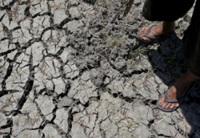
He said Malaysia was currently transitioning to a super El Nino and would likely experience less frequent rainfall, drier weather and an increase in hotspots.
“This will cause more haze,” he said, referring to the current haze in southern Sarawak and parts of Peninsular Malaysia.
Earlier, Arthur said the Asean Specialised Meteorological Centre (ASMC) had predicted a strong El Nino phenomenon that could result in longer dry periods, posing a major challenge for countries with vast peatland areas.
On the proposed National Climate Change Act, Arthur said he was targeting for it to be tabled by the end of the year.