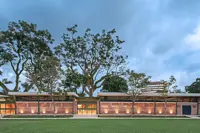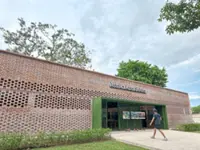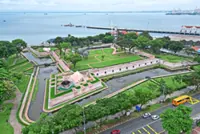
GEORGE TOWN: While locals return for a trip down memory lane, foreign tourists are praising the conservation work and exhibitions at two newly restored landmarks – Fort Cornwallis and Penang State Museum.
For retiree Cheah Kok Kheong, 80, stepping into Fort Cornwallis brought back memories of courting his wife there some six decades ago.
He barely recognised the site after its transformation, saying the restoration had given the fort a new lease of life.
“It offers a wealth of historical information, illustrating Penang’s journey from a humble village to a thriving city,” he said.
His daughter Cheah Huey Yee, 55, suggested adding covered walkways or rain canopies between gallery sections to improve comfort during wet weather.
“It remains a meaningful and educational experience for visitors of all ages,” she said.
French visitor Arnaud Le Gal, 62, from Paris, was impressed by the meticulous conservation work.
A trained historian, he said the exhibitions were concise yet rich in detail, particularly those covering international relations and regional independence movements.
“The restoration is beautifully executed and the historical displays pack an incredible amount of insight into just a few panels,” he said.
Operations manager Muhammad Norman Abdullah, 42, who last visited the fort during his school days, said the revamped attraction was far more engaging than he remembered.
“The preservation work and new curation are remarkably well done, making the site much more informative with interactive audio and thoughtfully arranged exhibitions.
“Even on a rainy day, it’s a fun place to revisit and see how much progress has been made,” he said.
Both Fort Cornwallis and Penang State Museum now offer free admission until Aug 31, following its reopening last week.
The museum attracted more than 5,000 local and foreign visitors during its opening weekend and is averaging over 1,200 visitors on weekdays.
Penang Museum and Art Gallery director Haryany Mohamad said the response reflected the community’s strong attachment to the landmark, which previously housed Penang Free School and Hutchings School before becoming a museum in 1965.
She said one of the museum’s biggest attractions is its recreated classroom on the upper floor, complete with a light-hearted “caning machine” (rotan) display that has become a favourite photo spot for families.
“Parents often queue with their children to let them experience a playful taste of old-school discipline,” she said.
Retiree Pang Sew Nee, 69, visited the museum with her cousins Veronica Dottore, 77, from Australia, and Lai Mei Ling, 74, from Kuala Lumpur.
“It features a lot of modern elements, unlike a conventional museum,” Pang said.
While welcoming the prominence given to the national language, Dottore suggested adding English translations to exhibitions for foreign visitors and elderly guests who may struggle with QR code-based translations.
She also felt some natural history exhibits such as the ancient shell deposits would benefit from clearer explanations about fossilisation to provide better context.
French tourists Alain, 65, and Aude Marchal, 61, were impressed by the museum’s colourful displays, particularly the traditional tiffin carriers, period costumes and recreated classroom.
Alain suggested providing full English translations alongside multilingual audio guides to help international visitors better appreciate Penang’s history.