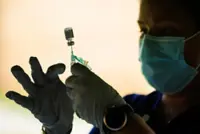
PETALING JAYA: Producing vaccines locally will ensure vaccine security while also boosting local capabilities, say health experts.
The Malaysian Medical Association (MMA) president, Datuk Dr Thirunavukarasu Rajoo, said Malaysia has pursued vaccine security and local manufacturing capability for more than a decade, with pneumococcal vaccines previously identified as a potential priority.
“This is a positive step towards reducing our dependence on imported vaccines and strengthening Malaysia’s preparedness against future supply disruptions.
“However, the real measure of success will be whether the vaccine achieves regulatory approval, maintains international standards of safety and quality, and can be supplied sustainably at a competitive cost,” he said.
He added that it would also be important to clarify the extent of technology transfer involved.
“Local filling and packaging can strengthen supply security, but genuine capability building should progressively include vaccine manufacturing, quality testing, research and development, and the development of Malaysian expertise.
“Otherwise, we may remain dependent on imported technology and critical raw materials,” he added.
He said local production will not automatically guarantee a lower price, as cost will depend on production volume, imported raw materials, licensing arrangements, quality control and access to regional markets.
“The immediate benefit may be greater supply security and stronger negotiating power, while cost savings may only be achieved when sufficient scale is reached.”
He said success should not be measured only by a “Made in Malaysia” label but by whether it builds genuine national capability, strengthens vaccine security and delivers better health outcomes for Malaysians.
Virologist Prof Datuk Dr Lam Sai Kit said Malaysia should continue to pursue its local vaccine development and manufacturing capabilities, but the initiative should be viewed as a long-term investment in national health security rather than purely as a cost-saving exercise.
“Local production does not automatically mean vaccines will be cheaper from the outset,” said the Senior Fellow at the Academy of Sciences Malaysia and Emeritus Professor at Universiti Malaya.
“Vaccine manufacturing requires significant investment in technology, facilities, skilled personnel and quality assurance. However, over time, if we achieve sufficient scale and efficiency, local production could help reduce costs and our dependence on imports,” he said.
“The more immediate and important benefit is greater supply security.
“Having local production gives Malaysia greater control over vaccine supply and more reliable access when vaccines are urgently needed,” he added.
He said Malaysia can learn from countries such as India, Indonesia, Vietnam and Thailand, which have strengthened their vaccine manufacturing capabilities, while South Africa has emerged as an important centre for the World Health Organisation-supported mRNA vaccine technology-transfer programme.
He said other developing countries, including Bangladesh, Senegal and Egypt, were also building capabilities through technology transfer and international partnerships.
“Ultimately, the goal is not just to produce vaccines locally. It is to ensure that Malaysians have safe, effective and affordable vaccines when they need them, while building the country’s long-term health security and resilience. Greater self-reliance should give us more options and greater preparedness, without losing the benefits of international collaboration,” he added.
Prof Lam said technology transfer is not only about bringing in technology or setting up a manufacturing plant but also ensuring the right facilities, skilled workforce, quality control systems, regulatory capabilities and reliable supply chains to produce vaccines safely and consistently.
“Equally important is genuine transfer of knowledge and expertise.
“The objective should be to develop local capabilities over time, rather than simply operate a production line based on technology developed elsewhere,” he said.
“We also need to consider the long-term sustainability of the programme, including the availability of raw materials, production capacity, financing and the ability to scale up when demand increases.
“Malaysia has a foundation in pharmaceutical and biotechnology manufacturing but we should be realistic that building a complete vaccine manufacturing ecosystem is a much bigger undertaking.
“The goal should not simply be to have a vaccine factory but to develop a sustainable ecosystem that can support the production of safe, effective and affordable vaccines,” he added.
The Federation of Private Medical Practitioners’ Associations, Malaysia president Dr Shanmuganathan Ganeson said if developed successfully, Malaysia’s biotechnology capabilities can be strengthened while it can also contribute to Asean’s collective vaccine resilience.
“We will need to maintain internationally accepted quality standards, ensure sustainable production, foster research and innovation, and build strong partnerships within Asean.”