PETALING JAYA: Malaysia is set to produce its first locally made human vaccine as early as 2028, marking a major step towards reducing reliance on imported vaccines and strengthening the country’s health security.
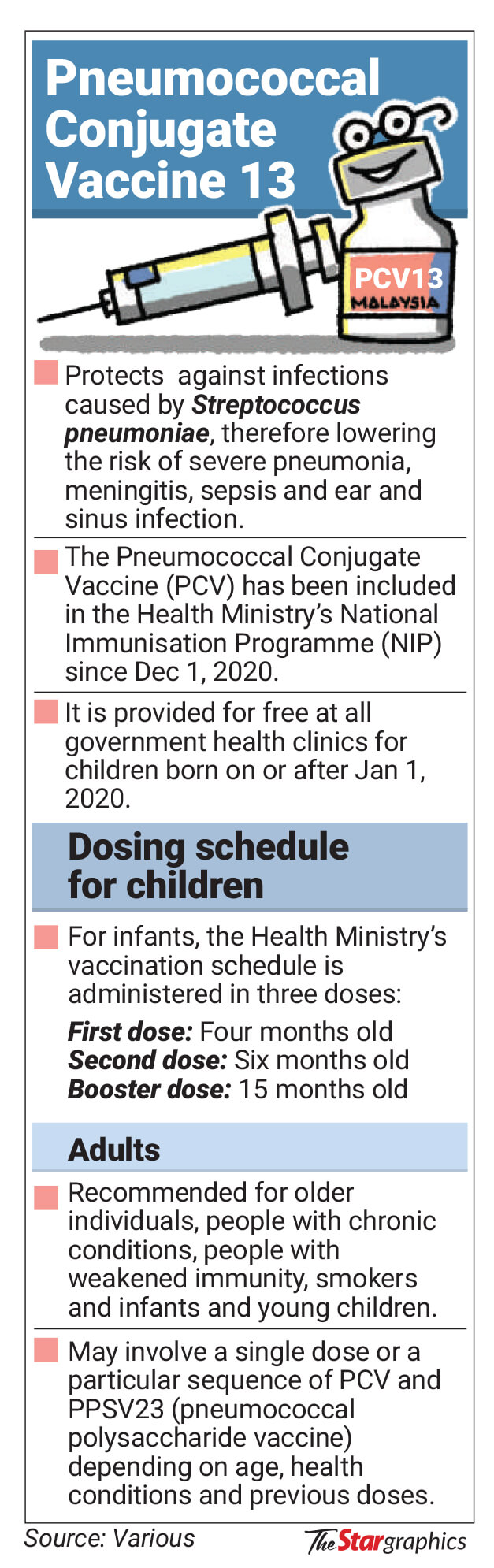
The 13-valent pneumococcal conjugate vaccine, or PCV13, is an injection that protects against 13 types of Streptococcus pneumoniae bacteria which cause serious illnesses like pneumonia and meningitis.

The local company involved in the manufacturing of the vaccine is Pharmaniaga Bhd, with technology transfer from a company in China.
At present, Malaysia imports all its vaccines which are sourced from countries such as the United States, France, Belgium, Japan, South Korea, India, Thailand and Indonesia.
In the interview with The Star, Chang said local production of PCV13 would help strengthen Malaysia’s preparedness for future health crises and reduce reliance on foreign suppliers in the long run.

He said the Covid-19 pandemic had shown the risks of not having domestic capability in critical technologies such as vaccines.
“During the Covid-19 pandemic, vaccine was something very important. But we didn’t have the capability to develop human vaccine, so we had to rely on other countries,” he said.
“When you rely on other countries, they will decide when to deliver the vaccine to us and they will decide what price they want to sell to us. So it becomes an issue, especially when a crisis happens,” he added.
Chang said this was why Malaysia must strengthen its technology sovereignty, particularly in areas that are critical during emergencies.
“Our target is to possess the capability to develop human vaccine by 2030. But we might achieve it earlier, in 2028,” he said.
He added that Malaysia is currently working on two vaccine-related developments, including a hexavalent vaccine for children.