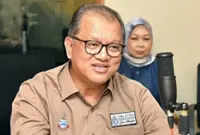
KOTA KINABALU: Converting RM200mil of state fixed deposits in Sabah Development Bank Berhad (SDBank) into shares was necessary to protect the government from a possible RM3bil burden if the bank failed, says the state government.
Assistant Finance Minister II Datuk Mohd Ishak Ayub said the amount involved SDBank's outstanding bonds and other liabilities.
He denied Parti Warisan president Datuk Seri Mohd Shafie Apdal's claim that the move was a bailout.
Mohd Ishak said no new money was injected as the RM200mil was already deposited in the state-owned bank.
The money was converted into redeemable preference shares to strengthen SDBank's capital while giving the state a 3.15% annual dividend, or about RM6.3mil.
"The choice was to strengthen the bank using money already kept there, or risk the government bearing a much bigger cost in future," he said in a statement on Wednesday (July 22).
Shafie had earlier on the same day questioned why the money was changed from a fixed deposit, which could be withdrawn, into shares in SDBank.
Speaking at a press conference outside the Sabah Legislative Assembly, the Senallang assemblyman asked whether the bank was facing cash flow problems.
He also linked the move to the 2023 restructuring involving SDBank, Sabah International Petroleum Sdn Bhd (SIP) and SMJ Energy.
Shafie said SMJ Energy borrowed RM900mil through a sukuk, with about RM700mil paid to SDBank after SIP was transferred to SMJ Energy.
"We borrowed RM900mil and RM700mil was paid to SDBank. What is the difference when the money is moved from one government-owned company to another?" he said.
"If this is not a bailout, the government must explain what is being bailed out and who is being bailed out."
Shafie said the move raised concerns that public and borrowed funds were being used to support a state-owned company facing financial problems.
He also questioned whether the government could recover the RM200mil as easily after it was converted into shares.
Mohd Ishak said SDBank's new board and management had carried out reforms since the second half of 2023, including addressing governance weaknesses and losses linked to old assets.
He said SDBank's debt instruments still held an AA1/Stable/P1 rating from RAM Ratings.
Mohd Ishak also claimed that only RM260mil was recovered from bad loans during Shafie's two years in government, compared with about RM3.3bil recovered by the current management since July 2023.
He rejected claims that SIP had also been bailed out, saying it was now debt-free following the RM900mil Sukuk Wakalah exercise and the transfer of its 10% stake in LNG9 to SMJ Energy.
SIP had also secured another 10 years of income through the extension of its asset in Indonesia, he said.
"This was not a bailout. It was a successful restructuring that protected Sabah's strategic assets and created long-term value," he said.
Mohd Ishak also denied that the government was prioritising state-owned companies over the people, saying the Supplementary Supply Bill included allocations for water, roads, housing, education and welfare.