
Owners must give workers safe housing, not just collect rent
PETALING JAYA: Cramped, makeshift accommodation above shops and restaurants will continue to put lives at risk unless building owners, employers and authorities get serious about worker housing, experts warn.
Malaysian Federation for Occupational Safety and Health chairman Dr Abu Hasan Samad said some owners appear more interested in rental income than safety.
ALSO READ: Crackdown on illegal housing to expand
He said that, assuming a building has its occupation certificate, they (owners/sublet owners) can carve up any available space into rooms and “just collect the money”.
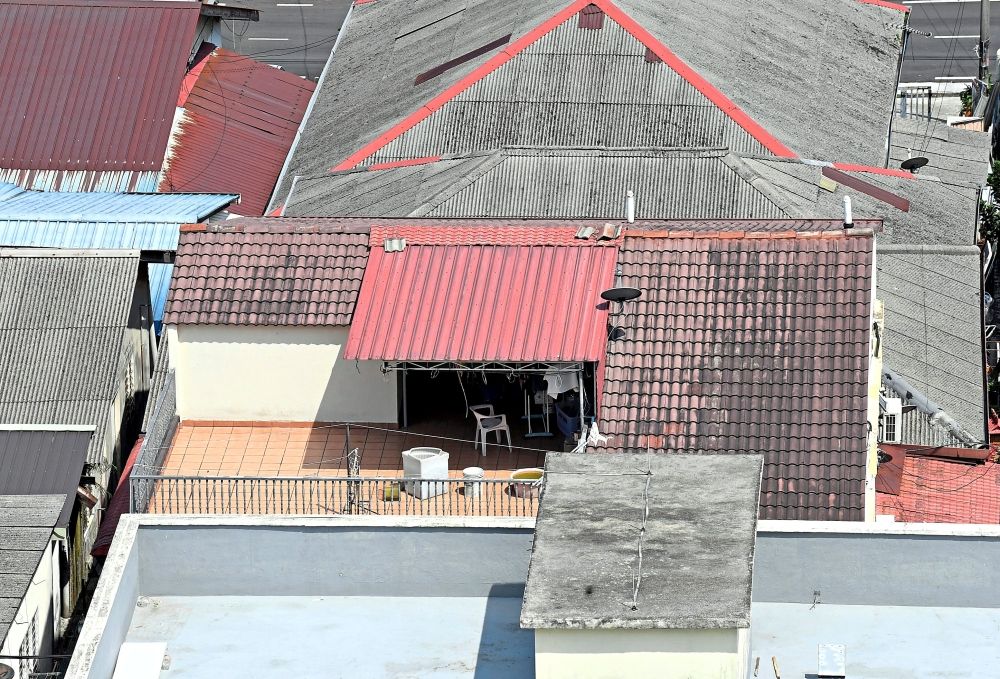
“In many cases, premises originally approved for commercial use are quietly converted into living quarters, with upper floors above eateries and small factories housing 10 or more people in conditions never designed for residential occupancy.
ALSO READ: Councils seek public’s help to curb cramped quarters
“While Malaysian law already sets minimum standards for workers’ housing and amenities, the reality on the ground may diverge sharply from what is declared on paper once licences and certificates are obtained,” he said.
Abu Hasan pointed out that enforcement alone cannot keep pace as labour and fire authorities have limited manpower and tend to focus on complaints or major incidents such as fires, meaning many unsafe quarters remain under the radar.
He urged owners and tenants alike to be more mindful, but insisted that the primary responsibility lies with landlords and employers, who should regularly inspect their premises and prevent unauthorised conversions and overcrowding.
“Authorities must send a stronger deterrent signal by taking errant employers and owners to court and publicising the outcomes of fire investigations and housing probes.
“Too often, they focus on helping victims and managing public perception after a tragedy, while the underlying causes and those responsible fade from view.
“Without visible, consistent action against those who flout the rules, Malaysians will continue to see cycles of outrage after each incident – followed by silence until the next preventable disaster,” Abu Hasan said.
Chemical health risk assessor Tan Tiong Ping, who is registered with the Occupational Safety and Health Department, said cramped living quarters can have significant implications for workers, residents and employers.
He said these implications are commonly considered under occupational safety and health, public health, fire safety and housing regulations.
“Cramped 'bird’s nest‑style quarters', such as those uncovered in recent enforcement operations, pose far‑reaching risks for workers, residents and employers in Malaysia.
“Beyond fire hazards, overcrowded rooms can accelerate the spread of communicable diseases, worsen indoor air quality and contribute to stress, anxiety and sleep disturbance among occupants, undermining both health and productivity.
“As such, the best and most effective suggestion will be strict enforcement, as there is nothing much a citizen can do. But we only see enforcement when there is pressure in the media and after that nothing much is done to address the issue,” he said.
Under the Employees’ Minimum Standards of Housing and Amenities Act 1990 (Act 446), Uniform Building By‑Laws, the Fire Services Act and local authorities, Tan said that employers who provide housing must ensure minimum standards for space, ventilation, sanitation and basic amenities.
He said that non-compliance with Malaysian workers' accommodation requirements can lead to legal and regulatory implications.
On July 12, it was reported that the Fire and Rescue Department’s Ops Sarang Burung uncovered 27 cramped, illegally converted rooftop units across three buildings.
Measuring about 6x4ft to 10x10ft and rented at RM200 to RM400, the “bird’s nest” rooms – mostly occupied by foreigners – are built from highly combustible materials and lack escape routes, alarms, emergency lighting and proper compartmentation.
Some occupants cook inside, worsening fire risk and complicating rescue efforts.
The department is verifying details with Kuala Lumpur City Hall (DBKL) and expanding inspections to Selangor, Penang and Johor after a May 13 shophouse blaze killed one person.