PETALING JAYA: For many low-income earners struggling to put food on the table and meet the daily needs of their families, scheduling a medical check-up is low on their list of priorities.
This reality is one of the key challenges facing the PeKa B40 programme, says the Health Ministry.
“Many individuals in the target group prioritise earning a living and supporting their families, making preventive healthcare a lower priority compared to their immediate daily needs.
“Time constraints also play a significant role, as many are occupied with work and income-generating activities, leaving little opportunity to attend health screenings or other healthcare programmes,” the ministry said.
Despite these challenges, the ministry said it will continue to improve access as well as outreach and awareness efforts to ensure more eligible Malaysians can benefit from early health screening and timely medical intervention.
The ministry added that based on Sumbangan Tunai Rahmah Phase 2 data for 2026, 6.74 million individuals, including recipients and their spouses, are currently eligible to participate in the PeKa B40 programme nationwide.
From its introduction on April 15, 2019, to May 31, 2026, PeKa B40 has provided health screening services to 1.94 million Malaysians from low-income households.
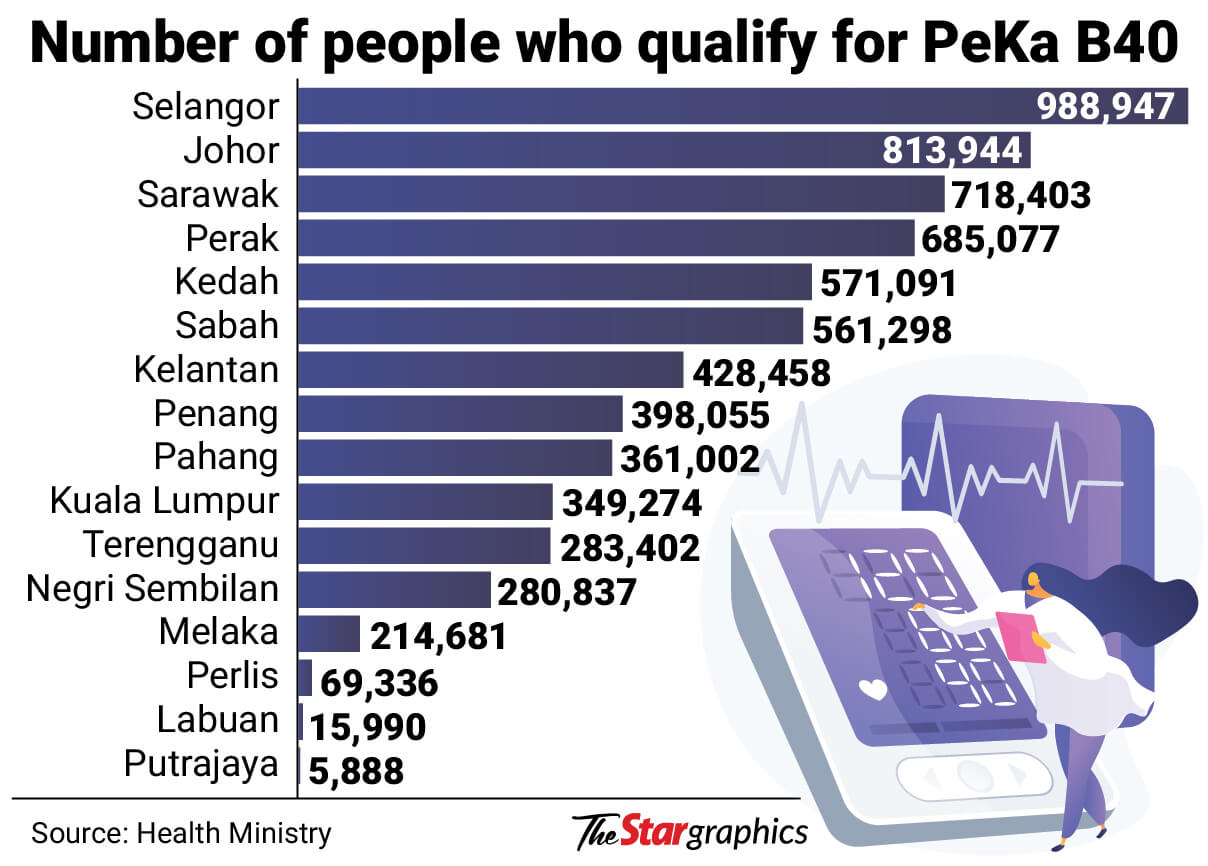
Selangor has the largest number of people eligible for the programme at 988,947, followed by Johor (813,944) and Sarawak (718,403).
The ministry urged all eligible Malaysians to take advantage of the free health screening offered under PeKa B40.
“Many non-communicable diseases, such as diabetes, hypertension and high cholesterol, often develop without noticeable symptoms in their early stages.
“Early health screening enables these conditions to be detected promptly so that appropriate treatment and intervention can be initiated early, ultimately reducing the risk of serious complications,” it said.
Beyond health screening, eligible individuals may also benefit from other components under PeKa B40.
These include financial assistance for selected medical devices, incentives to complete cancer screening and transportation incentives to facilitate access to treatment and follow-up care.
“We encourage all eligible individuals to make full use of these benefits to safeguard their health and improve their quality of life.”