
Barisan and Pakatan taking cautious approach, say analysts
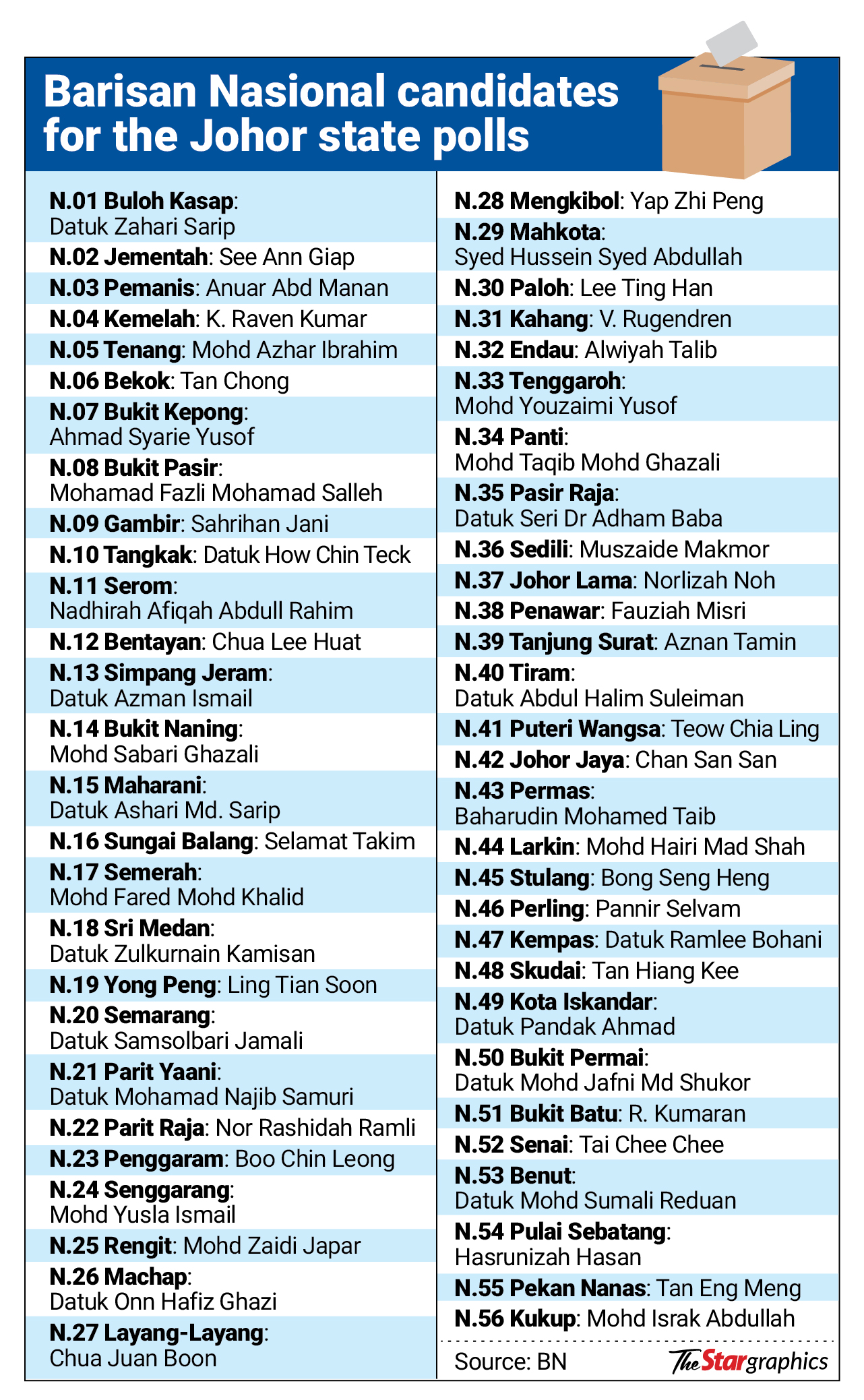
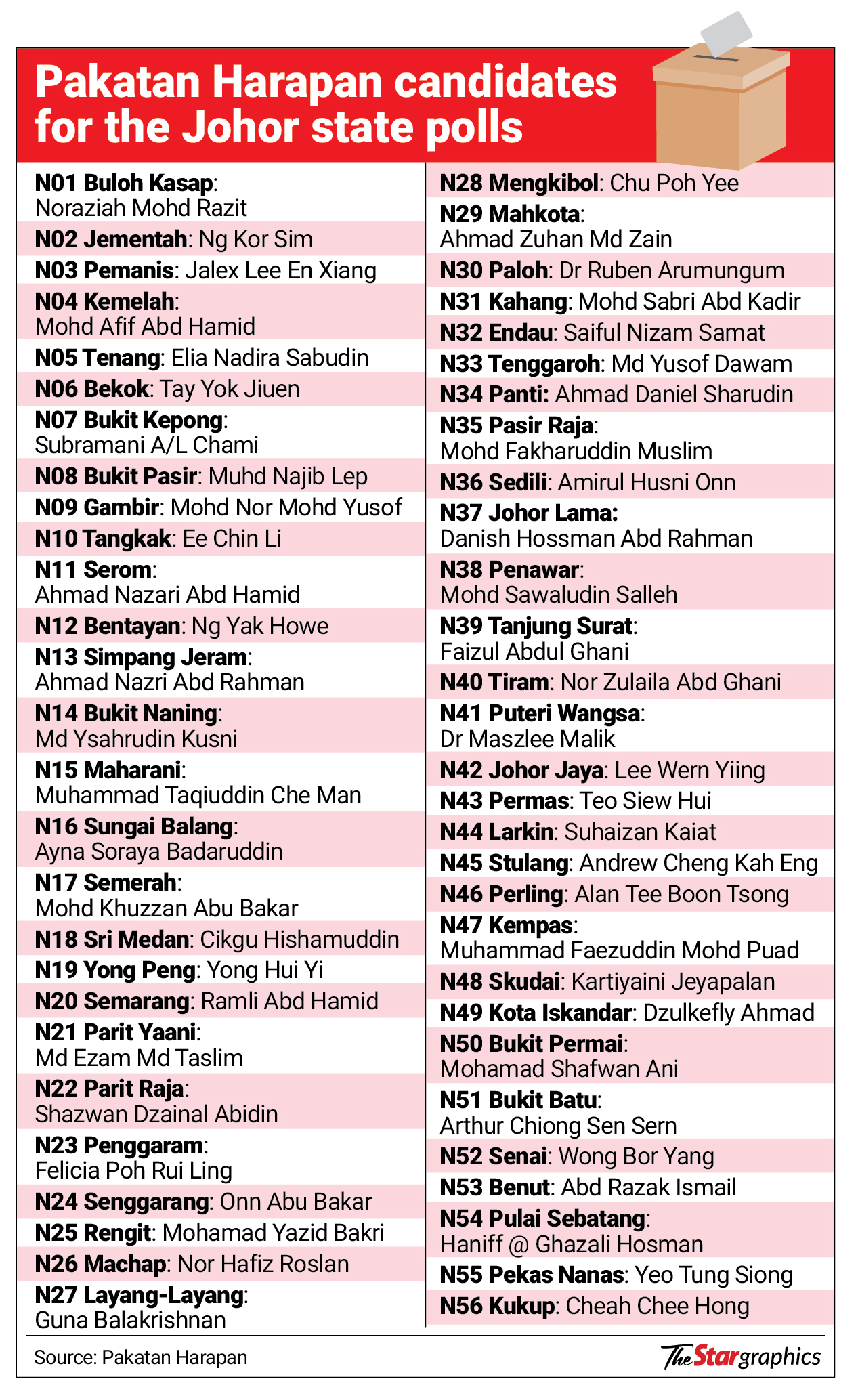
PETALING JAYA: Barisan Nasional and Pakatan Harapan are heading into the Johor state polls with a mix of familiar and new candidates, reflecting a cautious, winnability-focused strategy, political analysts say.
Universiti Teknologi Mara senior political science lecturer Mujibu Abd Muis said the candidate line-ups of both coalitions reflect a balanced but cautious electoral approach.
“Barisan and Pakatan appear to understand that Johor cannot be won solely through party branding.
“It still requires strong local machinery, recognisable candidates, and the ability to manage constituency-level issues,” he said.
Barisan and Pakatan are contesting all 56 seats in Johor.

For Barisan, at least 19 candidates are fresh faces, while 31 are incumbents. Five party veterans are making a comeback, including former health minister Datuk Seri Dr Adham Baba.
Endau candidate Alwiyah Talib also stood out, having contested under Barisan in 2018 but represented Perikatan Nasional in the 2022 state polls. In this election, she is contesting for Barisan, again.
Umno is contesting 37 seats, MCA 15 and MIC four.
For Pakatan, PKR is contesting 20 seats as the main force in mixed and swing constituencies while DAP has been allocated 17 seats, largely in urban areas.
Amanah is fielding 19 candidates in Malay-majority seats, mainly in Johor’s southern and rural belts.

The coalition is fielding seven incumbents and 31 new faces.
Another four candidates are re-contesting the seats they lost in the 2022 polls.
Barisan is fielding 10 female candidates, while Pakatan has 12.
Mujibu said the decision to retain established figures is strategically understandable.
“Experienced candidates often come with existing grassroots networks, familiarity with local voters, and a better understanding of polling district dynamics.
“This is particularly important in rural, Felda and Malay-majority constituencies, where local presence and party machinery remain decisive,” he said.
However, relying too heavily on familiar faces also carries political risks.
“It can reinforce the perception that the coalitions are relying on old political formulas rather than offering genuine renewal,” he said.

He added that the impact will be most significant in marginal and mixed constituencies.
“In safe seats, party machinery and demographic patterns may still dominate. But in competitive seats, candidate quality, local reputation, internal party unity and voter turnout can make the difference between victory and defeat.
“A strong newcomer can create momentum, while an unpopular recycled candidate can become an easy target for opponents,” he said.
Nusantara Academy for Strategic Research senior fellow Dr Azmi Hassan said a combination of experienced hands and fresh faces is arguably the most effective electoral strategy for any political coalition.
The Johor election, added Azmi, is shaping up primarily as a contest between Barisan and Pakatan, adding that the outcome of the polls could have significant implications beyond Johor.
Universiti Sains Malaysia political analyst Prof Datuk Dr Sivamurugan Pandian said Barisan and Pakatan’s decision to field new faces suggests an attempt to project renewal and build a leadership pipeline.
“It also reflects confidence in cultivating a new generation of leaders rather than relying solely on established personalities,” he said.
The Election Commission has set nomination day for the Johor election on June 27, with polling day on July 11, following the dissolution of the state legislative assembly on June 1.